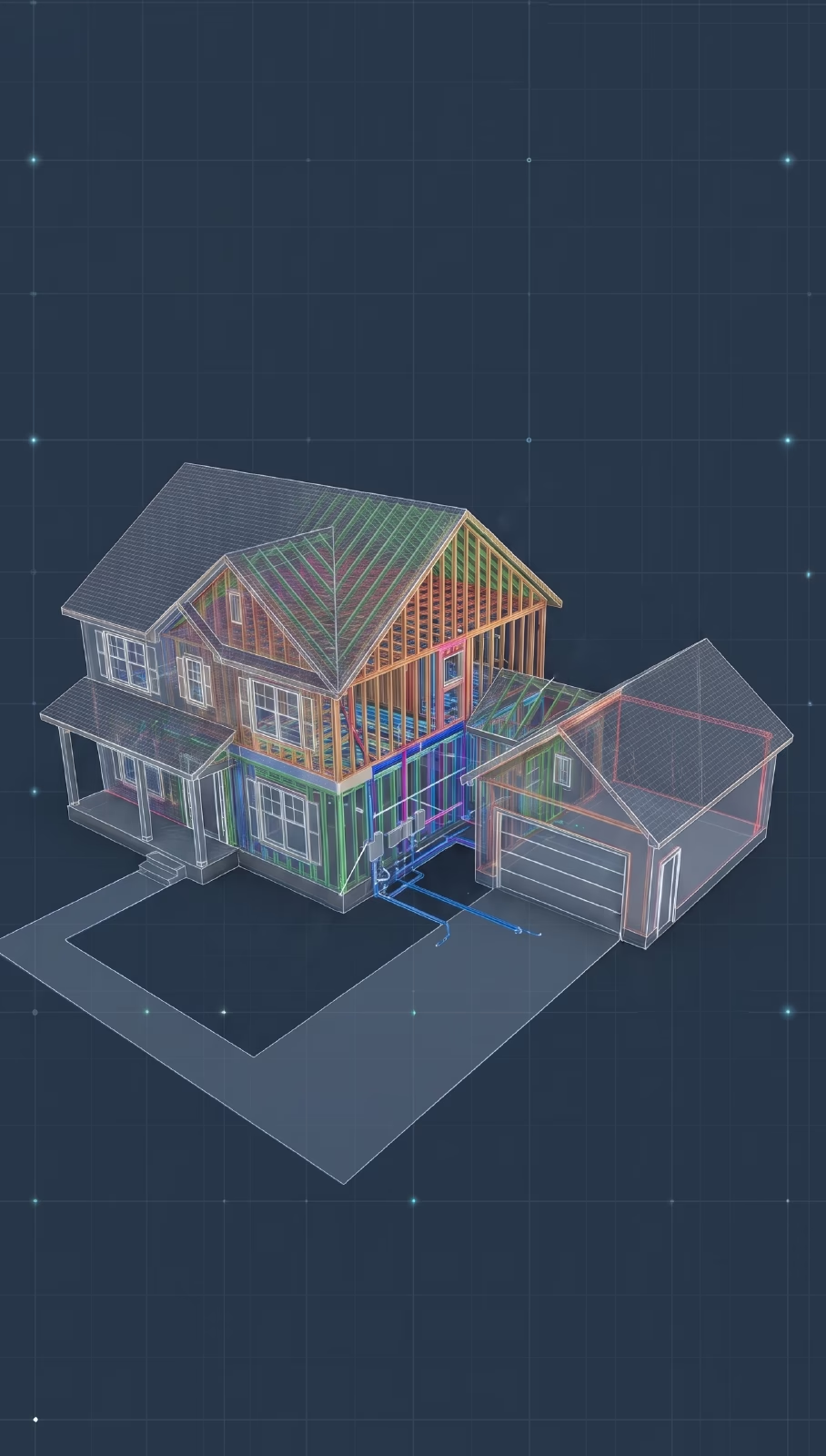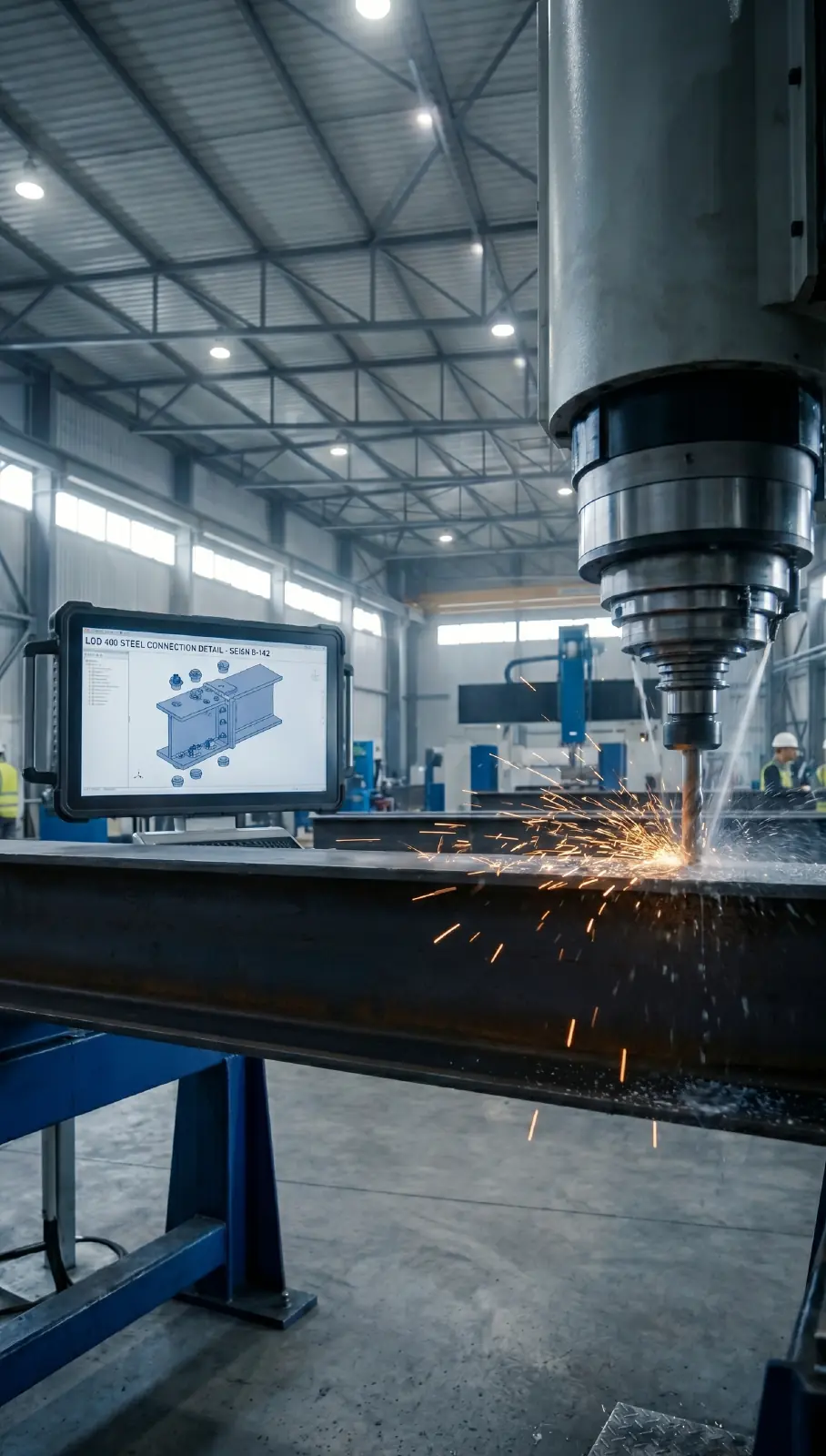
As an architect, developer, or design-build professional in the United States, you already know the brutal truth about the modern construction landscape. Between fluctuating material costs, stringent zoning laws, and aggressive client expectations, your firm’s AEC profit margins are tighter than ever. Deadlines are shrinking, and the margin for on-site error is virtually zero. Building Information Modeling (BIM) is no longer a luxury reserved for massive infrastructure projects, it is an absolute necessity to stay competitive, win lucrative bids, and prevent catastrophic on-site rework.
But here is the million-dollar question keeping firm owners, realtors, and developers awake at night: Should you invest heavily in building a full-time, in-house BIM team, or is Outsourcing BIM to a specialized agency the smarter financial play?
Let us strip away the industry fluff, put on our developer and CFO hats, and look at the cold, hard numbers. Whether you are designing boutique residential spaces or managing massive commercial developments, here is the ultimate financial breakdown of In-house vs outsourced BIM solutions for US firms.
The Iceberg Effect: The Hidden Costs of In-House BIM
When most design and construction firms attempt to calculate the cost of an in-house BIM modeler, they make a critical financial mistake: they only look at the base salary. According to annual compensation reports from organizations like the American Institute of Architects (AIA), base salaries for technical staff have risen significantly. However, that base salary is merely the tip of the iceberg.
The reality of hiring a full-time, mid-level BIM Coordinator or Modeler in the US looks vastly different when you factor in the true cost of employment. Let us break down the actual numbers for a standard in-house hire:
- Base Salary: A proficient BIM professional in the US typically commands between $65,000 to $95,000+ per year, depending on the state and their expertise in specialized disciplines like MEP or structural engineering.
- Benefits & Overhead: Human resources experts agree that you must add 30% to 40% on top of the base salary to cover healthcare premiums, dental plans, 401(k) matching, paid time off, and payroll taxes.
- Software Licenses: BIM requires serious digital firepower. An Autodesk AEC Collection license costs thousands of dollars annually per user. If your team needs specialized clash detection software like Navisworks Manage, expect those licensing fees to climb even higher.
- Hardware and Workstations: You cannot run massive, data-heavy Revit models on a standard office laptop. A high-performance workstation capable of rendering complex 3D environments and running federated models smoothly will set your firm back $3,000 to $5,000. Furthermore, this equipment generally requires replacing or upgrading every three years.
- Training and Onboarding: Software updates rapidly. Keeping an in-house team trained on the latest ISO 19650 standards or the newest Revit features requires ongoing paid training, which pulls them away from billable project hours.
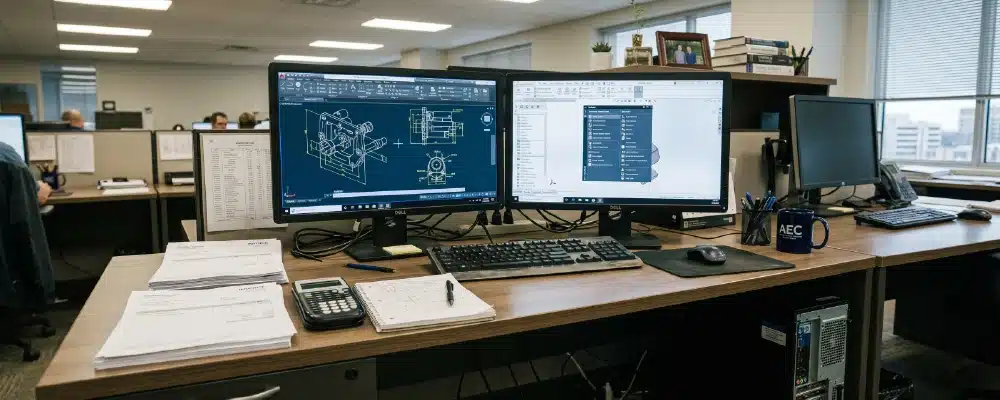
The “Idle Capacity” Drain on AEC Profit Margins
Beyond the hard costs listed above, there is a silent profit killer inherent to the in-house model: Idle Capacity. The architecture and construction industry is notoriously cyclical. Projects stall due to permit delays, clients take weeks to approve design phases, and winter weather can halt groundbreakings.
When you have an in-house team, you are paying for 40 hours a week, 52 weeks a year, regardless of your actual project load. If your BIM coordinator spends two weeks waiting for mechanical submittals from an engineer, you are still paying their full salary and overhead. This rigid financial structure is exactly why so many firms struggle to scale profitably.
When you add it all up, a single in-house BIM professional easily costs your firm well over $130,000 to $150,000 annually. If your project pipeline dips, that fixed cost becomes a heavy anchor.
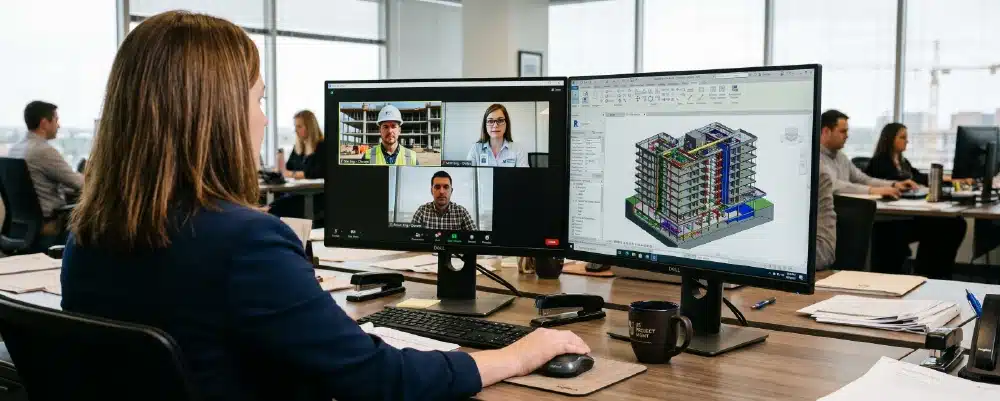
The Financial Agility of Outsourcing BIM
Now, let us flip the script and look at the financial architecture of Outsourcing BIM. The fundamental financial advantage here is shifting your firm from a CapEx (Capital Expenditure) model to an OpEx (Operational Expenditure) model. By doing this, you transform a rigid, high-risk fixed overhead cost into a flexible, variable cost that aligns perfectly with your revenue stream.
When executing a thorough BIM outsourcing cost breakdown, US firms consistently discover three massive operational advantages:
1. Outsourcing BIM is a True Pay-for-Performance
When you partner with a specialized agency for US architecture BIM services, you only pay for the exact modeling, coordination, or rendering hours your specific project requires. If a project goes on hold for a month due to zoning issues, your BIM expenses drop to zero. You completely eliminate the financial drain of idle time, allowing your firm to maintain healthy margins even during slow seasons.
2. Instant Scalability Without the HR Nightmare
Imagine your firm unexpectedly wins a massive bid for a mixed-use commercial development, and the client wants the first LOD 300 models in four weeks. Trying to recruit, interview, hire, and onboard three new BIM specialists in that timeframe is nearly impossible. With Outsourcing BIM, you can instantly scale a dedicated team of experts and scale back down when the project is successfully delivered. You get all the horsepower without the long-term payroll commitment.
3. Faster Turnarounds and the 24-Hour Workflow
Leveraging global talent pools often means your projects are moving forward around the clock. While your local US-based team sleeps, your outsourced partner is advancing the model, resolving clashes, and preparing sheets. This accelerated timeline can be the difference between winning a bid and losing it to a faster competitor.
If you want to see exactly how this agility translates into real-world profitability and project wins, take a moment to read these 7 BIM Success Stories in the US Construction Industry. You will see firsthand how strategic BIM application has saved developers millions in rework, schedule delays, and material waste.
Mitigating Risk: Quality, Clashes, and Communication in Outsourcing BIM
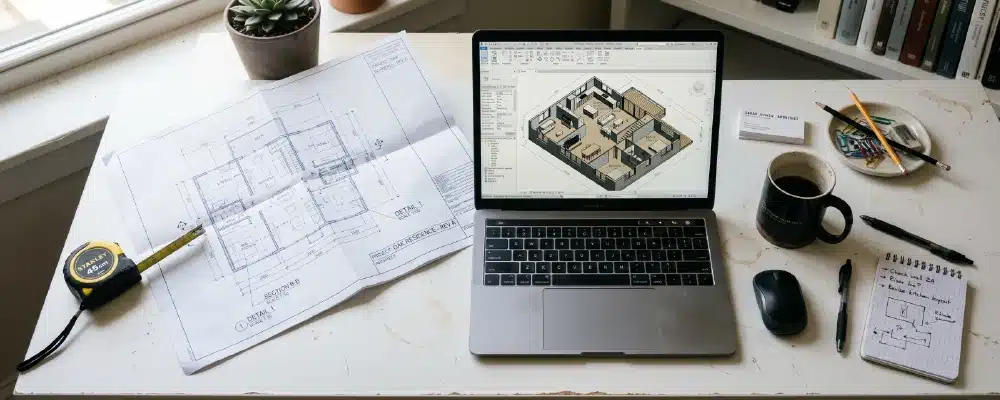
Despite the clear financial benefits, some firm owners remain hesitant. Skeptics of Outsourcing BIM often point to potential communication barriers, time-zone misalignments, and subpar quality control. Let us be incredibly clear: these are absolutely valid concerns if you are trying to cut corners by hiring cheap, unvetted freelancers off a generic gig platform.
But partnering with a premium, specialized BIM agency is an entirely different experience. High-end outsourced partners operate seamlessly as an extension of your own office. They deeply understand US building codes (ICC), AIA standards, and the specific LOD (Level of Development) required at each phase of your project. They speak your language, both literally and architecturally.
Proactive Problem Solving with Advanced BIM Modeling US
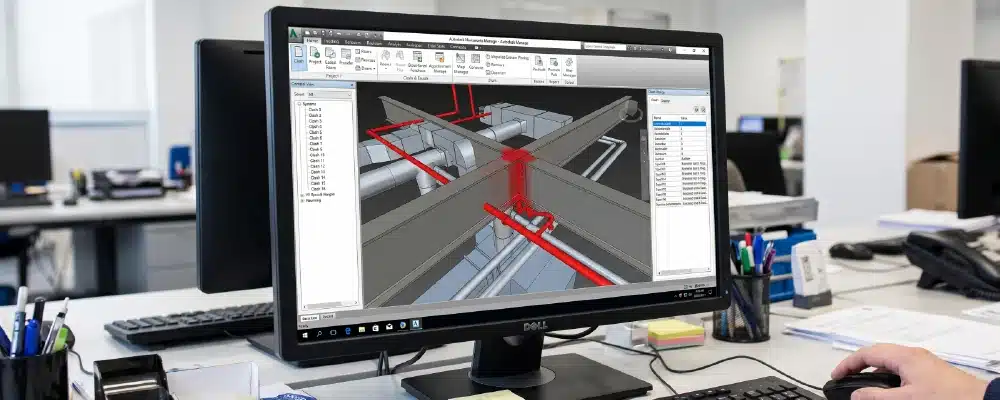
Expert outsourced teams do not just blindly trace 2D lines into 3D spaces; they excel in identifying pre-construction issues before a single shovel hits the dirt. Advanced clash detection is perhaps the greatest return on investment in the entire BIM process. Catching a plumbing pipe intersecting with a major steel beam in a digital model costs nothing to fix. Discovering that same clash on the construction site with crews standing around waiting? That can cost tens of thousands of dollars.
For a deeper dive into this specific technical advantage and how outsourced teams manage complex systems, read our comprehensive guide on Mastering MEP Coordination: How Scan to BIM Prevents Clash Detection Issues in Modern Builds.
According to comprehensive industry research from the Dodge Construction Network, projects with high BIM engagement drastically reduce design errors and omissions, leading to significantly higher ROI and client satisfaction. An elite outsourced team guarantees this high level of engagement without saddling your firm with the associated HR headaches.
Scaling Your Business: BIM for Developers and Home Builders
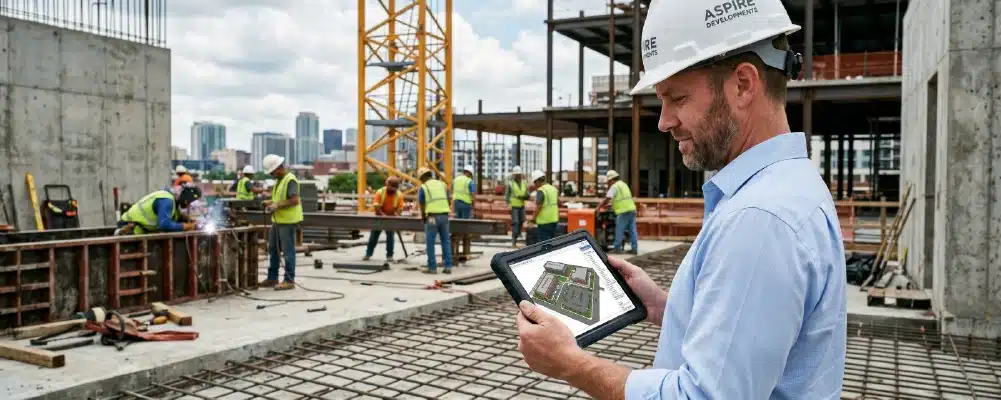
While large architectural firms have utilized BIM for years, a massive shift is occurring among real estate professionals, developers, and home builders. If you are a developer looking to secure funding, or a home builder managing a new suburban tract, adopting BIM is a game-changer.
BIM for developers and home builders allows for incredibly accurate quantity takeoffs. Instead of estimating material costs and padding the budget for “unforeseen circumstances,” an outsourced BIM model can tell you exactly how many cubic yards of concrete or linear feet of timber you need. This precision makes your pro-forma bulletproof when presenting to lenders and investors.
Furthermore, managing the CAD to BIM transition does not have to disrupt your current workflow. Many US builders still rely on 2D CAD drawings. An outsourced partner can take those legacy 2D files, point cloud scans, or simple PDF floor plans, and expertly translate them into intelligent, data-rich 3D Revit models. This seamless CAD to BIM transition is the lowest-risk way to modernize your firm and elevate your deliverables.
Outsourcing BIM: The Smart Way Forward for US AEC Firms
Ultimately, your goal as a US professional in the real estate, architecture, or construction sector is to design beautifully, build efficiently, and relentlessly protect your margins. For massive international corporations managing hundreds of global projects a year, a hybrid model, keeping a small core in-house management team while leveraging an outsourced army for production, often works best.
But for mid-sized architecture firms, developers, custom home builders, and design studios, fully Outsourcing BIM services provides an unbeatable competitive advantage. You gain immediate access to elite architectural talent, state-of-the-art software, and meticulous quality control, all at a fraction of the cost of a full-time hire.
This strategic financial move allows you to stop worrying about software updates, employee turnover, and hardware depreciation. Instead, it frees you up to focus on what actually drives your business forward: designing incredible spaces, closing lucrative deals, networking with clients, and growing your firm’s reputation.
At Xpress Rendering, we understand that your models need to be precise, compliant, and ready for the uncompromising demands of the US market. Our dedicated experts act seamlessly as your back-office BIM department. We deliver flawless CAD to BIM conversions, rigorous clash detection, and stunning architectural visualizations that protect your bottom line and elevate your brand.
Ready to Bring Certainty to Your Construction Pipeline?
Exceptional architecture requires flawless coordination and precise modeling. Do not let complex designs, hidden coordination errors, or the heavy financial burden of in-house overhead eat into your profit margins. At Xpress Rendering, we help top-tier architects, developers, and builders translate intricate designs into intelligent, clash-free BIM models that win pitches, accelerate approvals, and eliminate costly on-site rework.
Outsourcing BIM vs. In-House BIM: Frequently Asked Questions (FAQs)
1. Is Outsourcing BIM cheaper than hiring an in-house modeler in the US?
Yes, significantly. Outsourcing entirely eliminates the hidden costs of full-time employment, including healthcare benefits, payroll taxes, expensive software licenses (like the Autodesk AEC Collection), high-end hardware, and costly employee downtime. You pay only for the productive hours spent directly advancing your project, which often results in a 40% to 60% reduction in total BIM production costs compared to an in-house team.
2. How do outsourced BIM teams handle US building codes and standards?
Top-tier BIM outsourcing agencies specialize specifically in the US market. They strictly adhere to the American Institute of Architects (AIA) standards, the National CAD Standards (NCS), and specific state, municipal, or ICC building codes. Before a project begins, a detailed BIM Execution Plan (BEP) is established to ensure your models are fully compliant and constructible in your specific region.
3. What is the typical turnaround time for an outsourced BIM project?
Turnaround times depend entirely on the project’s scope, scale, and the required LOD (Level of Development). However, outsourced teams almost always deliver faster than in-house teams. Because they can allocate multiple specialized modelers to a single project simultaneously, and utilize time-zone overlaps to create a continuous 24-hour work cycle, deadlines are met with incredible efficiency.
4. How is quality control managed when Outsourcing BIM?
Professional US architecture BIM services employ rigid, multi-layered Quality Assurance and Quality Control (QA/QC) workflows. Before any model or drawing set is delivered to your firm, it undergoes rigorous automated clash detection, manual visual inspections, and compliance checks by senior BIM managers to guarantee absolute precision.
5. Can an outsourced agency handle MEP coordination and clash detection?
Absolutely. In fact, this is one of the most popular outsourced services. Specialized BIM firms excel in complex MEP (Mechanical, Electrical, and Plumbing) coordination. By using advanced tools like Navisworks, they resolve hard and soft clashes in the pre-construction digital phase, saving developers and contractors thousands of dollars in Requests for Information (RFIs) and on-site rework.
6. Is my intellectual property safe when utilizing BIM modeling US services?
Yes. Reputable BIM partners prioritize your data security. They sign strict, legally binding Non-Disclosure Agreements (NDAs) before seeing any project details. Furthermore, they utilize secure, encrypted cloud servers (such as Autodesk BIM 360 or Autodesk Construction Cloud) to ensure your proprietary designs, firm templates, and sensitive client data remain completely protected.
7. How do I transition my current 2D CAD workflows to outsourced 3D BIM?
The CAD to BIM transition is a seamless process when handled by professionals. You simply provide your existing 2D CAD files, PDF blueprints, hand sketches, or point cloud data. The outsourced team then acts as your technical bridge, building accurate, intelligent 3D Revit models from your 2D data. This is a low-risk, highly effective way for traditional firms to fully adopt BIM technology without disrupting their current operations.