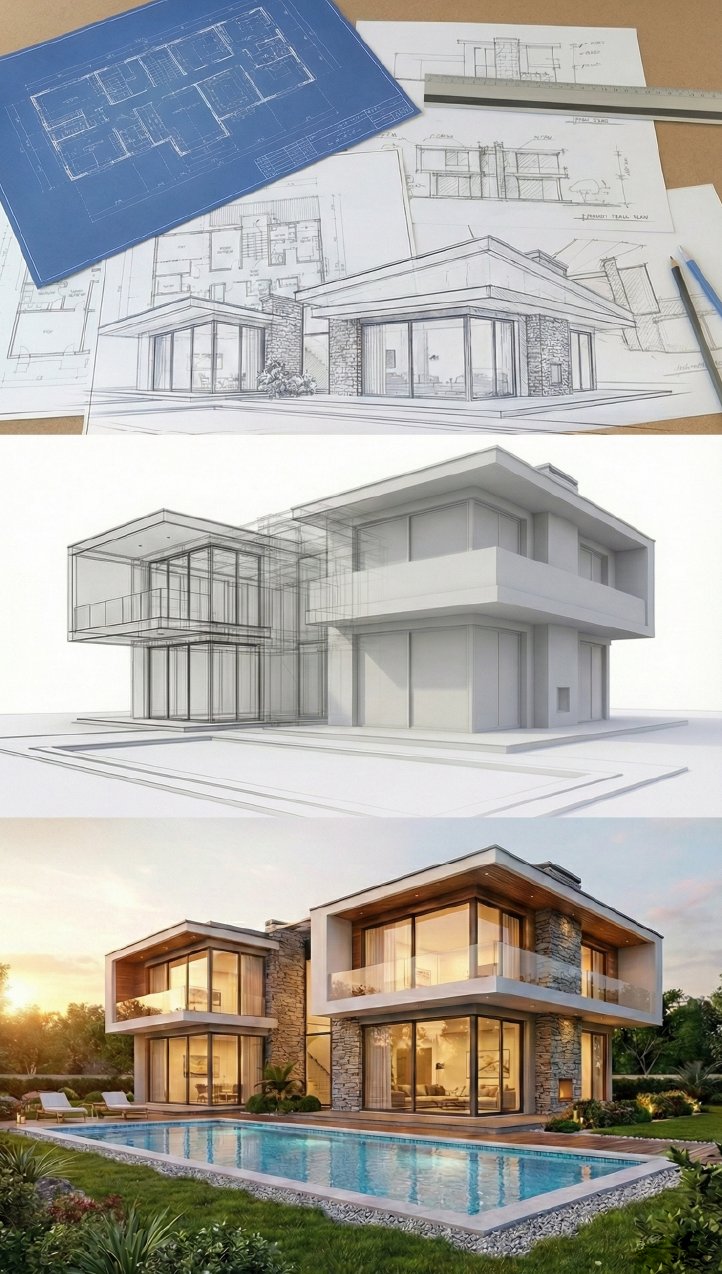
New York City is the world’s biggest architecture showroom, except the “exhibits” are 1,000+ feet tall, the lobby smells like espresso, and the critique happens in real time on the sidewalk. If you’ve ever searched New York Buildings while juggling a deadline, a client call, and a zoning question you didn’t want to ask out loud… welcome. This guide is built for architects, developers, home builders, and interior designers who want more than a tourist checklist.
One credibility stat to set the scale: New York City has 324 buildings over 150 meters (and 102 over 200 meters, 18 over 300 meters). That’s not “a skyline.” That’s a laboratory.
The most famous New York buildings combine skyline-defining height, breakthrough structure, and design storytelling, from Art Deco icons like the Empire State Building (1931) and Chrysler Building (1930) to modern supertalls like 432 Park Avenue (2015) and ultra-slender 111 West 57th Street (2021). Use this guide to understand what makes each landmark work, and borrow those lessons for your own massing, façade rhythm, ground plane, and presentation strategy

Why NYC’s skyline is so iconic (and what pros can learn from it)
New York didn’t just stack towers, it stacked eras. Art Deco silhouettes, Beaux-Arts civic monuments, Modernist “glass box” discipline, and today’s supertall needles all coexist in one dense design ecosystem. The skyline evolved through historical and modern skyscrapers, and NYC popularized and reinvented the skyscraper narrative through successive waves of innovation.
For working professionals, the value is practical: NYC is a living catalog of patterns you can reuse in your own projects:
-
Setbacks + silhouette control (massing that reads clearly at distance)
-
Façade rhythm (repetition that feels intentional, not monotonous)
-
Ground-plane strategy (plazas, retail edges, and entries that “sell” the building at street level)
-
Program stacking (where structure, core logic, and revenue strategy meet)
-
Interior moments (daylight, circulation, and that one signature view clients remember)
If you’re studying NYC famous buildings for inspiration, don’t just ask “Is it iconic?” Ask: What decision made it inevitable?
Famous New York Buildings (curated list with architecture highlights)
Empire State Building (Art Deco icon)
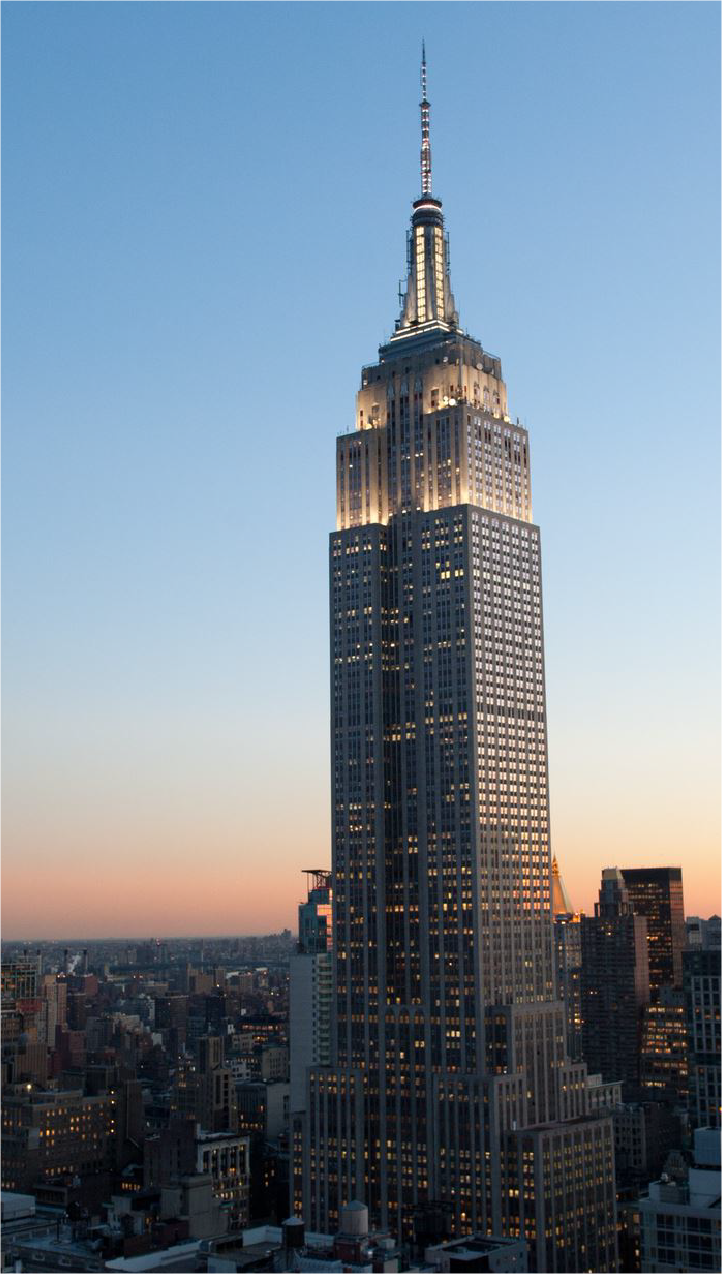
The Empire State Building is the definition of “reads well from any distance.” Its stepped massing turns zoning-era setbacks into a silhouette that still feels crisp in 2026, clean vertical lines, strong crown, and a base that anchors the tower instead of apologizing for it. For anyone studying New York Buildings, this is the tower that teaches you how to make a big volume feel elegant: the eye moves upward naturally, guided by rhythm and proportion rather than gimmicks.
From a developer and builder lens, the real lesson is clarity. The Empire State is a masterclass in designing a recognizable profile that performs across every medium: street view, skyline view, marketing image, and hero rendering. If you’ve ever presented a concept and heard, “It looks… tall, I guess?”, this building is the opposite of that problem.
Fast facts
-
Completed: 1931
-
Architects: Shreve, Lamb & Harmon
-
Style: Art Deco

Chrysler Building (Art Deco, NYC’s chrome crown)
The Chrysler Building doesn’t just sit in the skyline, it performs. Its crown is ornament, engineering, and branding all at once, turning a corporate identity into architecture without relying on signage. The layered arches and metallic sheen read like a skyline signature, which is exactly why it remains one of the most photographed NYC famous buildings even when it’s not the tallest thing around.
For architects and interior designers, it’s a reminder that detail can be the concept, not decoration. The Chrysler shows how material expression and craft can create emotion at city scale. It’s also a lesson in “one unforgettable move”: if your project has a single moment people can describe from memory, your design becomes easier to sell, easier to approve, and harder to ignore.
Fast facts
-
Completed: 1930
-
Architect: William Van Alen
-
Style: Art Deco

Woolworth Building (Neo-Gothic skyscraper energy)
The Woolworth Building is what happens when a skyscraper dresses like a cathedral and somehow pulls it off. It’s historic language wrapped around modern vertical ambition, Neo-Gothic detailing used to give early height a sense of legitimacy and permanence. This is one of those New York Buildings that proves skyline drama existed long before glass curtain walls made it look effortless.
From a practical standpoint, it’s a study in how style can manage perception: a tall building can feel more “human” when the façade carries recognizable patterns and scale cues. If your project needs to read as timeless, especially in established neighborhoods, Woolworth is the reminder that architectural storytelling can reduce resistance before a single stakeholder meeting begins.
Fast facts
-
Opened: 1913
-
Architect: Cass Gilbert
-
Style: Neo-Gothic

Rockefeller Center / 30 Rockefeller Plaza (the “city within a city” move)
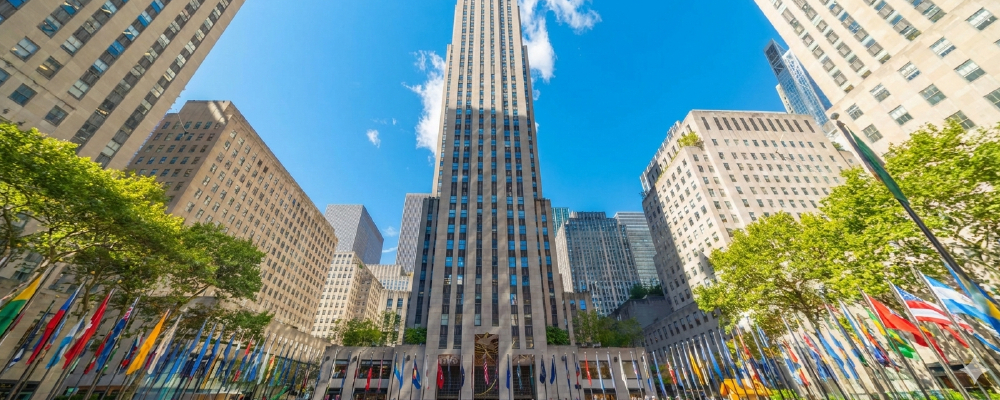
Rockefeller Center is the quiet flex of Midtown Manhattan architecture: a master-planned ensemble that works like a mini-city. The genius isn’t only the tower, it’s the choreography of buildings, plazas, and pedestrian energy. Instead of treating the ground plane as leftover space, Rockefeller uses it as the “front porch” of the project, which is exactly why it still feels relevant to modern mixed-use development.
For developers, this is the playbook: combine program diversity with a public realm people actually want to occupy. For designers, it’s a reminder that the experience begins long before the lobby, at the curb, the corner, the canopy, the plaza. If you’re designing something big, this precedent whispers a useful truth: a project becomes iconic when it’s not just a building, but a destination.
Fast facts
-
30 Rockefeller Plaza completion: 1933
-
Lead architect (30 Rock): Raymond Hood
-
Big idea: master-planned mixed-use + public space
Flatiron Building (the original “viral building”)
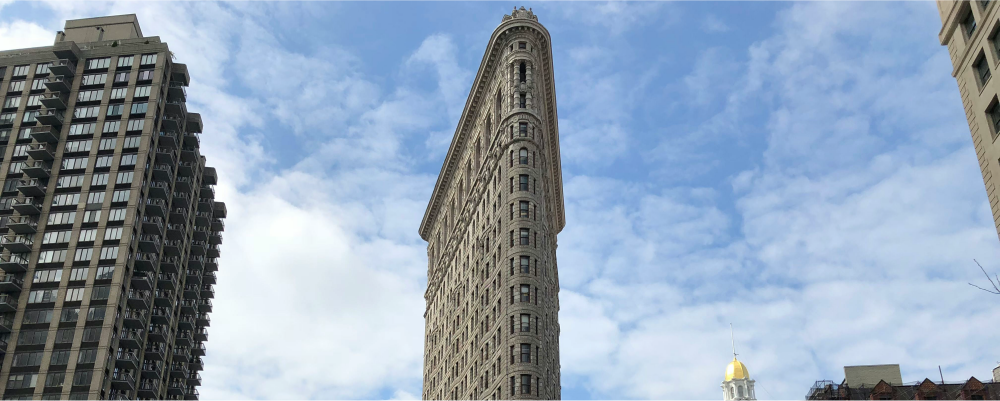
The Flatiron Building is proof that constraints are not the enemy, they’re the marketing department. Built on a wedge-shaped site, it turns a tricky geometry into an instantly recognizable form. You don’t have to be an architect to remember it, which is exactly why it has always functioned like a landmark. In the universe of NYC famous buildings, Flatiron is the early example of “shape = identity.”
For project teams today, the takeaway is simple: solve the site honestly and the design can become inevitable. If your parcel is awkward, your setbacks are severe, or your frontage is weird, you don’t need to hide it. Flatiron shows how a bold, rational response can become the story, something that’s incredibly valuable when you’re pitching stakeholders who want confidence, not complexity.
Fast facts
-
Completed: 1902
-
Architect: Daniel Burnham
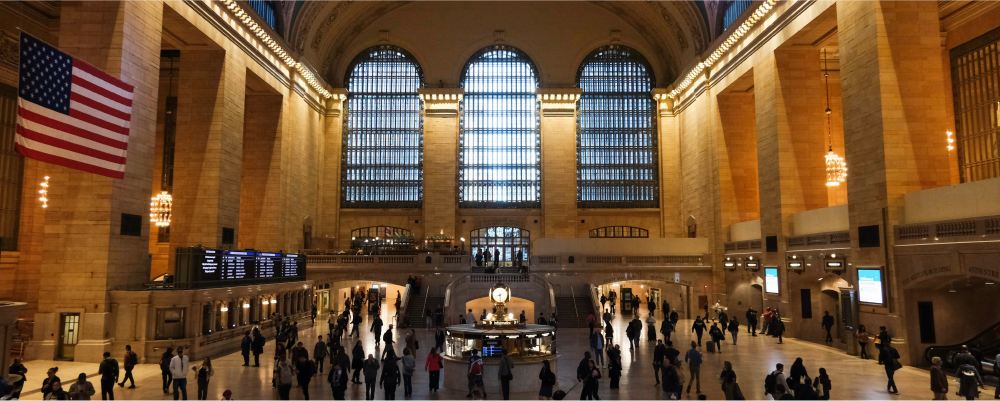
Grand Central Terminal (where circulation becomes architecture)
Grand Central is an interior design case study wearing a city-scale suit. It takes movement, arrivals, departures, crossings, waiting, and turns it into a spatial experience that feels ceremonial without being precious. The building teaches you how to design “flow” so that it’s intuitive and dramatic at the same time, which is why it’s still a reference point for airports, transit hubs, and large lobbies everywhere.
For architects and developers, the lesson is how experience drives value. Grand Central doesn’t rely on a single feature; it relies on sequence: compression, release, sightlines, and the sense that you’re part of something bigger than your commute. If your project involves public-facing interiors, this is your reminder that great circulation isn’t just functional, it’s brand-building.
Fast facts
-
Opened: 1913
-
Architect teams: Reed & Stem; Warren & Wetmore
New York Public Library (Stephen A. Schwarzman Building)
The NYPL is what “timeless” looks like when it’s done with restraint. Its exterior communicates civic importance without trying to compete with the skyline, and its interior atmosphere is a masterclass in proportion, quiet grandeur, and material calm. For interior designers especially, this building proves that a space can feel luxurious without being loud, light, symmetry, and texture do the heavy lifting.
From a practical perspective, it’s also a lesson in designing for longevity. Libraries have changing programs, evolving technology, and unpredictable traffic patterns, yet this building maintains dignity because its fundamental spatial structure is strong. For anyone designing institutional or public interiors, this is one of those New York Buildings you study to understand how to future-proof experience.
Fast facts
-
Dedicated/opened: 1911
-
Architects: Carrère and Hastings

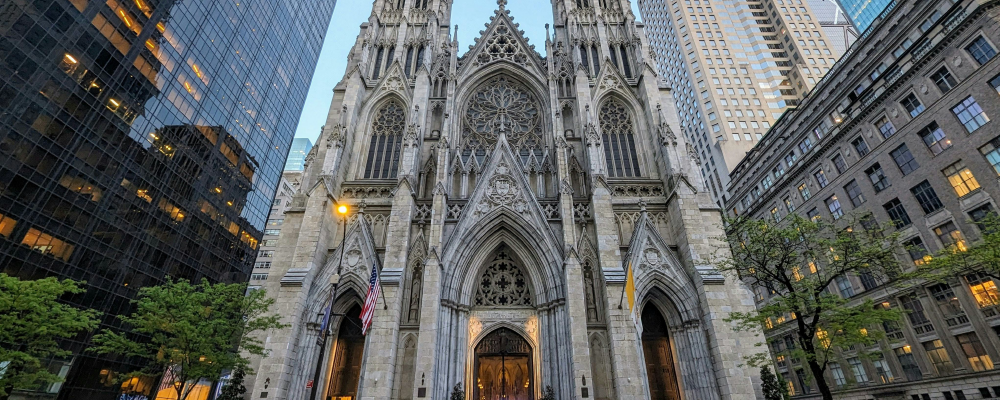
St. Patrick’s Cathedral (Gothic Revival landmark)
St. Patrick’s Cathedral delivers what contemporary projects often chase: instant emotion. The verticality, the detail, and the way light interacts with the architecture create a natural pause in the city’s pace. Even people who don’t care about architecture walk in and lower their voice, an unspoken sign that the building is doing its job.
For designers, this is a reminder that atmosphere is a design outcome you can engineer: proportion, rhythm, material, and light create feeling. For builders and developers, it shows why craft matters. When a building is made with intention, it becomes culturally protected, something the city will fight to maintain. That’s the long game of iconic work.
Fast facts
-
Opened: 1879
-
Architect: James Renwick Jr.
-
Style: Gothic Revival
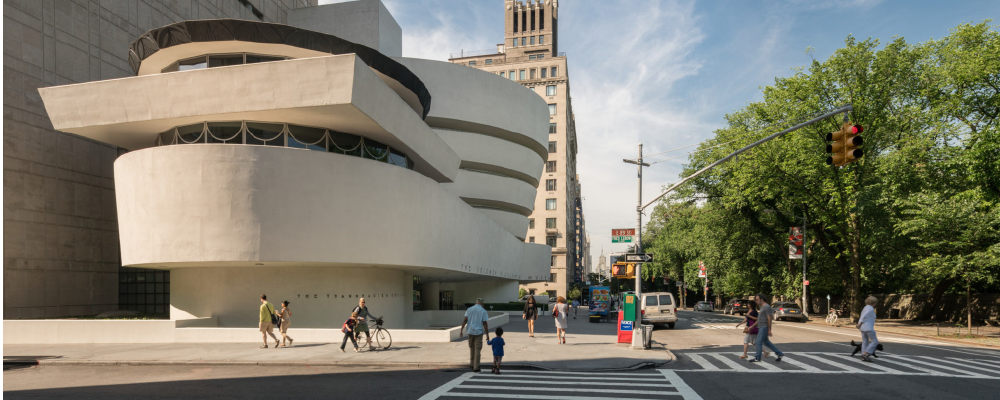
Solomon R. Guggenheim Museum (form that is the experience)
The Guggenheim is what happens when the circulation is the concept. Frank Lloyd Wright didn’t design a neutral container for art, he designed a spatial narrative. The spiral ramp pulls you through the museum like a slow reveal, turning movement into a curated experience. As far as NYC famous buildings go, this is the one that teaches you how architecture can guide behavior without signs shouting at people.
For architects and interior designers, it’s also a lesson in conviction. The building makes a strong formal decision and commits to it fully, materials, geometry, and spatial logic all align. In client terms, this is the building that proves the value of a single, clear idea. When your concept is truly coherent, it becomes easier to communicate, easier to defend, and easier to remember. Learn more about this building in our article “Guggenheim Museum Architecture: A Revolutionary Design by Frank Lloyd Wright”.
Fast facts
-
Opened: 1959
-
Architect: Frank Lloyd Wright
Seagram Building (Modernism’s NYC rulebook)
The Seagram Building is disciplined elegance. Its Modernist logic, clean proportions, refined façade rhythm, and a deliberate relationship to the street, still feels premium because it avoids visual noise. The plaza strategy is the move: it creates breathing room in Midtown and turns “less built area” into more perceived value. That’s a developer lesson hiding in plain sight.
For architects, Seagram is also a reminder that detailing is not optional when the design is minimal. When you remove ornament, every joint, proportion, and reflection becomes the ornament. If you’re designing contemporary commercial work, this is one of the New York Buildings that teaches how precision becomes luxury. Learn more about this building in our article “Seagram Building: The Glass-and-Steel Icon That Redefined Modern Skyscrapers”.
Fast facts
-
Built: 1956-58
-
Designers: Ludwig Mies van der Rohe with Philip Johnson

New York buildings, The modern skyline: supertalls + megaprojects
One World Trade Center (resilience + symbolism)
One World Trade Center is a modern landmark where meaning is part of the brief. It’s not just a tall building; it’s a skyline statement with a civic role. The lesson for architects and developers is how public expectation shapes design decisions, form, presence, and performance all carry symbolic weight. In other words: sometimes your building has more stakeholders than your contract list suggests.
From a project workflow standpoint, it’s also a strong argument for clarity in communication. When a building represents more than its program, approvals and public perception matter even more. That’s why strong visualization, massing studies, skyline views, and street-level realism, becomes essential for alignment.
Fast facts
-
Completed: 2014
-
Architect: David Childs (SOM)
-
Height (with spire): 1,776 ft

30 Hudson Yards (Hudson Yards mega-development anchor)
30 Hudson Yards is development at district scale: not a single tower, but a piece of a larger value proposition. The building participates in a master plan where office, retail, transit adjacency, and destination experiences work together. The architecture reads like an anchor, stable, confident, and designed to hold attention in a neighborhood built for attention.
For architects and developers, the takeaway is program storytelling. Hudson Yards isn’t sold as “a building.” It’s sold as an ecosystem. If your project includes multiple uses, this is a reminder to design the narrative early: what’s the hero view, what’s the pedestrian experience, and what’s the signature moment that makes the district feel inevitable?
Fast facts
-
Completed: 2019
-
Architect: Kohn Pedersen Fox (KPF)

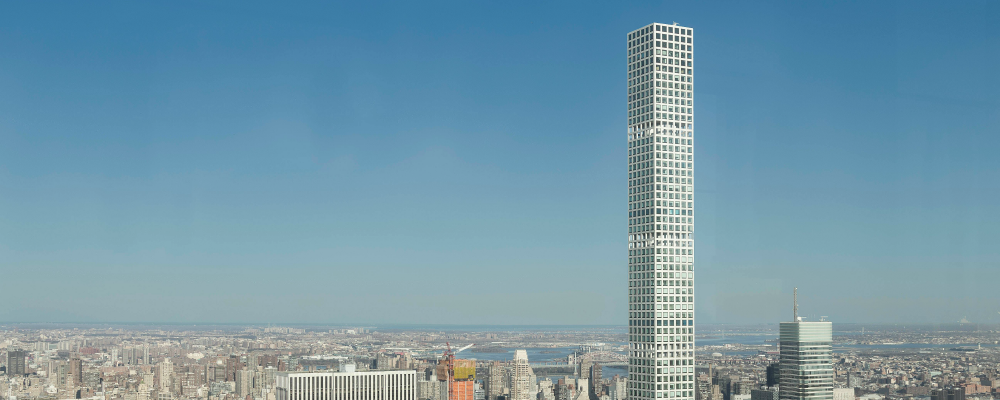
432 Park Avenue (the pencil tower era)
432 Park Avenue is a pure geometry statement: the square becomes a skyline needle. It’s one of those NYC famous buildings that people either admire or argue about, often both in the same sentence. Architecturally, it shows how extreme verticality can be expressed through disciplined repetition, while engineering realities (like wind behavior) influence everything from structure to façade openings.
For professionals, the real lesson is about perception and context. A supertall doesn’t only change the skyline; it changes conversations around it. If you’re designing high-profile work, 432 Park is the reminder that your project will be evaluated as an object, a symbol, and a neighbor. That means you need a strong narrative for why the design looks the way it looks, and how it contributes to the city.
Fast facts
-
Opened: 2015
-
Architect: Rafael Viñoly
111 West 57th Street (Steinway Tower)
111 West 57th Street is the skyline equivalent of a tightrope walk: elegant, extreme, and almost suspiciously slender. It pairs a refined base with an ultra-thin tower that reads like a precision instrument. For architects, this is a case study in proportion and restraint, how to make an audacious engineering feat feel composed rather than chaotic.
For designers and developers, it’s also a lesson in “luxury through specificity.” The building doesn’t try to be everything to everyone; it’s designed with a clear audience and a clear identity. That’s why it photographs well, reads clearly in skyline renderings, and feels distinct in a city full of ambitious shapes. Learn more about this building in our article “111 West 57th Street: The Architectural Secrets Behind the World’s Thinnest Skyscraper”.
Fast facts
-
Completion: 2021
-
Architect: SHoP Architects

270 Park Avenue (JPMorgan Chase HQ)
270 Park Avenue represents a modern corporate tower that’s expected to do more than look good. It’s about performance, workplace logic, and long-term adaptability, while still holding its own in Midtown Manhattan architecture. In the current era, the “iconic” office building has to sell efficiency and experience at the same time: a tough brief, especially in New York.
For architects and developers, the bigger lesson is how the office typology keeps evolving. Tenant expectations, sustainability targets, and operational flexibility now shape massing and façade decisions earlier than many teams expect. If you’re designing commercial work, this tower is a reminder that the business model and the architecture are no longer separate conversations, they’re the same meeting. Learn more about this building in our article “270 Park Avenue Architecture: How JPMorgan’s New Tower Redefines New York’s Skyline”.
Fast facts
-
Opened: October 20, 2025
-
Architect: Foster + Partners

NYC building reality check (permits, codes, façades): use DOB as your compass
If you’re developing, renovating, or even just researching New York Buildings beyond the postcard version, the NYC Department of Buildings (DOB) site is the practical compass: permits, inspections, and the documentation trail that keeps a project real.
A few workflows that matter in the real world:
-
Certificates of Occupancy (CO/TCO): A CO states the legal use/occupancy, and DOB outlines requirements and how to search records via BIS and DOB NOW.
-
Façade inspection culture (FISP / Local Law 11): For buildings over six stories, DOB describes recurring inspection cycles, reporting, and filings through DOB NOW: Safety—one reason NYC buildings “age differently” than in many markets.
For architects and developers, this is also why clarity wins: approvals and compliance are easier when stakeholders can see exactly what’s proposed.
Sustainability lens
Iconic doesn’t only mean tall. In 2026, “famous” is increasingly tied to performance, energy, comfort, embodied carbon, long-term adaptability, and how a building behaves after the ribbon-cutting.
If you want a strong next read (especially if you’re pitching forward-looking clients), check out Xpress Rendering’s internal feature: “10 Groundbreaking Sustainable Architecture Projects Shaping the Future of Architectural Design.” It’s a global inspiration set that complements this NYC guide, perfect for architects and developers who want precedent beyond Manhattan.
New York Buildings: 3D Visualization takeaway
Here’s the quiet truth behind many NYC famous buildings: big projects move forward when the right people align early, community boards, investors, internal stakeholders, lenders, and end buyers. And alignment usually happens faster when everyone is reacting to the same visual reality.
If you’re presenting a new tower concept, a façade redesign, a lobby/interior package, or a high-stakes development pitch, photoreal visuals reduce friction: fewer misunderstandings, faster approvals, stronger pre-sales, and fewer late-stage reversals.
Get a Quote or learn more about our 3D Rendering Services.
New York Buildings (FAQs)
-
What are the most famous New York buildings?
A strong starter list of NYC famous buildings includes: Empire State Building, Chrysler Building, One World Trade Center, Grand Central Terminal, Rockefeller Center, the Guggenheim Museum, the Seagram Building, the Woolworth Building, and St. Patrick’s Cathedral.
-
Why is the NYC skyline considered one of the most iconic in the world?
Because NYC layered multiple skyscraper eras, historic icons and modern supertalls, into one dense skyline that functions like a museum and a lab at the same time.
-
How many skyscrapers does New York City have?
By CTBUH/SkyscraperCenter city data, New York City has 324 buildings 150m+, including 102 buildings 200m+ and 18 buildings 300m+.
-
What building styles define New York buildings the most?
Common “New York Buildings” style families include Art Deco (Empire State, Chrysler), Beaux-Arts civic landmarks (NYPL, Grand Central), International Style/Modernism (Seagram), plus contemporary supertalls and megaprojects (Hudson Yards, 432 Park, 111 West 57th).
-
What’s the difference between “iconic” buildings and “tallest” buildings in NYC?
“Iconic” means cultural + architectural impact (Grand Central is iconic without being a supertall). “Tallest” is a metric. Many overlap, but not always.
-
Where do developers and architects check NYC permits and building requirements?
Start with the NYC Department of Buildings (DOB) site, including tools like BIS and DOB NOW for records, job status, and compliance workflows such as CO searches and façade filings.
-
How can 3D rendering help when designing or marketing New York buildings?
3D rendering helps teams align faster, present options clearly (massing, façade, interiors), and strengthen approvals and pre-sales, especially when stakeholders need to “see it” now rather than interpret drawings under pressure.
Conclusion About Famous New York Buildings
New York Buildings aren’t iconic by accident. Each landmark in this guide proves that great projects win when massing is clear, structure supports the story, and the ground plane is treated like the first presentation slide. Whether you’re studying Midtown Manhattan architecture for precedent, refining an interior concept, or pitching a development, the real takeaway is simple: the best NYC famous buildings communicate their intent instantly. Use these references as a toolkit, borrow what works, and make your next proposal feel inevitable.