Quick Summary
In the highly competitive US real estate market, leaving your project’s visual appeal to the imagination is a costly mistake. This comprehensive guide explores the best practices in Exterior Architectural Visualization, tailored specifically for architects, developers, and builders. From mastering the psychological impact of lighting to leveraging geographically accurate context for zoning approvals, these strategies will help you sell the dream before breaking ground. Discover how top-tier residential 3D rendering and commercial property rendering techniques can secure investor buy-in, accelerate pre-sales, and transform complex blueprints into irresistible, photorealistic masterpieces.
Let’s face it: in today’s cutthroat United States real estate market, trying to sell a multi-million-dollar development off a standard 2D blueprint is like trying to sell a luxury sports car by handing the buyer an engineering manual. Buyers, seasoned investors, and stringent zoning boards do not just want to see the math, they want to feel the space. They want to know what it is like to pull into the driveway, walk through the front doors, and experience the lifestyle your project promises.
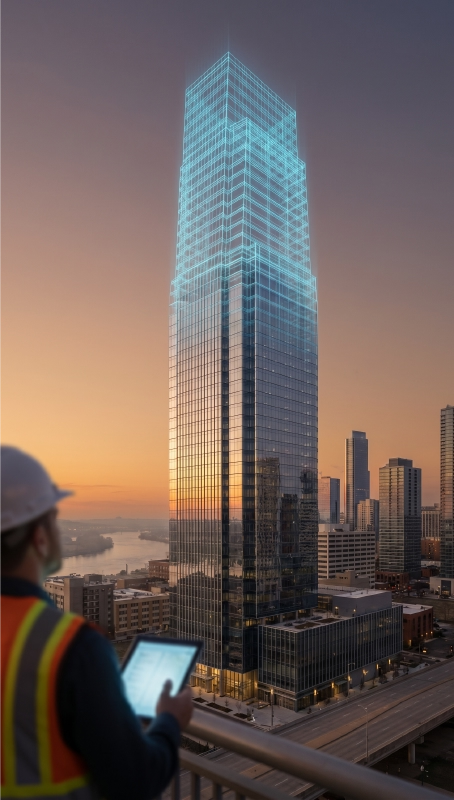
As developers and architects continuously push the boundaries of modern design, exterior architectural visualization has evolved from a simple “nice-to-have” marketing asset into the ultimate, undisputed deal-closer. Whether you are pitching a sleek, glass-clad high-rise condo in Miami or a sprawling, master-planned eco-community in the heart of Texas, the quality of your visual assets directly dictates the perceived value of your entire project.
Drawing from the intersection of rigorous architectural precision, AI-enhanced rendering technology, and high-converting marketing psychology, here are the best practices every developer must demand from their workflows to dominate the market.
1. Master the Narrative with Strategic Lighting and Mood
A building never exists in a vacuum, and neither should its digital representation. The most successful builders and marketers know that lighting is the fastest, most effective way to trigger an emotional response from an audience. You are not just showing a structure; you are selling a specific moment in time.
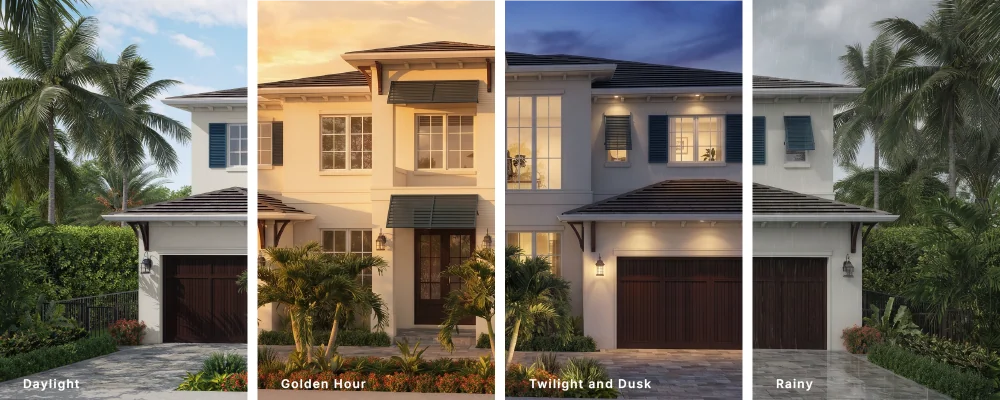
When planning your architectural visualization for developers, consider these distinct lighting strategies:
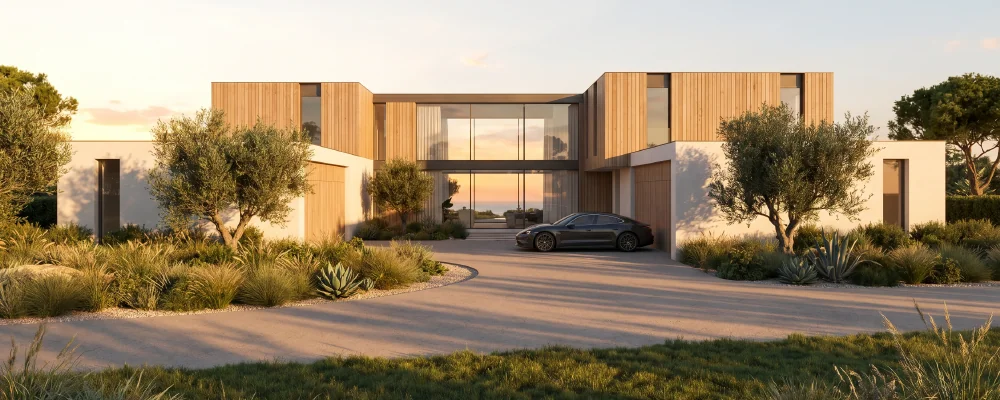
- The “Golden Hour” Approach: This is the absolute sweet spot for residential 3D rendering and suburban family communities. The warm, inviting, amber sunlight casts soft shadows and creates an undeniable sense of home, warmth, and belonging. It tells the buyer, “This is where your family will thrive.”
- Twilight and Dusk: If you are marketing luxury commercial property rendering or high-end urban condos, dusk is your best friend. This lighting highlights sophisticated exterior lighting design, showcases glowing interior windows against a deep blue sky, and evokes a premium, exclusive, and vibrant nightlife lifestyle.
- Overcast or Rainy Moods: While it might sound counterintuitive, an overcast or slightly moody atmosphere can be incredibly effective for highly architectural, avant-garde pieces. It is often used in competitive design pitches to stand out from a sea of overly sunny images, forcing the viewer to focus on the raw geometry and materials of the building itself.
2. Embrace “Perfect Imperfection” with PBR Materials
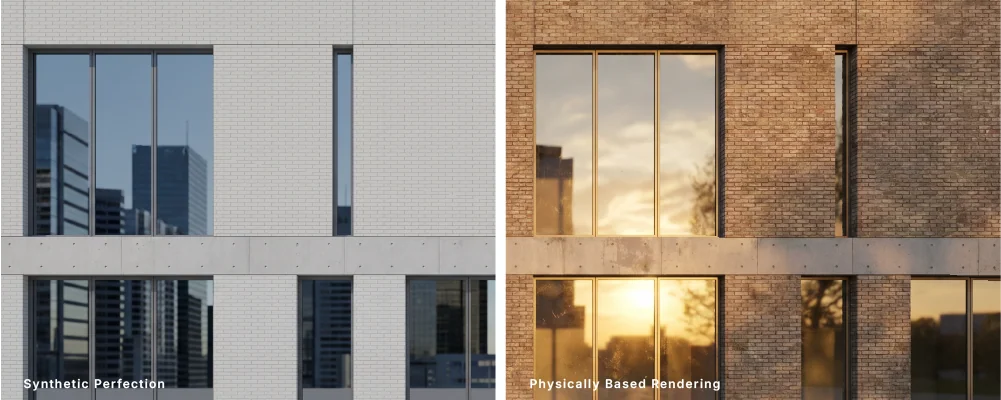
The human eye is remarkably skilled at spotting “fake” digital images. When an exterior looks plastic, overly sterile, or impossibly clean, a subconscious alarm goes off in the viewer’s brain, and trust is instantly broken. In the realm of high-end real estate 3D rendering US, perfection is actually the enemy of realism.
Top-tier studios utilize Physically Based Rendering (PBR) materials to ensure light bounces off digital surfaces exactly as it would in reality. This scientific approach means deliberately incorporating micro-imperfections into the model. Think about subtle weathering on a brick facade, slight color variations in poured concrete textures, or the natural, slightly uneven sheen of large glass panels.
As artificial intelligence continues to optimize modern rendering workflows, the ability to generate hyper-realistic, high-definition textures is moving faster than ever before. To see how these technological leaps are actively reshaping the construction and design industry, check out our comprehensive guide on the Top 5 Architectural Visualization Trends.
3. Leverage Geographically Accurate Context
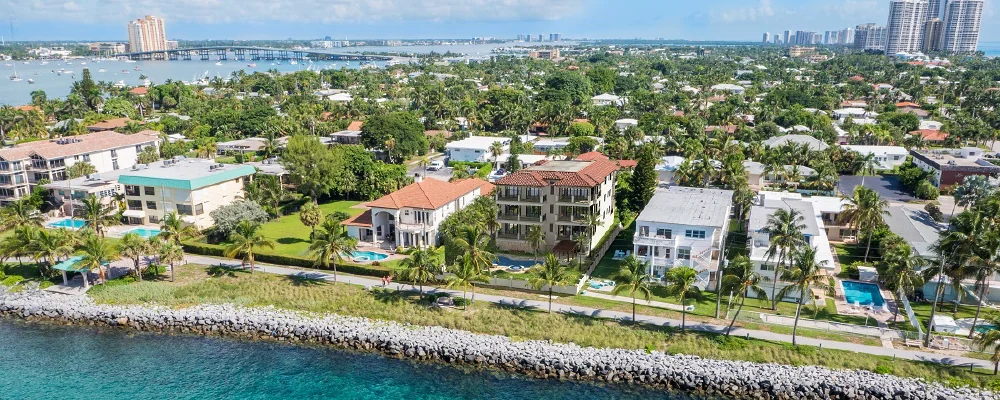
Placing a generic oak tree next to a Florida beachfront development or a palm tree in the middle of a Colorado ski resort instantly kills your project’s credibility. Real estate is fundamentally hyper-local, and your exterior architectural visualization must accurately reflect the specific environment.
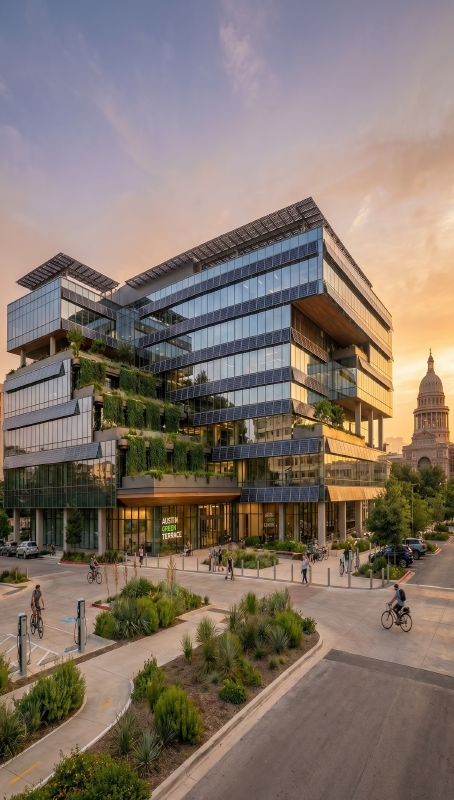
Integrating your 3D model into actual drone photography, a process known as photomontage, grounds your project in undeniable reality. It shows investors exactly what the views will be and how the building sits within the existing neighborhood. Furthermore, accurate landscaping and topographical context are crucial when seeking green building certifications.
According to the U.S. Green Building Council (USGBC), demonstrating clear, contextual integration of sustainable design elements is a fundamental component of modern LEED-certified developments. Your rendering should visibly and proudly prove how your building interacts harmoniously with its natural surroundings, from local flora to solar orientation.
4. Curate Your “Entourage” Strategically
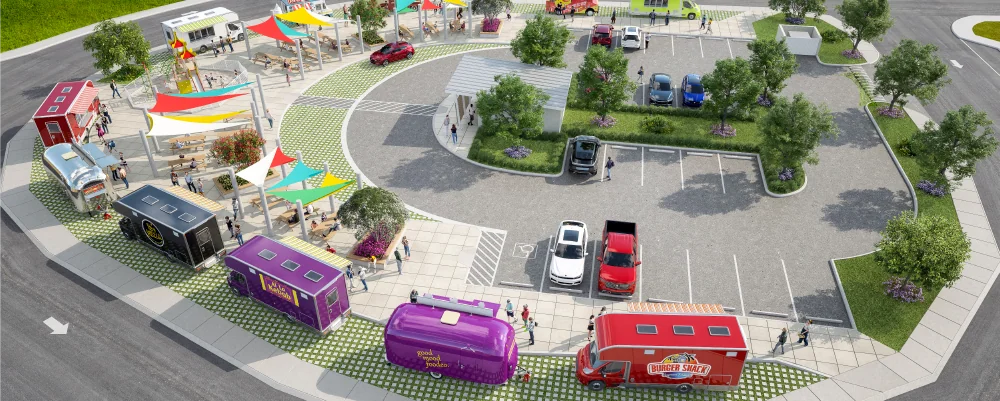
In the 3D rendering world, “Entourage” refers to the people, vehicles, pets, and lifestyle elements strategically placed within a scene to give it life. The golden rule here is simple: Showcase your exact target demographic, but never let them distract from the architecture.
If you are developing a cutting-edge, tech-hub commercial plaza in California, you should populate the scene with modern professionals, subtle electric vehicles, and an active, bustling streetscape. If you are selling a quiet retirement community in Arizona, show relaxed couples enjoying the walking paths. The entourage sets the physical scale of the building while simultaneously telling the buyer exactly who this space is built for. It is a subtle psychological cue that makes the viewer think, “These are my people, and this is my place.”
5. Streamline Zoning Approvals with Indisputable Visual Proof
Anyone who has developed property in the United States knows that city councils, zoning boards, and neighborhood associations are notoriously risk-averse. They need to know exactly how a proposed structure will impact the existing skyline, traffic flow, and overall neighborhood aesthetics before they hand over a permit.
High-fidelity exterior renderings bridge the massive communication gap between technical architects and non-technical community stakeholders. By presenting an indisputable, photorealistic vision of the finished product, developers can dramatically reduce friction, mitigate “Not In My Backyard” (NIMBY) complaints, and speed up the approval process.
In fact, extensive research from the National Association of Realtors (NAR) consistently highlights how highly visual property data and virtual tours are paramount for buyer, investor, and stakeholder comprehension. When people can see the future clearly, they are much less likely to fear it.
6. The Art of Choosing the Right Camera Angle
A beautiful building shot from a terrible angle is still a terrible rendering. The camera placement in your exterior architectural visualization dictates the entire story of the image.
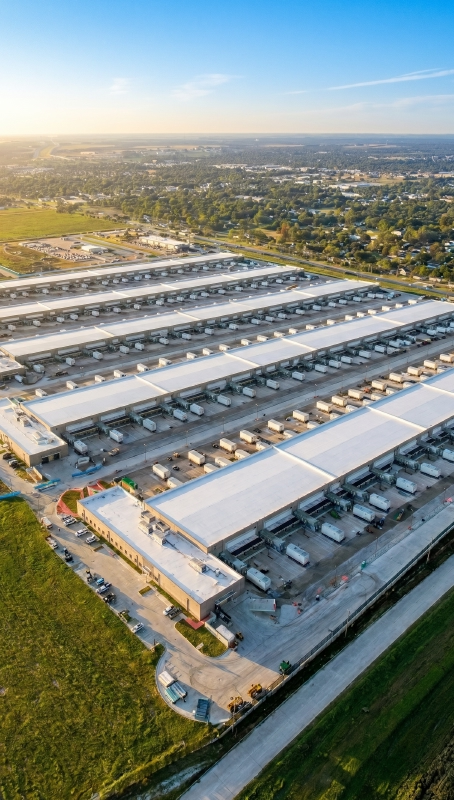
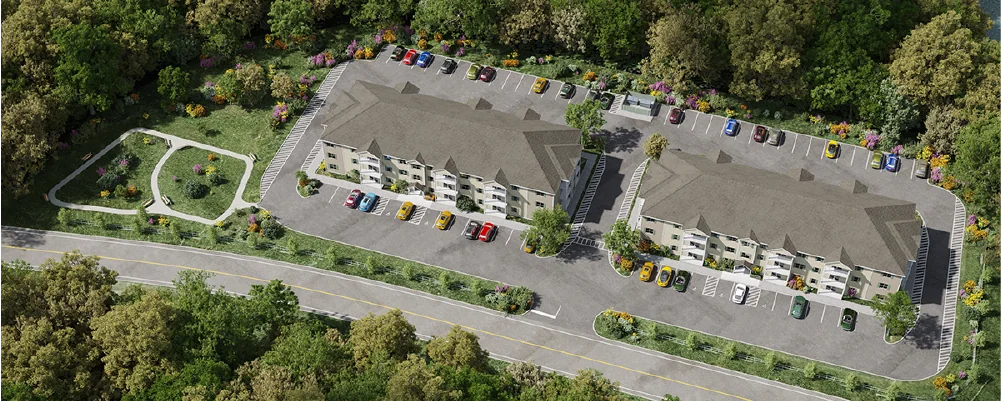
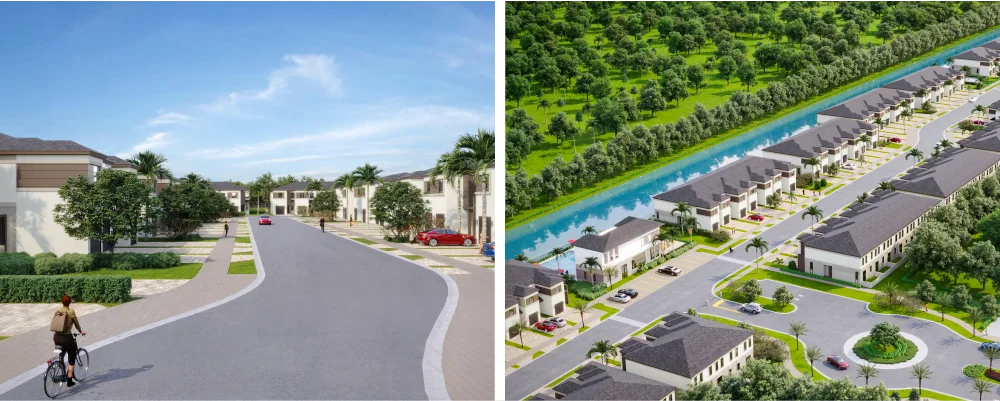
The “Hero Shot” is typically placed at a pedestrian eye-level (around 5.5 feet off the ground). This simulates what a person walking down the street will actually experience, creating an immediate sense of scale and approachability. Conversely, aerial and bird’s-eye views are absolute necessities for large-scale developments, allowing investors to understand the master plan, parking logistics, and proximity to major highways or local landmarks.
A professional studio will know how to mix these angles to provide a complete, compelling package that answers every question an investor or buyer might have.
7. Protect Your Investment by Hiring the Right Team
Achieving this elite level of visual accuracy requires partnering with a studio that deeply understands the nuances of construction, architectural drafting, and intelligent workflows like BIM visualization services.
The market is flooded with cheap, overseas freelancers who can make a generic pretty picture, but lack the technical knowledge to read complex blueprints or understand US building codes. This often leads to endless, frustrating revision loops and missed deadlines. Before outsourcing your next big investor pitch, make sure you know exactly How to Choose the Right 3D Rendering Company. Working with dedicated teams that employ structured, certified project management ensures your critical marketing assets are delivered flawlessly, accurately, and strictly on schedule.
Ready to Bring Your Vision to Life?
Stop losing investors to flat, uninspiring 2D presentations. At Xpress Rendering, we blend deep architectural expertise with cutting-edge 3D technology to create breathtaking exterior architectural visualization that sells your projects before ground is even broken. Whether you need photorealistic twilight shots for a luxury condo or massive aerial master plans for a new community, our expert team is ready to deliver.
Exterior Architectural Visualization: Frequently Asked Questions (FAQs)
1. What exactly is exterior architectural visualization?
It is the professional process of creating highly accurate, photorealistic 3D images or animations of the outside of a building before it is physically constructed. It is widely used by US developers, architects, and real estate agents for marketing campaigns, high-stakes investor pitches, and securing city zoning approvals.
2. How much do professional 3D exterior rendering services cost in the US?
Pricing varies heavily based on the complexity, size, and level of detailing required. A standard residential exterior might range from $400 to $800 per view. However, large-scale commercial developments, master-planned communities, or complex aerial drone photomontages can range from $1,000 to over $3,000 per image. Every project is unique and prices vary. If you want to know how much your project might cost, get a personalized quote here.
3. What files do I need to provide to start an exterior rendering project?
To ensure the most accurate and fastest result, you should provide complete architectural drawings (CAD files, PDF floor plans, and elevations), a detailed material schedule (including exact colors, textures, and finishes), and any specific landscaping or lighting preferences. Providing comprehensive BIM models (like Autodesk Revit) can also heavily speed up the workflow.
4. How long does it take to create a high-quality exterior 3D render?
For standard residential projects, a high-quality initial draft can typically be turned around in 3 to 5 business days. Much larger commercial property rendering developments or complex 3D animations may take 2 to 6 weeks, depending entirely on the speed of client feedback and the required revision cycles.
5. Why is 3D rendering better than traditional architectural hand sketches?
While hand sketches are fantastic for early conceptualization and brainstorming, 3D renderings offer undeniable physical accuracy. They display real-world lighting conditions, precise material textures, and exact mathematical scale. This builds significantly more trust with investors and buyers who usually struggle to mentally visualize a three-dimensional space from flat 2D drawings.
6. Do rendering studios use AI in architectural visualization?
Yes, forward-thinking studios seamlessly integrate AI tools to enhance their human-led workflows and generate conceptual design ideas. AI is used to rapidly generate hyper-realistic material textures, seamlessly upscale resolutions, populate background entourage, and optimize heavy post-production processes, ultimately delivering faster and more striking results to developers.
7. Can exterior architectural visualization really help with zoning board approvals?
Absolutely. By presenting a photorealistic, geographically accurate image of how a new development will blend with the existing neighborhood, developers can effectively and instantly address community concerns regarding building massing, scale, and aesthetic impact. Visual proof is the fastest way to overcome objections and secure faster permit approvals.