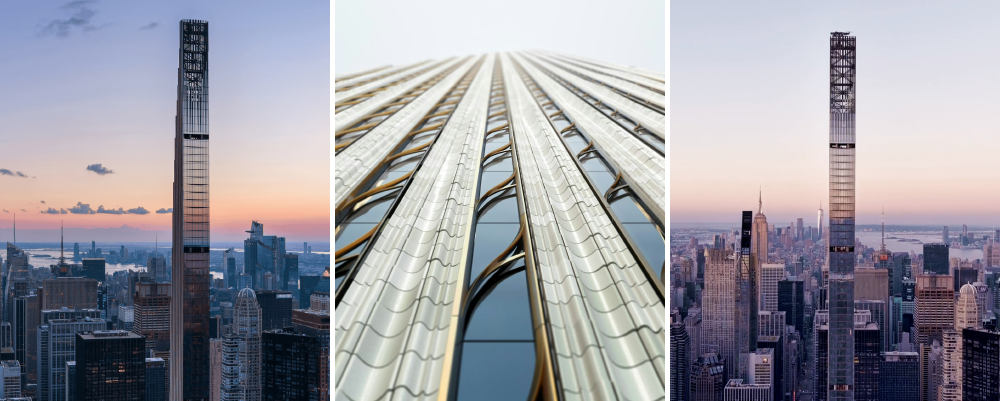
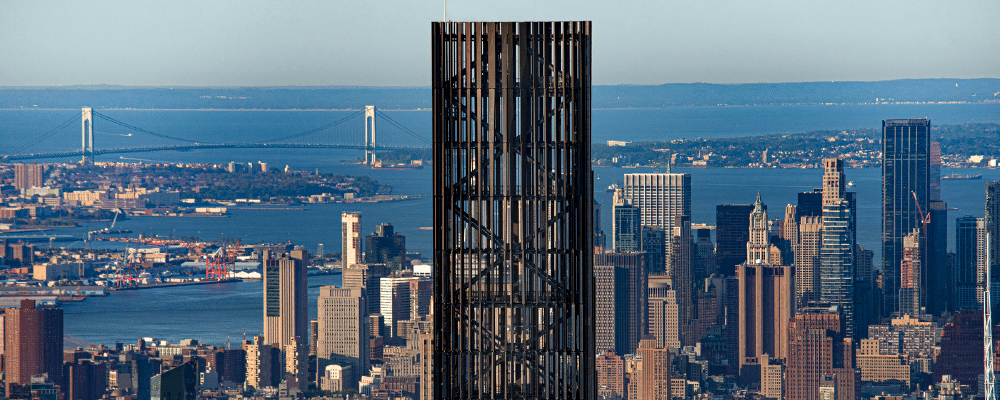
A pencil-thin tower that somehow feels old New York and futuristic at the same time. That’s the magic trick of 111 West 57th Street, also known as Steinway Tower, rising over Midtown Manhattan architecture like a perfectly sharpened No. 2 pencil aimed at the clouds.
If you work in design or development, this building isn’t just a headline. It’s a masterclass in how to turn constraints into an identity, how to blend heritage with high performance, and how to make a skyscraper so recognizable that it sells itself before the keys are even cut.

The word “thin” gets thrown around a lot in real estate marketing. “Thin profile.” “Slim footprint.” “Elegant silhouette.” But 111 West 57th Street earns it. This is the World’s Thinnest Skyscraper in the literal, mathematical sense, and it uses that extreme geometry to create a brand, a lifestyle, and a skyline moment that’s impossible to ignore.
And here’s the best part: it’s not thin for the sake of being thin. It’s thin because the site, the city, the history, and the market all pushed the project toward a very specific solution, then the team executed it with the kind of precision architects love and developers respect.
-
What it is: A super-slender luxury residential tower at 111 West 57th Street in Midtown Manhattan, often called Steinway Tower.
-
Why it’s famous: A height-to-width ratio around 24:1, widely cited as the World’s Thinnest Skyscraper.
-
Who designed it: SHoP Architects, with interiors by Studio Sofield.
-
How tall it is: Approximately 1,428 feet (435 m).
-
What makes it special: A restored landmark base (Steinway Hall), a terracotta-and-bronze façade that nods to classic NYC towers, and engineering strategies that make a “needle” feel livable.
Why architects and developers care: it’s a real-world case study in zoning creativity, extreme-structure engineering, and heritage integration that still results in a product people will pay for.
111 West 57th Street at a Glance (Quick Facts)
Data of Interest
-
Official building website: 111 West 57th Street official site
-
Address/Area: 57th Street, Midtown Manhattan (often grouped with Billionaires’ Row NYC)
-
Alternate name: Steinway Tower
-
Architect: SHoP Architects
-
Interior architecture/design: Studio Sofield
-
Developers: JDS Development Group + Property Markets Group (PMG)
-
Height: 1,428 ft (≈435 m)
-
Slenderness: ~24:1
-
Floors / Residences: 84 stories; residences are often reported around the high 50s (and can vary based on how units are combined)
-
Heritage base: Steinway Hall (1920s) integrated/restored
One reason this tower became a global obsession? You can understand it in seconds: Visually.
The Origin Story, A Landmark Base Meets a 21st-Century Needle
Super-tall towers usually start with a clean slate: clear the site, pour the foundation, and build a new identity from scratch. 111 West 57th Street took the harder route. Instead of erasing history, the project leans into it by incorporating Steinway Hall, a landmarked piece of New York’s cultural fabric tied to the city’s music legacy.
The Steinway Hall legacy (why the base matters)
From a design standpoint, a preserved base can feel like the opening move in a chess game where half the board is already occupied. You don’t just have a footprint, you have an architectural character to respect. Steinway Hall’s presence makes the project feel grounded, almost ceremonial, like the tower is rising out of a classic New York story rather than landing as a foreign object.
For developers and realtors, that heritage does something even more practical: it gives the building an identity that’s deeper than “another luxury condo.” In a neighborhood where “luxury” is the default setting, a recognizable narrative becomes a competitive advantage.
The big idea: “New York classic skyscraper DNA” in a new form
SHoP’s approach reads like a love letter to Manhattan’s golden age of vertical architecture, reinterpreted through modern engineering and detailing. The façade strategy intentionally echoes the depth, shadow, and rhythm of older towers, while the form pushes that DNA into a new extreme.
Think of it as a two-part performance: the base plays the “heritage” instrument, and the tower plays the “future” instrument. Together, they make the kind of duet New York secretly demands.
The “World’s Thinnest” Secret: It’s Not Just Skinny, It’s Strategically Skinny
If you’ve ever tried to fit a full design concept into a complicated site boundary, you already understand the real secret behind the World’s Thinnest Skyscraper: the geometry isn’t a gimmick. It’s a response.
The site constraints + the luxury business model (why thin can be profitable)
In high-end residential development, “unique” is not a bonus, it’s the product. A super-slender tower naturally supports full-floor or near full-floor living, dramatic privacy, and panoramic views that feel curated for one household at a time. That’s the kind of value proposition you can explain quickly in a sales gallery, in a broker email, or during a client tour: fewer neighbors, more sky, and views that don’t feel borrowed.
For builders and developers, this is a reminder that constraints can shape not just the form, but also the unit strategy. A thin tower encourages layouts that feel exclusive by design, because they literally have to.

The zoning-envelope chess move (SHoP’s feathered profile)
The tower’s silhouette doesn’t feel like a typical stepped wedding-cake massing. Instead, the profile tapers and shifts with a kind of “feathered” elegance, an effect SHoP connects to careful shaping and façade depth, so the building reads at multiple scales: skyline, street, and close-up detail.
This is the quiet genius: the form isn’t only engineering-driven. It’s also perception-driven. The tower is thin, yes, but it’s also composed.
Engineering Magic: How Do You Keep a 24:1 Tower From Misbehaving?
Here’s the part architects love to talk about at dinner (and developers love to talk about when budgets are already approved). A slenderness ratio around 24:1 means wind and movement aren’t theoretical, they’re daily realities the structure must manage.
Foundations + structural system (the quiet hero work)
When a building is this slender, the “invisible” systems become the stars: foundations, shear walls, structural stiffness, and the overall strategy that keeps the tower feeling calm. The project’s engineering team addressed the challenges of a mega-slender profile with solutions that help control movement, including systems at the top of the building designed to reduce sway.
In plain English: the building is designed not only to stand tall, but to feel steady when you’re living in it.
Wind, comfort, and stability (a human-centered problem)
It’s not just standing up, it’s standing up comfortably.
That comfort goal is where the façade becomes more than aesthetics. The terracotta piers and bronze detailing aren’t only visual; they contribute to how the tower interacts with wind by shaping turbulence and breaking up airflow in ways that support stability.
This is an underrated takeaway for architects and designers: “performance” can be beautiful when it’s integrated. Instead of hiding the solution, the building expresses it.
If you ever need a diagram idea for a client presentation, this is the section that begs for one: a simple “wind + slender tower + damping strategy” graphic can instantly explain why the design looks the way it does.
The Façade That Sells the Skyline: Terracotta, Bronze, and a Modern Art Deco Vibe
If the shape is the hook, the façade is the reason people keep looking.
At a distance, 111 West 57th Street reads like a refined vertical instrument, light, shadow, and proportion doing the heavy lifting. Up close, it’s tactile. Textured. Crafted. The kind of building that makes you slow down even if you’re late.
Why terracotta came back (and why it matters for architects)
Terracotta isn’t just a nostalgic material choice here. It’s a strategic one. SHoP has described developing an innovative use of a classic Manhattan skyscraper material to contribute meaningfully to the skyline, essentially borrowing from the city’s historic language while building something unmistakably new.
Paired with bronze and glass, the façade becomes a modern interpretation of the city’s Art Deco DNA, without turning into a theme park version of the past.
Interiors by Studio Sofield: Luxury That Feels Like Old Money (Even If It’s Brand New)
A skyscraper can be the most dramatic object on the skyline, but the interior is where people decide whether it actually feels worth it.
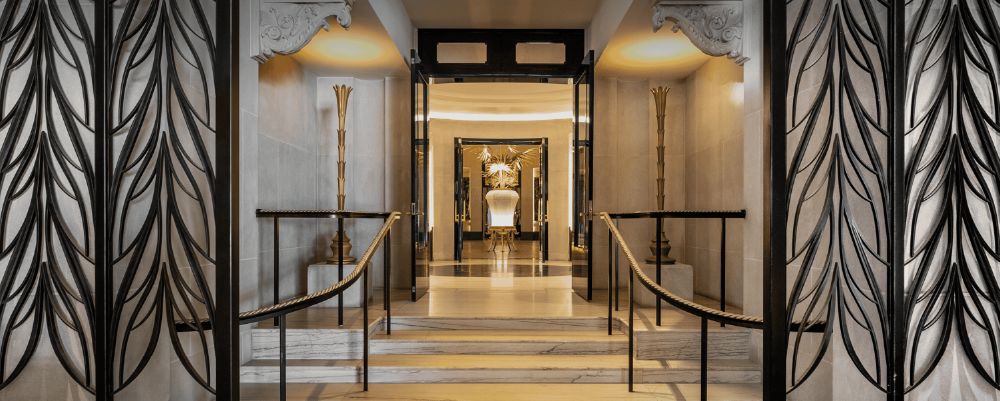
The official project narrative emphasizes Studio Sofield’s “inventively elegant” interiors, and coverage of the residences often highlights a refined, heritage-aware approach rather than flashy minimalism.
A “Gilded Age meets modern minimal” playbook
Studio Sofield’s style tends to land in a sweet spot: classic proportion, rich materials, and a sense of permanence, balanced with contemporary restraint. In a building that already makes a bold statement outside, that interior strategy is smart. It lets the skyline be the artwork, while the rooms remain timeless.
For interior designers, this is a great reminder that luxury doesn’t require noise. Often, the most expensive look is the one that feels calm and inevitable.

Material storytelling (details people remember)
When a project integrates a landmark base, material storytelling becomes even more powerful. You’re not just choosing finishes, you’re choosing continuity. A residence that echoes the building’s historic roots can feel more authentic, even if every surface is newly built.
This is especially relevant for designers working with clients who want “warm modern” or “quiet luxury” without losing a sense of character. The lesson here is simple: tie your interior narrative to the building’s larger story whenever you can.

What Architects, Developers, and Interior Designers Can Steal (Legally) From 111 West 57th Street
This is the part where we turn admiration into practical lessons you can use in real workflows, design reviews, client meetings, investor decks, and sales strategies.
Architects: silhouette strategy, façade legibility, heritage integration
-
Use constraints to shape a signature silhouette rather than fighting them.
-
Design for multiple reading distances: skyline, street, close-up detail.
-
When heritage is present, treat it as a narrative asset, not a limitation.
Developers: brand value of uniqueness, privacy as a feature, story-driven sales narrative
-
“Thin” becomes a brand when it’s backed by real performance and a clear story.
-
Exclusive layouts (like full-floor experiences) can feel more valuable than simply “bigger.”
-
Heritage integration creates identity, especially in saturated luxury markets.
Interior Designers: timeless detailing, material layering, “quiet luxury” choreography
-
Anchor modern spaces with classic proportion and tactile materials.
-
Let the views lead; design interiors that support the skyline rather than competing with it.
-
Use the building’s story as a palette guide, especially when a landmark base is involved.
A Skyline Conversation: From Steinway Tower to JPMorgan’s 270 Park Avenue
New York loves a skyline debate. And it should, skyscrapers are how the city thinks out loud.
111 West 57th Street is a residential needle: ultra-slender, expressive, heritage-linked, and intimacy-driven. By contrast, a major corporate tower like JPMorgan Chase’s 270 Park Avenue plays a different game: performance, scale, workplace experience, and a civic presence shaped by corporate identity and urban impact.
If you enjoyed how engineering shapes identity here, you’ll love our deep dive on “270 Park Avenue Architecture: How JPMorgan’s New Tower Redefines New York’s Skyline.”
The Visualization Takeaway
Projects like the World’s Thinnest Skyscraper aren’t won at the finish line. They’re won early, when stakeholders understand the idea, when design intent becomes clear, and when the story is communicated so well that it feels inevitable.
That’s the real takeaway for architects, developers, builders, and realtors: the more complex (or unconventional) the project, the more you need visuals that remove guesswork and align everyone fast.
If you’re developing, designing, or marketing a project that needs that kind of clarity, explore Xpress Rendering’s 3D Rendering Services to visualize your next project with confidence, from exterior hero imagery to interior storytelling that helps clients say “yes” sooner.
111 West 57th Street – FAQs
-
How tall is 111 West 57th Street (Steinway Tower)?
111 West 57th Street rises to about 1,428 feet (435 meters), placing it among New York’s tallest residential towers. Its height is a major part of why the building reads so dramatically on the skyline.
-
Why is 111 West 57th Street considered the world’s thinnest skyscraper?
It’s widely cited as the World’s Thinnest Skyscraper due to a height-to-width ratio of around 24:1. That extreme slenderness makes wind behavior, movement control, and structural comfort central to the building’s design.
-
Who designed 111 West 57th Street?
The tower was designed by SHoP Architects, with interior architecture and design led by Studio Sofield. It’s a collaboration that blends a skyline-forward exterior with refined, heritage-aware interiors.
-
What is Steinway Hall, and why is it part of the project?
Steinway Hall is the landmarked base component integrated into the development, linking the tower to a historic New York cultural story. Its preservation and integration add identity and continuity, making the project feel rooted rather than purely new.
-
What materials define the façade of 111 West 57th Street?
The façade is known for its combination of terracotta, bronze, and glass, designed to create depth, texture, and a strong vertical rhythm. The material palette nods to classic Manhattan skyscrapers while still reading as contemporary.
-
How many residences are in 111 West 57th Street?
Reports commonly place the total number of residences in the high 50s, with some variation based on how units are configured or combined. The overall concept emphasizes privacy and exclusive floor plans.
-
Who are the developers behind 111 West 57th Street?
The project is associated with JDS Development Group and Property Markets Group (PMG). Their development approach pairs a landmark narrative with a high-impact, high-performance residential product.
-
Where is 111 West 57th Street located, and what is Billionaires’ Row?
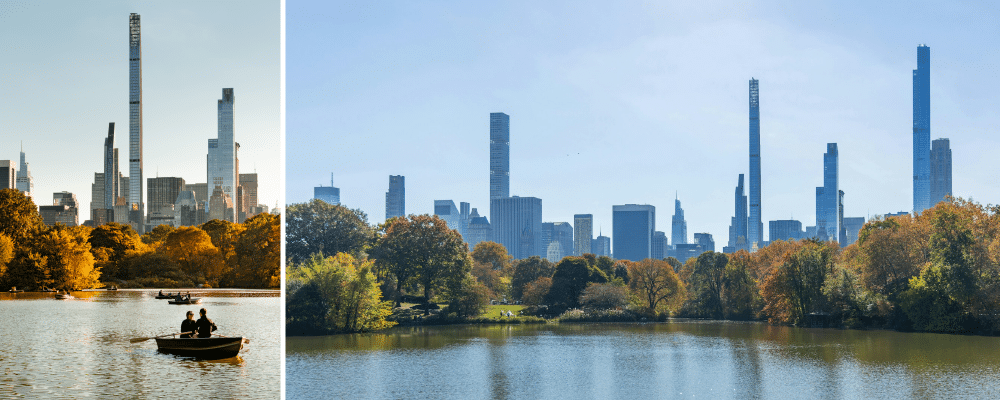
It’s located on West 57th Street in Midtown Manhattan, often grouped with the cluster of ultra-luxury supertall towers nicknamed Billionaires’ Row NYC. The term generally refers to this corridor of high-end towers near Central Park that target premium residential buyers.
Conclusion about 111 West 57th Street
111 West 57th Street isn’t just a skinny skyscraper story. It’s a case study in how New York keeps reinventing itself without losing its identity: landmark heritage at the base, contemporary engineering in the structure, and a façade that speaks both classic and modern in the same sentence.
For architects, it proves that extreme constraints can become your strongest design signature. For developers and builders, it shows how form and product strategy can work together, turning geometry into value. And for interior designers and realtors, it’s a reminder that the most compelling luxury isn’t just what you see, it’s what you understand instantly and remember later.
That’s why 111 West 57th Street the World’s Thinnest Skyscraper keeps showing up in conversations: it doesn’t only rise high. It lands clearly.