Let us talk about the architectural phenomenon we are all watching unfold right before our eyes. We all remember a time not too long ago when the Texas capital was primarily famous for its world-class brisket, legendary indie music festivals, and that unapologetic, grassroots energy.
Fast forward to today, and the city has successfully and aggressively rebranded itself, bringing about a massive Silicon Hills expansion. With major tech titans like Tesla, Apple, and Oracle planting massive corporate flags in the Texas soil, a tidal wave of high-net-worth individuals, tech executives, and ambitious entrepreneurs has flooded the market.
This unprecedented influx has ignited what industry insiders are universally calling the Austin Boom. But make no mistake: this Austin Boom is not just about population growth or suburban sprawl. It is a fundamental, vertical reimagining of the city’s geographical footprint. If you drove down I-35 or navigated the downtown grid anytime between 2023 and 2025, you probably thought the city’s official bird was the construction crane. We were truly operating in a state of “Crane City.”
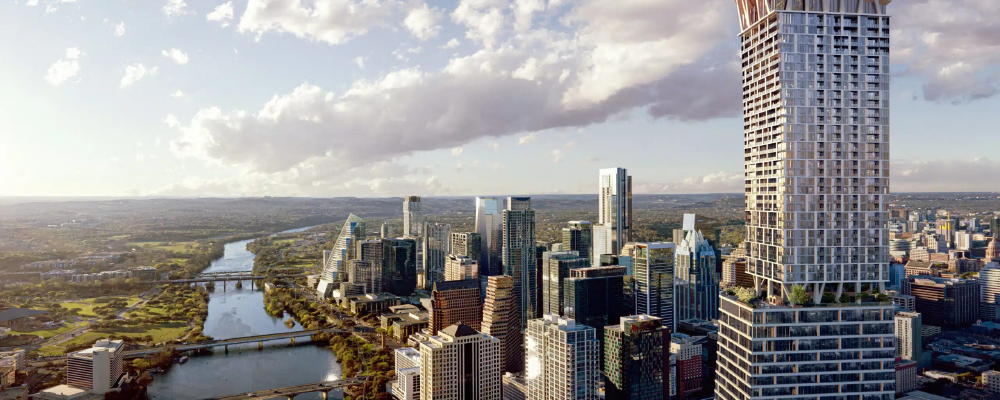
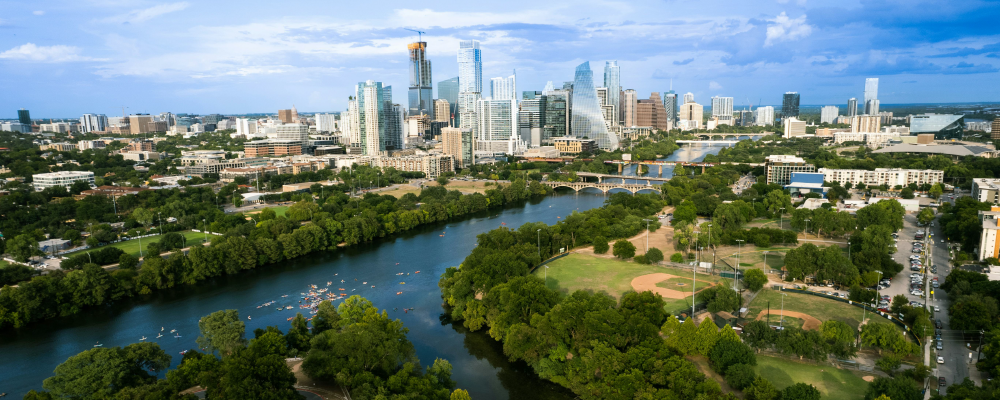
But as we look toward the horizon, 2026 represents the year the dust finally begins to settle. The scaffolding is coming down, the heavy machinery is rolling out, and we are witnessing the reveal of a breathtaking, completely transformed Austin Tech Hub Skyline 2026.
However, for you, the visionary architects, the ambitious developers, the custom home builders, and the luxury realtors driving this change, waiting for the paint to dry and the construction to finish is simply not a viable business strategy. In a hyper-competitive, high-stakes market fueled by the Austin Boom, waiting means losing. The developers and architects who aggressively leverage advanced 3D visualization are the ones securing critical early funding, winning fierce bidding wars, and pre-selling entire building inventories long before the first shovel ever hits the dirt.
Austin Boom, The 2026 Milestones: What’s Redefining the Texas Capital?
To truly grasp the magnitude of the Austin Boom, we have to look at the concrete and steel rising above the Colorado River. The sheer scale of the new developments is staggering, completely rewriting the rules of Texas real estate. We are looking at mega-projects that are not just changing the view, but changing the structural identity of the city.
Take the highly anticipated Waterline project, for instance. Upon completion, this architectural marvel will not just join the ranks of the tallest buildings in Austin; it is slated to become the tallest tower in the entire state of Texas, stretching a dizzying 1,022 feet into the sky. Then you have the magnificent Sixth and Guadalupe, a mixed-use behemoth that perfectly encapsulates the live-work-play lifestyle that modern urbanites crave. These are not just buildings; they are self-sustaining vertical neighborhoods.
The numbers completely back up this visual evidence. The appetite for these massive, skyline-altering projects is voracious. According to recent market insights from the Austin Board of REALTORS® (ABoR), the demand for mixed-use, high-density developments has never been stronger. This data proves that the Austin Boom is not a temporary bubble; it is a permanent geographical shift.
But here is where the challenge gets incredibly interesting for the creative minds involved. How do you design for the Austin Boom without losing the soul of the city? Interior designers and architects are currently tasked with a highly unique, almost contradictory challenge: they must seamlessly blend ultra-high-tech, billionaire-tier luxury with the organic, grounded, biophilic aesthetic that honors the classic ethos of the city. The new buyer wants smart-glass windows and automated climate control, but they also want living green walls, natural Texas limestone textures, and expansive terraces that overlook Lady Bird Lake.
Visualizing this delicate balance, proving to a high-end buyer that your design honors the local culture while providing world-class luxury, requires a level of visual storytelling that goes far beyond traditional blueprints. This is the new frontier of the Austin Boom.
6 Architectural Marvels Redefining the Austin Boom by 2026
To truly understand the scale of the Austin Boom, you have to look at the individual masterpieces rising above the Colorado River. The Austin Tech Hub Skyline 2026 is being forged by some of the most ambitious engineering and design feats in the country. For architects, developers, and realtors tracking the market, these are the top construction projects in Austin 2026 that are setting the new gold standard for urban living and commercial space:
-
Waterline (The New King of Texas)
Address: 98 Red River St, Austin, TX 78701
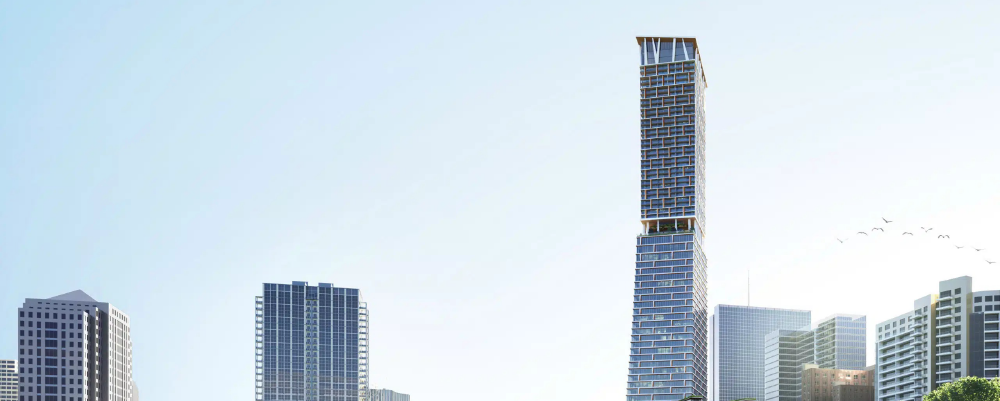
Slated for completion in late 2026, this architectural titan is the absolute crown jewel of the Austin Boom. Rising to a staggering 1,022 feet with 74 stories, Waterline will officially surpass Houston’s JPMorgan Chase Tower to become the tallest building in the entire state of Texas. Beyond its record-breaking height, this $520 million mixed-use supertall features a breathtaking 3.3-acre base elevated on tree-inspired columns, seamlessly integrating luxury living, a 1 Hotel, and office spaces with the natural beauty of the Waterloo Greenway and Waller Creek.
-
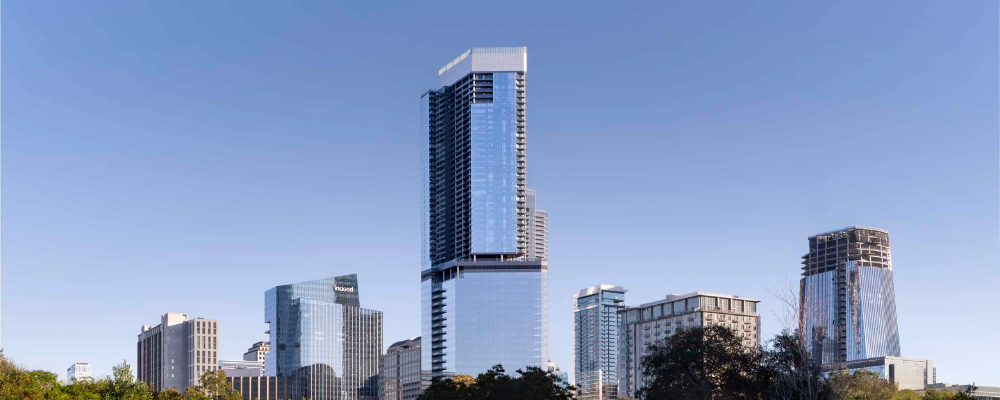
Sixth and Guadalupe (The Vertical Neighborhood)
Address: 400 W 6th St, Austin, TX 78701
Briefly holding the title of Austin’s tallest building before Waterline took the crown, this 66-story, 865-foot behemoth is a masterclass in mixed-use density. Designed by Gensler, it stacks high-end residential units directly on top of massive commercial office spaces (famously anchoring tech giants like Meta) and ground-level retail. It is the ultimate expression of the “live-work-play” ecosystem that the Silicon Hills expansion demands.
-
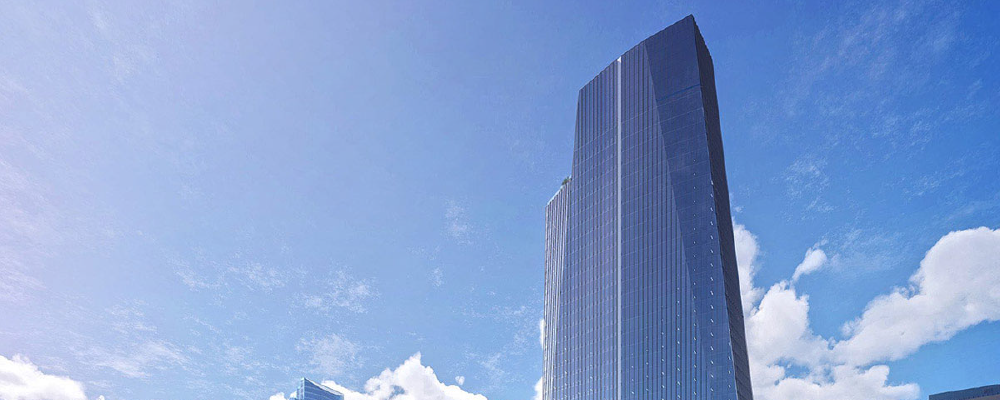
The Republic (Nature Meets Corporate Luxury)
Address: 401 W 4th St, Austin, TX 78701
Located adjacent to historic Republic Square Park, this 48-story office tower is a prime example of biophilic design done right. Slated to be one of the most prominent commercial buildings in the Austin downtown construction projects pipeline, The Republic features a striking, modern facade and an expansive ground-level public plaza that extends the park right into the building’s lobby. It is designed to attract top-tier tech executives who demand wellness-focused workspaces.
-
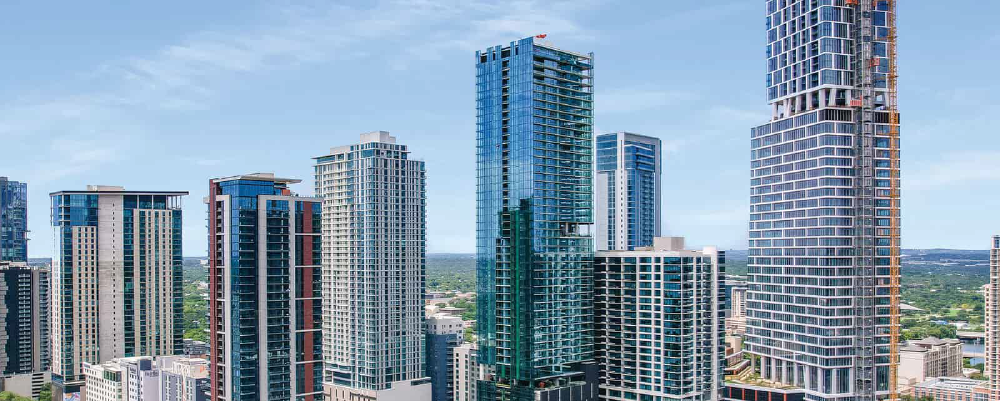
The Modern Austin Residences (Rainey Street’s High-Density Jewel)
Address: 610 Davis St, Austin, TX 78701
The Rainey Street district has transformed from a quiet neighborhood of bungalow bars into a dense, vibrant urban canyon. The Modern is leading this charge. With over 50 stories of ultra-luxury condominiums, this project caters directly to high-net-worth buyers looking for unobstructed, panoramic views of Lady Bird Lake and an exclusive downtown lifestyle.
-
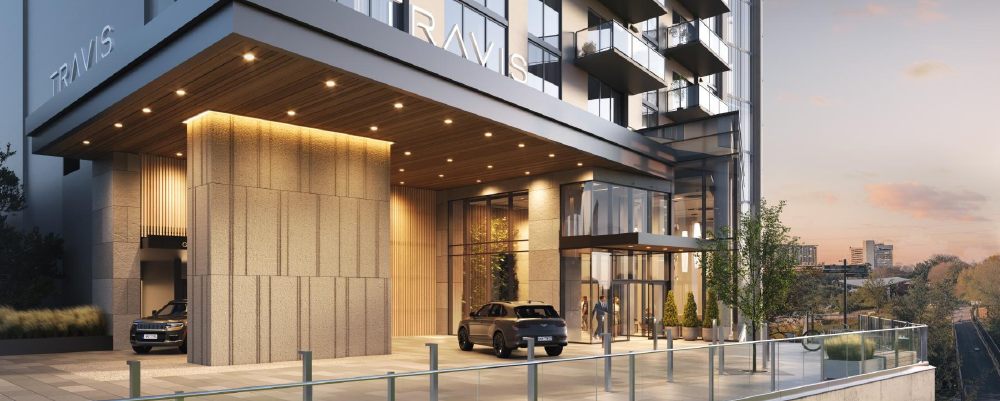
The Travis (Dual-Tower Ambition)
Address: 80 Red River St, Austin, TX 78701
Adding even more density to the Rainey Street district, The Travis is a massive residential undertaking that will eventually feature two distinct towers. The first phase includes a towering high-rise that blends premium rental apartments with luxury amenities, catering perfectly to the influx of tech professionals who want immediate access to the city’s best nightlife and waterfront trails.
-
Block 185 / The Google Tower (The Sail of Silicon Hills)
Address: 601 W 2nd St, Austin, TX 78701
While completed slightly earlier, its visual impact is so profound that it defines the 2026 skyline. With its iconic, sweeping sail-like curve overlooking Lady Bird Lake, Block 185 is an architectural triumph that proves Austin is no longer just building boxes. It sets a high aesthetic bar for all future developers trying to leave their mark on the Texas capital.
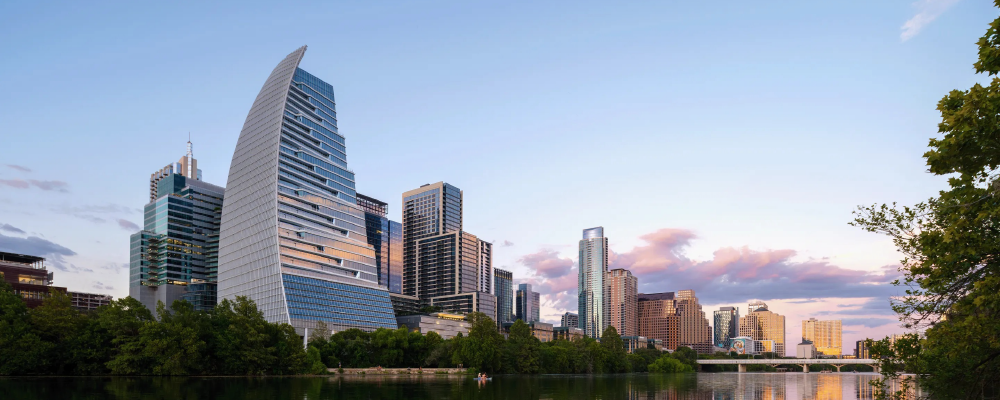
For interior designers and 3D visualization studios, these buildings are more than just steel and glass; they are blank canvases. The level of luxury expected inside these towers requires developers to utilize the highest quality renderings and BIM services to ensure every square inch lives up to the monumental exterior.
Pre-Selling the Future: Why Photorealism is the New Standard in Texas Real Estate?
Let us get down to brass tacks and talk about the psychology of the modern real estate buyer. Today’s investors, tech executives, and luxury home buyers are highly visual creatures. They are accustomed to immediate gratification and high-definition experiences. When they are about to drop millions of dollars on a penthouse or a massive commercial lease during the Austin Boom, they simply do not want to look at flat, uninspiring 2D floor plans.
Trying to sell a modern luxury concept with a 2D line drawing is like trying to sell a sports car by showing the buyer the engine schematic. It does not work. They want immersive, emotional experiences. They want to see exactly how the golden hour sunlight will hit the marble kitchen island. They want to look out the virtual window and see their exact, calculated view of the Texas Capitol.
This is exactly why photorealistic 3D renderings and immersive virtual tours have become the ultimate cheat code for accelerating the pre-construction sales cycle. By providing a perfect digital twin of a property, developers are bypassing the imagination gap. You are no longer selling a promise; you are selling a tangible digital reality. This tactic is the driving force keeping the Austin Boom profitable, allowing real estate professionals to lock in capital and close deals at premium price points before the foundation is even poured.
And we are seeing a similar phenomenon across the Sun Belt. Much like the architectural renaissance happening in Florida, which we explored in our recent piece, The Rise of Luxury Condos in Miami: Visualizing the 2026 Skyline, Austin’s developers are relying on hyper-realistic visuals to drive international pre-sales before breaking ground. The Austin Boom is attracting buyers from California, New York, and overseas who may not have the time to visit a dusty construction site. Photorealism allows you to ship your model home directly to their smartphone or VR headset, no matter where they are in the world.
Navigating the Boom: Smarter Construction Through BIM
While stunning, photorealistic visuals are absolutely essential for marketing and closing sales, the actual execution of these massive Austin downtown construction projects requires a completely different type of visualization. Let us shift our focus to the operational side of the Austin Boom.
As any builder or developer operating in Travis County will tell you, the rapid growth of the city has brought an equal amount of growing pains. We are talking about incredibly complex zoning laws, fiercely tight construction timelines, supply chain unpredictability, and intricate structural challenges that arise when you are building massive towers on a constrained downtown grid. The margins for error during the Austin Boom are razor-thin. A single structural clash discovered on-site can cost hundreds of thousands of dollars and weeks of delays.
This is where the conversation shifts from marketing to pure risk mitigation. Enter Building Information Modeling.
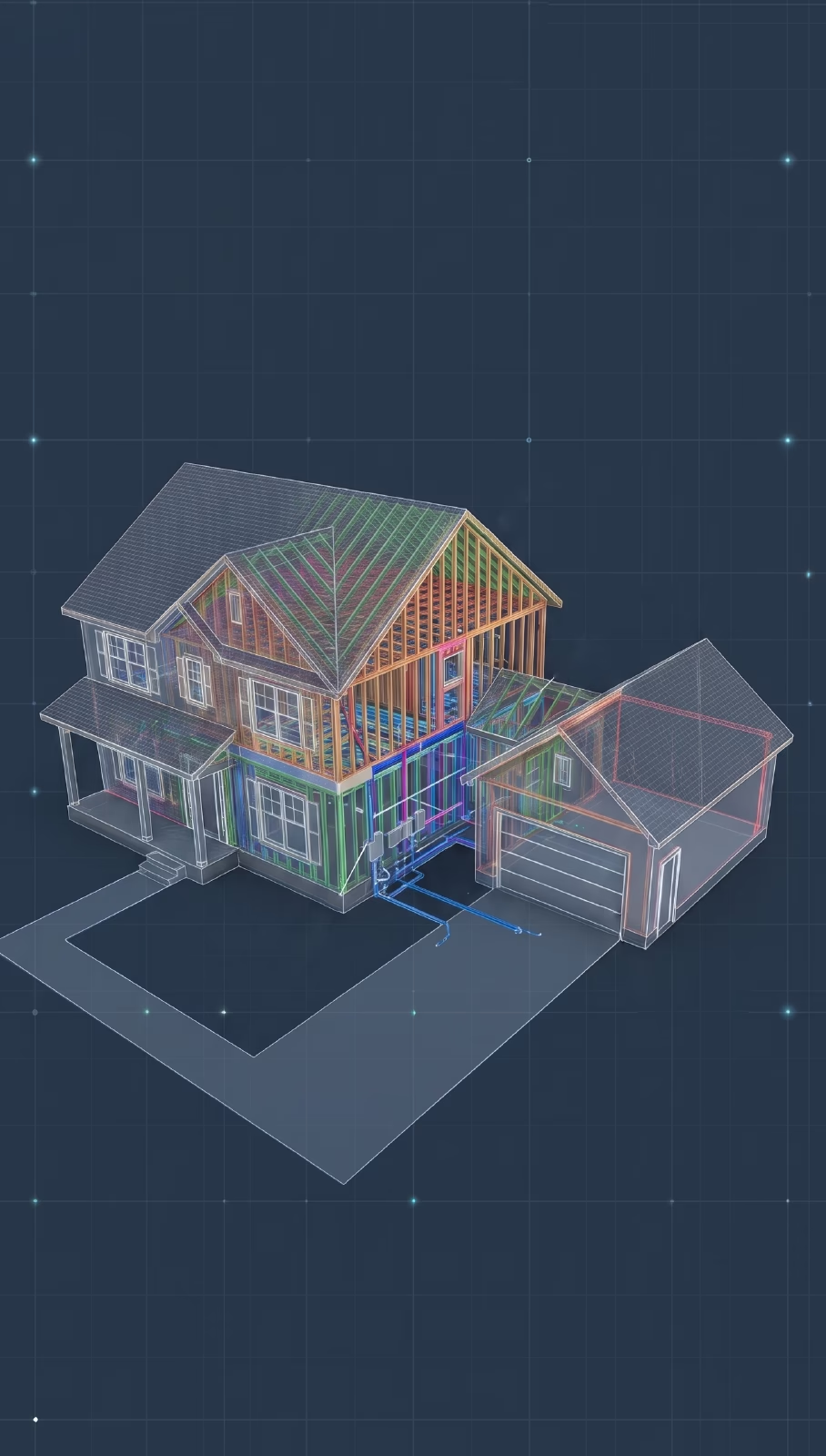
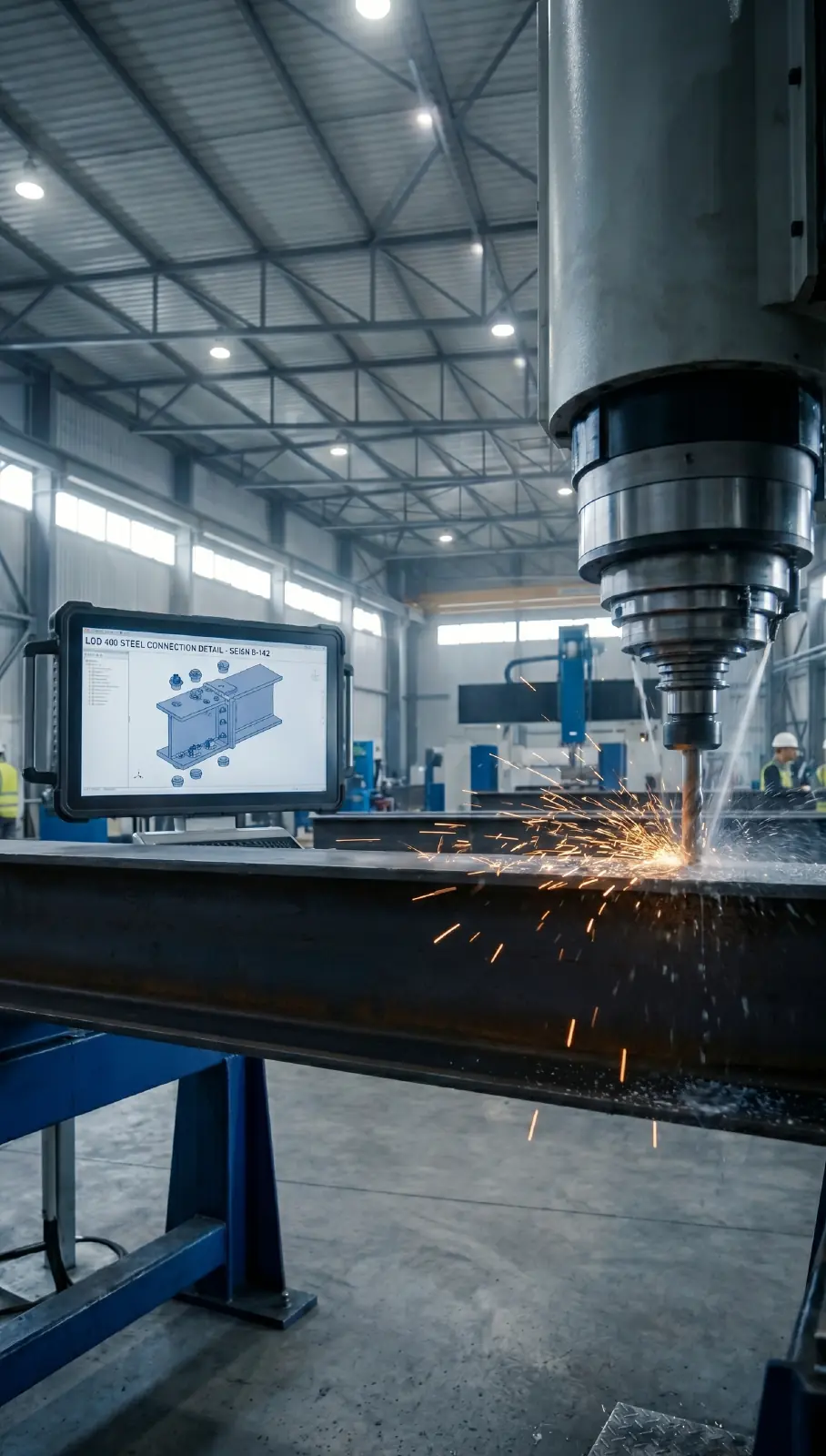
You should not view BIM simply as a piece of software; it is a comprehensive, intelligent strategy for risk management and operational efficiency. When navigating the complexities of the Austin Boom, BIM allows you to build the entire project digitally before you ever swing a hammer. It detects plumbing, electrical, and structural clashes early in the pre-construction phase.
Furthermore, having a deeply detailed, data-rich 3D model drastically streamlines the notoriously strict permitting process with city planners, who can clearly see and understand the exact specifications of your project.
Visualizing the final product is crucial for sales, but visualizing the process is what guarantees project success. By integrating comprehensive BIM Services into your workflow, architects and developers can ensure that the stunning 2026 skyline we imagine today is built efficiently, accurately, and without costly delays tomorrow. Do not let the incredible momentum of the Austin Boom be derailed by an operational oversight that could have been easily solved in a digital environment.
Austin Boom, Frequently Asked Questions (FAQ)
-
Why is Austin’s skyline growing so fast in 2026?
Austin’s rapid skyline expansion is driven by its emergence as a major tech hub (“Silicon Hills”). The influx of corporate headquarters and a growing population has created a massive demand for luxury residential, commercial, and mixed-use high-rises in the downtown area.
-
What will be the tallest building in Austin by 2026?
By 2026, the Waterline is projected to be the tallest building in Austin, and the entire state of Texas, reaching 1,022 feet (74 stories), surpassing the JPMorgan Chase Tower in Houston.
-
How are developers pre-selling luxury condos in Austin before construction?
Top developers in Texas use high-end 3D architectural renderings and virtual walkthroughs. These photorealistic visuals allow buyers and investors to experience the space, views, and amenities years before the building is completed, driving early off-plan sales.
-
What role does BIM play in Austin’s real estate development?
Building Information Modeling (BIM) is critical for managing the complexities of high-density urban projects. It helps Austin architects and builders coordinate trades, detect structural clashes early, and expedite the city’s permitting process.
-
What are the key architectural trends in Austin for 2026?
The prevailing trends focus on sustainability and biophilic design. New developments are seamlessly blending indoor and outdoor spaces, utilizing eco-friendly materials, and integrating smart-home technology to cater to the tech-savvy demographic relocating to Texas.
-
Do 3D renderings really improve real estate ROI?
Yes. High-quality 3D renderings significantly reduce the time a property sits on the market, justify premium pricing for luxury units, and save marketing costs by eliminating the need for expensive physical staging.
Conclusion: Securing Your Spot in the 2026 Skyline
The sheer energy and velocity of the Austin Boom is nothing short of historic. We are watching a relatively sleepy, culturally rich capital city transform into a global architectural and technological powerhouse right before our eyes. The skyline of 2026 will be a testament to human engineering, bold investment, and visionary design. But the window of opportunity to capitalize on this specific phase of the Austin Boom is rapidly closing.
The most successful professionals in this market are not sitting back and watching the skyline change; they are actively using next-generation tools to shape it. They understand that selling a vision requires giving their clients something spectacular to look at, and building that vision requires an airtight digital strategy.
Do not let your next big Texas project get lost in the noise of the Austin Boom. It is time to elevate your presentation, mitigate your construction risks, and secure your funding faster than the competition. Contact Xpress Rendering today to bring your next blueprint to life through our cutting-edge 3D visualization and professional BIM technology.
Let us build the future of Texas, together.