If you drive down the Las Vegas Strip today, the skyline does something it has never done before: it curves.
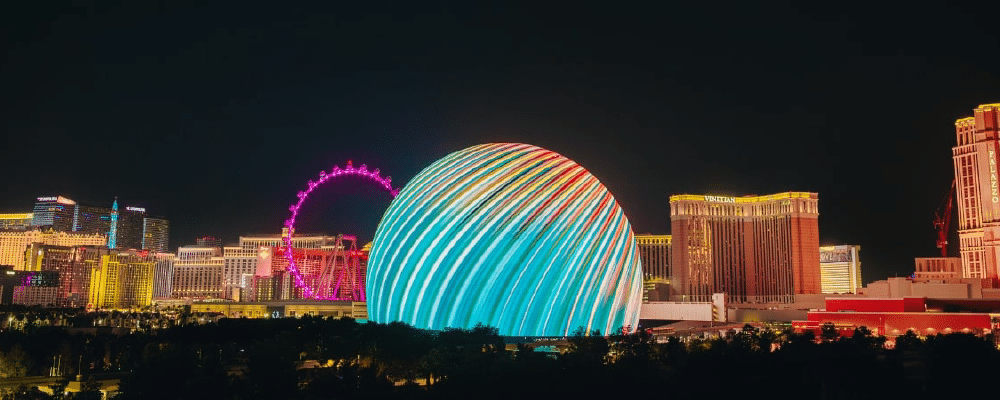
Between the towers of The Venetian and the glow of the Wynn, a perfect illuminated orb rises above the desert: a building that looks less like a venue and more like a digital planet someone landed just east of the Strip. That object is The Sphere Las Vegas, officially Sphere at The Venetian Resort, and it has quickly become one of the most talked-about pieces of architecture on the planet.
On paper, the numbers already sound unreal: roughly 366 feet (112 m) high, 516 feet (157 m) wide, about 875,000 square feet of area, and seating for 17,600 people, expandable to 20,000 with standing room. The construction cost hovered around 2.3 billion dollars, making it the most expensive entertainment venue ever built in the Las Vegas Valley.
But The Sphere Las Vegas is not just another “big, expensive arena.” Architecturally, it fuses structure, media façade, immersive interior, and urban spectacle into a single object-building. Its exosphere is a programmable LED shell, its interior bowl is wrapped with the world’s largest 16K LED display, and its sound system reaches a level of precision we usually associate with headphones, not 20,000-seat venues.
For architects, home builders, developers, and interior designers in the United States, The Sphere Las Vegas is more than a viral Las Vegas attraction. It is a case study in how event venues are shifting from “boxes with seats” to fully choreographed experiences, spaces where every surface, every pixel, and every decibel are part of the design brief.
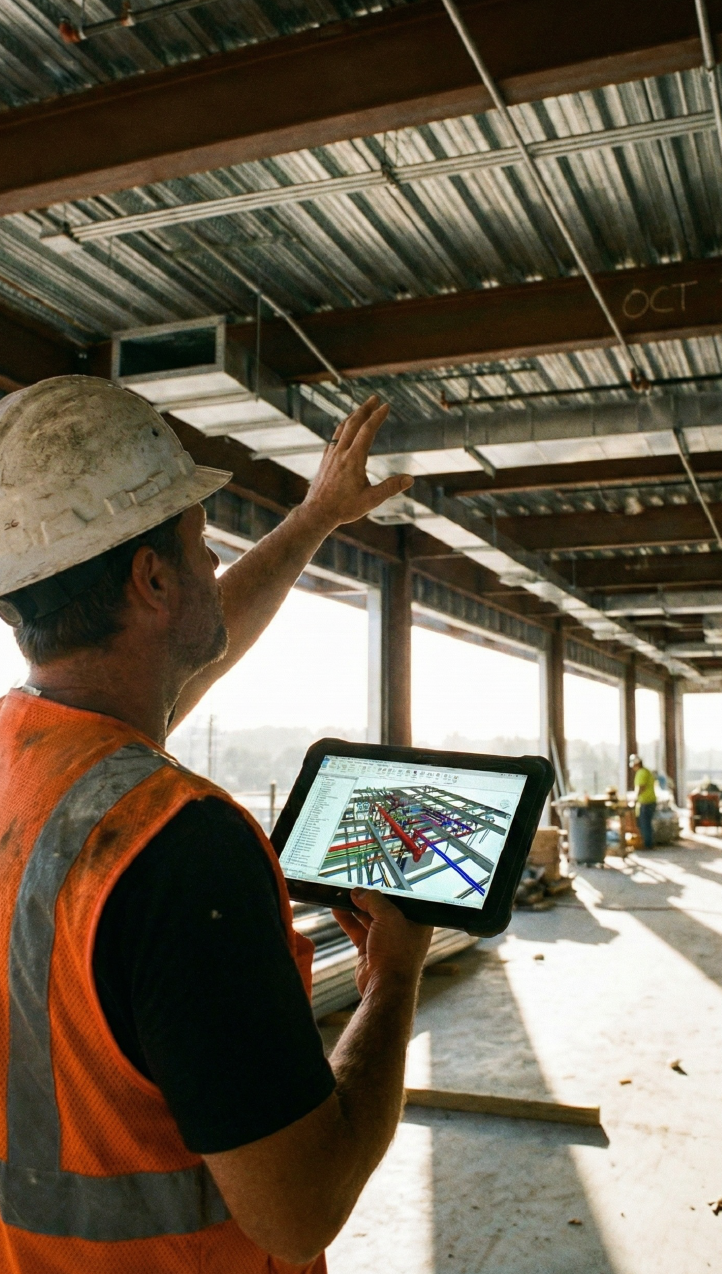
And there is another layer that professionals will recognize immediately: a project like this simply cannot exist without advanced 3D visualization. Long before the first steel member was fabricated, The Sphere had to be rendered, simulated, animated, and stress-tested in the digital world, exactly the type of workflow that 3D rendering studios handle every day.
Let’s unpack what makes The Sphere Las Vegas Architecture so radical—and what you can take back to your own project.
From Vision to Reality: How The Sphere Las Vegas Was Conceived and Built
Project Timeline and Design Team
The idea for The Sphere was first announced in 2018 under the name MSG Sphere, then part of Madison Square Garden Entertainment’s expansion strategy. Construction began soon after, with Populous, well known for major stadiums and arenas worldwide, serving as architect of record.
On September 29, 2023, The Sphere opened to the public with U2’s residency, “U2:UV Achtung Baby Live at Sphere,” instantly positioning the venue as the new global benchmark for immersive concerts. A week later, Darren Aronofsky’s large-format film “Postcard from Earth” debuted as The Sphere’s first dedicated cinematic experience.
The key players behind The Sphere Las Vegas Architecture include:
-
Populous – Architect of record and lead design for the building and bowl
-
Sphere Entertainment Co. – Owner and operator, spun off from Madison Square Garden Entertainment
-
ICRAVE – Responsible for interiors, atrium, bridges, and much of the experiential design and lighting choreography
For those who want to dive deeper into the design specifics, the official Populous project page for Sphere offers an excellent overview of structural concept, program, and design intent.
Site, Context and Urban Role on the Las Vegas Strip
The Sphere is located in Paradise, Nevada, tucked just east of the main Strip and physically connected to The Venetian Resort via a roughly 1,000-foot pedestrian bridge. In plan, the venue occupies almost an entire block, but in the vertical profile of Las Vegas, it acts like a glowing punctuation mark among towers.
Las Vegas itself has gone through several urban “eras”:
-
The neon years, when the Strip emerged as a kind of tax- and planning-light free-trade zone
-
The Disneyfication period, with family-friendly themes and spectacle hotels
-
The Manhattanisation wave, with glass-box luxury towers and more serious urban planning
-
Today’s era of “Dubai-style” spectacle, with Allegiant Stadium, the F1 track weaving around the Strip, the High Roller observation wheel, and now The Sphere
In that context, The Sphere Las Vegas feels oddly inevitable. This is a city that has always used architecture as entertainment technology. A 366-foot spherical venue with a programmable exterior simply continues that tradition, pushing it into the age of 360° LED icons.
The same typology, however, is more controversial in traditional city centers. A proposed sister project in London’s Stratford district ultimately had its planning application refused, largely over concerns about light pollution, sustainability, and neighborhood impact, and the developer eventually withdrew.
In other words: The Sphere Las Vegas fits its urban ecosystem perfectly, but it does not fit everywhere.

“Wait… How Do You Even Build a 366-Foot Sphere?”
From an engineering perspective, The Sphere Las Vegas is not a single shell. It is a nested and layered system.
At the outside sits the steel exoskeleton, a diagrid frame that carries the weight of the exterior LED system, the exosphere. More than 400 LED “mega panels,” each containing thousands of LED pucks, are mounted onto this diagrid. According to Populous, the exosphere acts as a structurally independent skin that wraps the main building, almost like a digital lantern.
Inside that exoskeleton, a thinner concrete spherical shell forms the envelope of the seating bowl, with tiered seating and suites integrated into its geometry. Between the structural layers, catwalks and plant spaces weave through, supporting lighting, rigging, audio equipment, HVAC, and life-safety systems.
The result is a remarkably dense three-dimensional puzzle:
-
Structural loads from the terraces and roof
-
Weight and heat output from the LED systems
-
Acoustic isolation from the chaos of Las Vegas outside
-
Fire egress and maintenance access through a highly curved volume
It is no surprise that initial cost estimates around 1.2 billion dollars eventually grew toward 2.3 billion as the design became more ambitious and materials and systems escalated in price.
For architects and developers, The Sphere is a reminder that once you commit to a truly non-standard form, everything from seating geometry to duct routing becomes custom.
The Exosphere: Turning a Façade into a 360° Storytelling Canvas
Anatomy of the LED Skin
The most recognizable feature of The Sphere Las Vegas is its exosphere: a continuous LED surface that covers about 580,000 square feet (roughly 54,000 m²), making it the largest LED screen on Earth at the time of opening.
The numbers are staggering:
-
Approximately 1.2 million puck-shaped LED nodes spaced about 8 inches apart
-
Each puck containing 48 individual diodes
-
Color and brightness levels capable of competing with the Vegas Strip at any hour
These LED pucks are mounted on large triangular and polygonal panels, which in turn are attached to the steel diagrid frame. The panels act as a kind of “digital cladding,” following the curvature of the sphere while remaining modular enough for installation, replacement, and maintenance.
For architects, this is where façade design meets product design. At this scale, pixel pitch is not about the phone in your hand—it is about legibility from blocks away, or even from an airplane window.
From Emoji to Moon: The Sphere as Urban Media Architecture
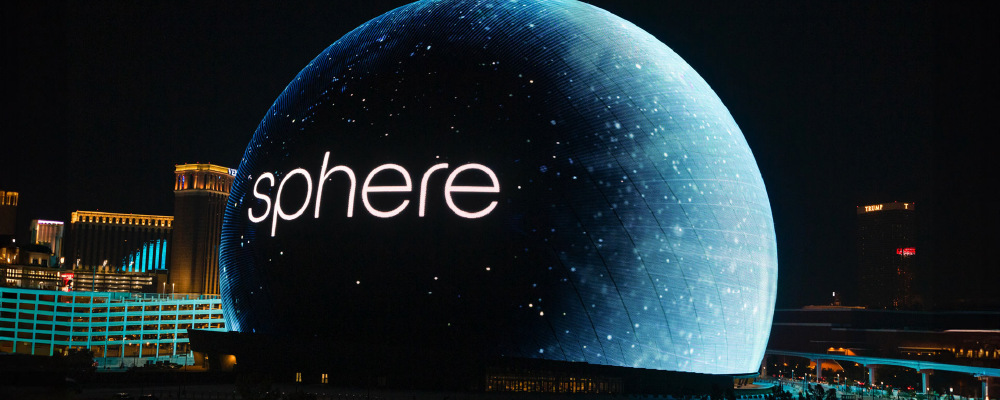
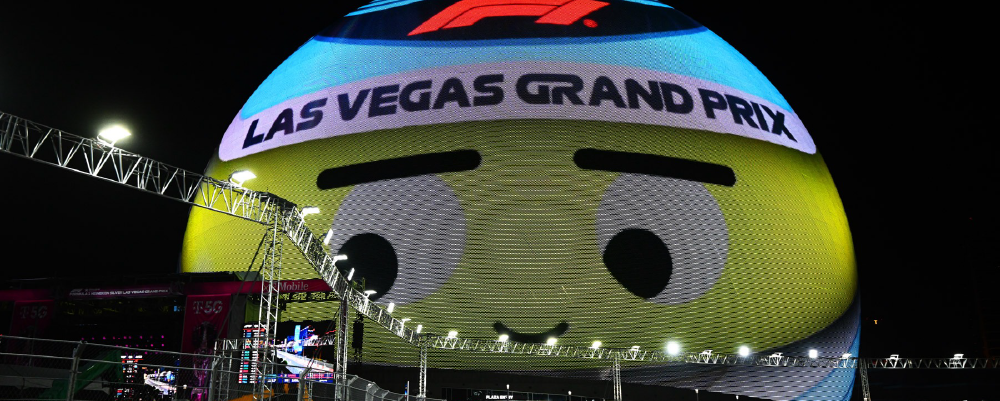
If you have seen The Sphere Las Vegas on social media, chances are the exosphere was doing something playful or surreal: blinking as a giant eyeball, glowing as a Jack-o’-lantern for Halloween, turning into a basketball during sports events, or displaying a hyper-real Moon hanging over the Strip. On July 4, it famously lit up with the words “Hello World” and digital fireworks.
This is where The Sphere steps beyond any traditional “sign.” The entire volume becomes a real-time, programmable urban media surface. Brand campaigns, show promotions, public art, seasonal greetings, everything can wrap the orb.
Design Lessons for Future Event Venues and Facades
The exosphere of The Sphere Las Vegas forces us to confront some trade-offs that will become more common:
-
Brightness versus light pollution and neighbor comfort
-
Visual excitement versus visual overload on drivers and pedestrians
-
Iconic presence versus regulatory resistance
Concerns about energy consumption, glow impact on nearby residences, and overall fit with the skyline ultimately sank the project.
Inside The Sphere Las Vegas: Architecture of an Immersive Bowl
Arrival, Atrium and the “Extended Proscenium”
Most people know The Sphere from its exterior shots. But from an architectural point of view, the arrival sequence is just as important as the orb itself.
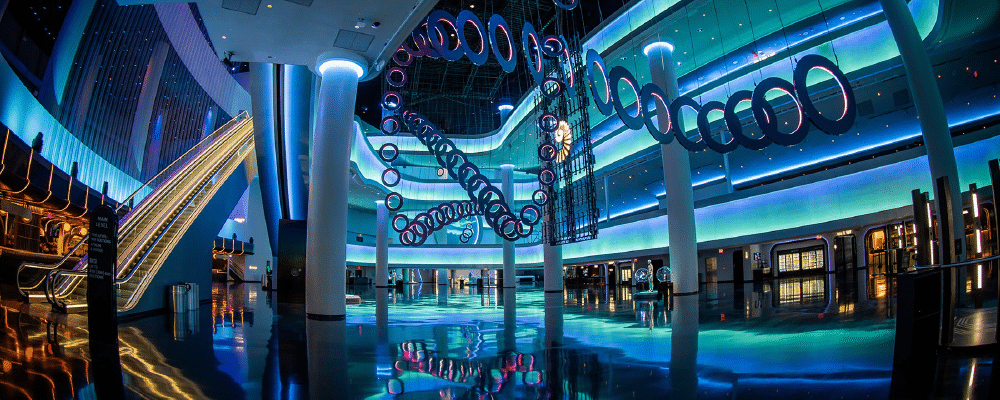
Guests can enter at plaza level or route through the pedestrian bridge from The Venetian, arriving in what Sphere and Populous call the Atrium: an approximately 80-foot-tall central volume with overlapping balconies, visible escalators, and programmable lighting.
ICRAVE’s interior design strategy was simple but ambitious: the show starts at the door. Bridges, archways, lit bands, and even robot “hosts” are choreographed to build anticipation. The goal is to pull the proscenium all the way to the front door, so visitors feel like they are entering an experience, not just passing through circulation space.
For interior designers, this is an instructive example of:
-
Wayfinding as storytelling
-
Lighting as performance, not only as utility
-
Material and color choices that embrace, rather than fight, the LED glow
The Seating Bowl and 16K Wraparound Screen
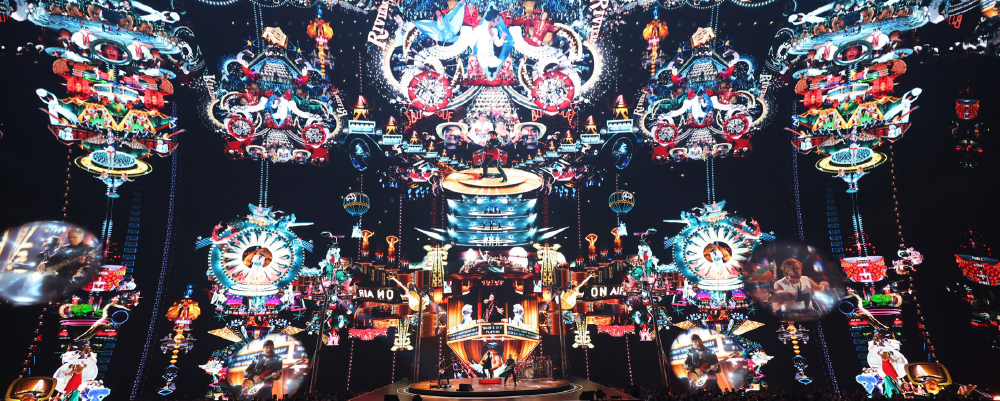
Once you pass through the portals into the bowl, The Sphere Las Vegas Architecture reveals its most radical move: the interior shell becomes a screen.
The seating bowl offers about 17,600 seats in an amphitheater configuration, with all seats oriented to the stage and the massive LED surface behind and above it. Standing room on the floor increases capacity to roughly 20,000 for certain events. The bowl is carved into four primary seating tiers with two levels of suites, and some lower seating can be retracted to create additional production or event space.
Audio, Haptics and 4D: When Architecture Becomes an Instrument
If the screen is the visual instrument, the audio system is the invisible one.
Sphere Immersive Sound, powered by HOLOPLOT, uses a matrix of approximately 1,600 speaker modules and an extraordinary 160,000+ individually amplified drivers hidden behind the LED surface.
Instead of conventional “left/right” stacks and delay lines, the system uses 3D audio-beamforming and wave field synthesis to direct sound in highly precise ways. In practice, that means:
-
Every seat can receive a “best seat in the house” listening experience
-
Audio can be steered to specific audience zones
-
Sound can track visuals across the 16K surface with surprising localization
Then comes the physical layer. About 10,000 seats in The Sphere Las Vegas include infrasound haptic systems built into the chairs themselves. When a bass drop hits, a rocket launches on screen, or a thunderstorm rolls over the virtual landscape, the seats vibrate correspondingly. Wind, temperature effects, and scent can also be integrated in some shows, diving fully into 4D territory.
Designing a Venue Around Artists, Not Just Events
Traditional arenas are often designed to be flexible: basketball one night, hockey the next, concert over the weekend. The Sphere, by contrast, is performance-first.
The bowl, screen, and audio system are all optimized for concerts, residencies, and custom immersive content. U2’s residency, for example, uses the 16K surface for everything from minimal line drawings to full-scale desert landscapes and typographic fields. Darren Aronofsky’s “Postcard from Earth” uses the canvas for cinematic vistas that completely fill your field of view.
The result is a building that is unusually focused. The Sphere Las Vegas is not trying to do everything. It is trying to do one thing better than anyone else: immersive live storytelling at architectural scale.
The Sphere Las Vegas as an Urban and Cultural Statement
“Inside Your Phone”: The Technological Sublime
Several critics have described the experience of being inside The Sphere as “like being inside your phone or TV.” That line sounds like a joke until you are in the bowl and the entire field of view is filled with pixels.
The American historian David Nye coined the term “technological sublime” to describe the mix of awe, fear, and excitement people feel in front of massive feats of engineering, railroads, dams, skyscrapers. The Sphere Las Vegas extends that category into digital media. It is not just a big building; it is a big interface.
That has real consequences for how people perceive scale, material, and reality in architecture. Concrete and steel are still there, but the emotional reading of the space is dominated by light and sound.
Design Takeaways: What Professionals Can Learn from The Sphere Las Vegas
Think Experience-First, Program-Second
One of the clearest lessons from The Sphere Las Vegas Architecture is the decision to design from the experience outward.
Instead of starting with a generic multifunction arena and then adding tech, the team began with a question: what kind of experience should 20,000 people share in this room? Everything else, structure, seating layout, circulation, MEP, was wrapped around that answer.
That mindset is scalable. You may not be designing a 366-foot LED orb, but you might be:
-
Planning a new performing arts center in a mid-size city
-
Developing a hospitality project where the lobby doubles as an event space
-
Designing a sales gallery that needs to deliver a “mini-immersive” experience to potential buyers
Starting from the emotional arc and user journey, then backing into the plan and section, is no longer a luxury reserved for icons. It is becoming the standard.
The Sphere Las Vegas also connects naturally to other global icons that rely heavily on visualization. In our article “Marina Bay Sands Architecture: How Singapore Redefined Modern Urban Design” we explored how three towers and a sky park reshaped an entire skyline and tourism economy. Projects like Marina Bay Sands and The Sphere share a common thread: bold architectural ideas supported by crystal-clear visual storytelling long before opening day.
Why 3D Renderings, Animations and VR Are Non-Negotiable for This Kind of Project
In a venue where every surface curves, every pixel moves, and every seat has a unique perspective, 2D drawings simply cannot carry the full design intent. Before a project like The Sphere Las Vegas ever reaches a construction site, it must be understood in motion and in three dimensions.
Stakeholders need to:
-
Walk virtually through the atrium and concourses
-
See what exosphere content looks like from nearby streets and hotel windows
-
Experience sightlines and screen coverage from the front row, upper bowl, and suites
-
Test how lighting and media alter perceived scale and mood
This is where specialized 3D rendering studios come into the picture. For architects, home builders, and developers in the U.S. who may be planning smaller, but still highly experiential, venues, partnering with a visualization team is no longer just “nice to have.” It is part of risk management and project storytelling.
At Xpress Rendering, for example, our 3D Rendering Services are built precisely around this need: helping design teams and owners visualize complex projects before the first RFQ goes out. From photorealistic stills and animation sequences to VR walkthroughs, we translate ambitious concepts into visuals that investors, city officials, and buyers can instantly understand. If you are developing your own “mini-Sphere”—whether that’s an arena, a performance hall, or a mixed-use project with a strong experiential component—visit our 3D Rendering Services page and see how we can support your next presentation.
Key Facts About The Sphere Las Vegas Architecture (Data for Architects & Developers)
For quick reference, here is a snapshot of The Sphere Las Vegas:
-
Official name: Sphere at The Venetian Resort (commonly called The Sphere Las Vegas)
-
Location: 255 Sands Avenue, Paradise, Nevada, just east of the Las Vegas Strip, connected to The Venetian by pedestrian bridge.
-
Architect of record: Populous
-
Interiors / experiential design: ICRAVE
-
Owner / operator: Sphere Entertainment Co. (spin-off of Madison Square Garden Entertainment)
-
Construction start: 2018
-
Opening date: September 29, 2023
-
Height: 366 ft (112 m)
-
Width / diameter: 516 ft (157 m)
-
Gross floor area: approximately 875,000 sq ft
-
Seating capacity: 17,600 seated, up to 20,000 with standing room
-
Construction cost: around 2.3 billion USD
-
Exosphere LED area: about 580,000 sq ft (~54,000 m²), roughly 1.2 million LED pucks with 48 diodes each
-
Interior screen: approximately 160,000 sq ft (~15,000 m²) of 16K wraparound LED display
-
Audio system: roughly 1,600 HOLOPLOT modules and about 160,000–167,000 individually amplified drivers, fully hidden behind the screen
-
Haptic seats: approximately 10,000 seats with infrasound haptic systems for 4D effects
FAQs About The Sphere Las Vegas
What is The Sphere Las Vegas?
The Sphere Las Vegas is a next-generation music and entertainment venue located next to The Venetian Resort, just off the Las Vegas Strip. It is currently the world’s largest spherical building, combining a 360° LED media façade, a 16K wraparound interior screen, advanced audio, and haptic technology to deliver fully immersive live experiences for up to 20,000 guests.
Who designed The Sphere Las Vegas Architecture?
The Sphere Las Vegas Architecture was designed by global sports and entertainment specialists Populous, with interiors and experiential spaces by New York–based ICRAVE. The venue is owned and operated by Sphere Entertainment Co., a company spun off from Madison Square Garden Entertainment.
How big is The Sphere Las Vegas?
The Sphere in Las Vegas is approximately 366 feet (112 meters) high and 516 feet (157 meters) wide, with about 875,000 square feet of total area. Its exterior exosphere includes roughly 580,000 square feet of LED surface, while the interior 16K display covers around 160,000 square feet of the bowl.
How many seats does The Sphere Las Vegas have?
The Sphere Las Vegas features seating for about 17,600 people in an amphitheater configuration, with all seats oriented toward the stage and the massive LED surface. For some events, standing room on the floor increases total capacity up to approximately 20,000 guests.
How much did The Sphere Las Vegas cost to build?
Construction of The Sphere Las Vegas cost roughly 2.3 billion dollars, making it the most expensive entertainment venue in the Las Vegas region. Costs rose over time due to the complexity of the structure, the unprecedented scale of the LED systems, and broader market factors.
What technology is used inside The Sphere Las Vegas?
Inside, The Sphere Las Vegas uses a 16K resolution LED display wrapping around the audience, Sphere Immersive Sound powered by HOLOPLOT’s 3D audio-beamforming and wave field synthesis, roughly 160,000–167,000 individually amplified drivers, and about 10,000 haptic seats capable of delivering infrasound vibrations. Some shows also incorporate wind, temperature, and scent effects for a full 4D experience.
What kind of events are held at The Sphere Las Vegas?
The Sphere Las Vegas is designed primarily for concerts, long-term artist residencies, and immersive cinematic experiences. It opened with U2’s “U2:UV Achtung Baby Live at Sphere” residency and has hosted large-format films such as Darren Aronofsky’s “Postcard from Earth,” as well as performances from artists like Phish and the Eagles. It can also host special events, award shows, and certain ring-based sports.
Conclusion: The Sphere Las Vegas and the Future of Immersive Event Venues
The Sphere Las Vegas Architecture represents a turning point. It is the moment when a venue stops being “a room with a stage” and becomes a fully programmable environment, structurally, visually, acoustically, and even climatically.
Most of us will never build the next Sphere. But many of us will be asked to create theaters, arenas, hospitality projects, sales centers, and mixed-use hubs where people expect at least a small fraction of that magic.
Studying The Sphere Las Vegas, how it is built, how it performs, and how it fits its urban context, offers a valuable blueprint for that future. And when it is time to communicate your own vision, from the first client pitch to the last investor meeting, translating your design into clear, compelling 3D visuals may be the most powerful design decision you make.