Summary
The skyline of the Mile High City has officially shifted. This comprehensive breakdown explores the Populus Denver Architecture, a groundbreaking project that moves beyond standard “net-zero” goals to become the first carbon-positive hotel in the United States. Designed by Studio Gang and developed by Urban Villages, this architectural marvel is a masterclass in biophilic design, complex site engineering, and uncompromising sustainability. Discover how developers and architects overcame a tight flatiron site, utilized low-carbon concrete, and eliminated on-site parking to create a sustainable hotel design that actively sequesters carbon. Learn why high-quality commercial 3D rendering services are absolutely essential to secure investor buy-in and city approvals for vanguard real estate projects like this one.
The margin for error in the modern United States construction landscape is practically zero, and the expectations from investors and city planners have never been higher. The Denver skyline has officially shifted, and it is sending a massive ripple through the entire commercial real estate sector. While most modern commercial developments aim for “net-zero” to appease basic environmental standards, developer Urban Villages and the visionary architects at Studio Gang decided that baseline was simply not enough. They aimed significantly higher, creating Populus, the very first carbon-positive hotel in the United States.
The Populus Denver architecture is far more than just a striking visual aesthetic to admire from the sidewalk. It is a rigorous masterclass in biophilic design architecture, complex site engineering, and uncompromising sustainability. When you are trying to push boundaries in Denver real estate development, or anywhere else in the country, you need to understand the mechanics behind this kind of success. Here is a deep dive into how this highly anticipated 265-room hotel is fundamentally reshaping the future of green real estate, luxury hospitality design, and urban planning.
Biomimicry at Scale: The Aspen Tree Façade

What actually inspired the Populus Denver Architecture? and How did they arrive at such a radical shape?
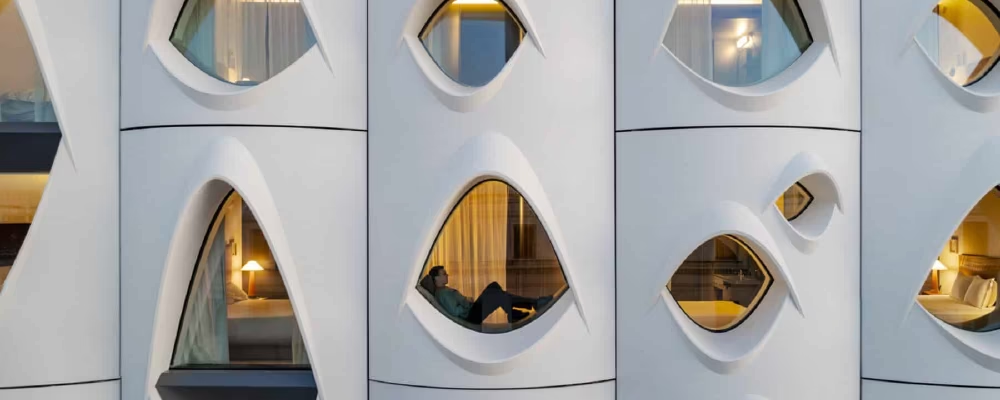
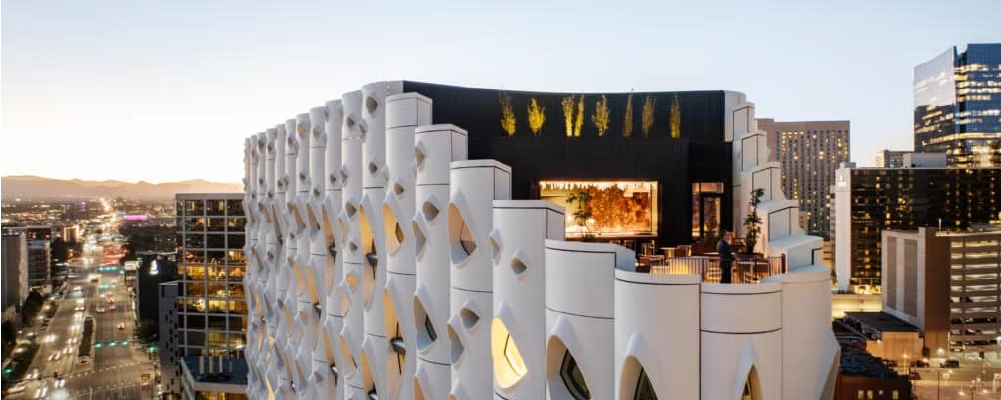
The answer is quite literally in its name. The building’s striking white, heavily textured façade and uniquely shaped windows are directly inspired by the Populus tremuloides, better known as the native Colorado Aspen tree. As Aspen trees grow and mature in the wild, they naturally shed their lower branches. This biological shedding leaves distinct, dark, eye-shaped marks on their pale, white trunks. Studio Gang architecture took this beautiful biological phenomenon and translated it into a highly functional, scalable architectural feature.
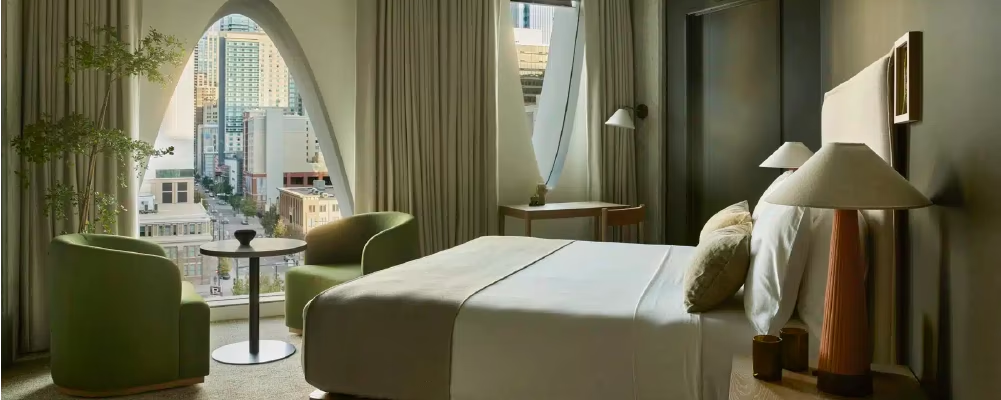
But let us be completely clear for the developers and builders reading this: The “Aspen eye” windows are not just for show. In high-stakes commercial development, every aesthetic choice must pull its weight functionally, or it gets value-engineered out of the project immediately. The scalloped, asymmetrical window frames on the Populus Denver architecture act as sophisticated, built-in visors. They provide crucial passive shading for the hotel’s interiors, directing rainwater away from the glass while significantly reducing the building’s solar heat gain.
For developers looking to cut long-term operational costs and maximize ROI, this is a prime example of how exterior architecture can actively reduce the load on internal HVAC systems. By utilizing biophilic design architecture principles, the design team managed to decrease energy consumption while creating a visually iconic structure that commands premium room rates. It is a perfect marriage of form and high-performance function.
Engineering the Flatiron Site
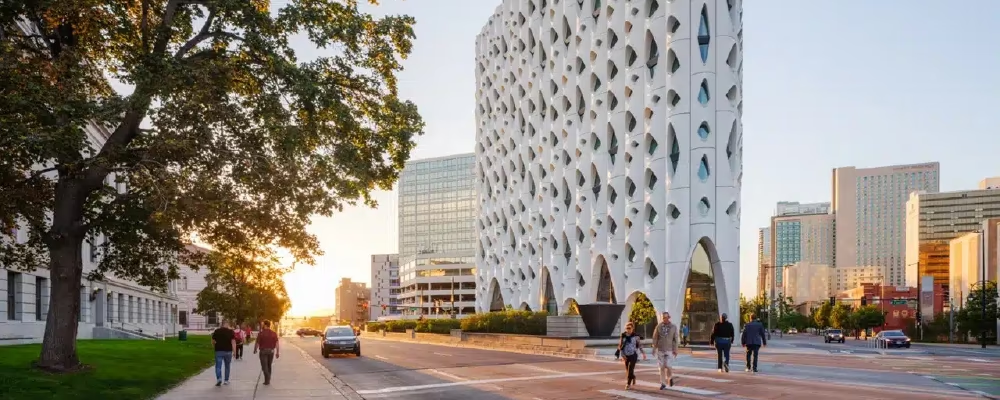
Let us talk about the dirt. Building on an awkward, tight, triangular footprint at the busy intersection of 14th Street and Colfax Avenue presented severe spatial and logistical challenges for the construction teams. The site required a classic “flatiron” structural approach, maximizing every single square inch of the available footprint while ensuring the massive building did not feel oppressive or blocky at street level.
Pushing the absolute limits of site constraints, zoning regulations, and structural engineering is a defining hallmark of modern US development. Urban cores are running out of easy, square lots. We have seen similar engineering ambition in luxury residential sectors, such as the gravity-defying, stacked-cube design explored in our breakdown of the Waldorf Astoria Miami Architecture Insights: Engineering South Florida’s First Supertall. Just as the Waldorf tackles hurricane-force winds with an unprecedented shape, the Populus Denver architecture tackles extremely tight urban constraints with an undulating, organic structure. The curved edges at the base naturally guide pedestrian flow around its footprint, transforming a difficult corner into a seamless extension of the urban fabric.
For home builders and commercial developers, the lesson here is profound. A difficult site is not a dealbreaker; it is an opportunity to innovate. The unique geometry of the Populus footprint actually informed the interior layouts, creating distinctive room shapes that feel bespoke and luxurious rather than cookie-cutter.
The Financial and Structural Reality of “Carbon-Positive”
We hear the buzzwords all the time, but what does “carbon-positive” actually mean for the construction phase and the project’s bottom line? It means the building is explicitly designed to sequester more carbon than it emits throughout its entire lifecycle, from the extraction of raw materials to decades of daily operation.
Achieving this aggressive target required radical, sometimes uncomfortable decisions from both the architects and the developers. They had to look at traditional construction workflows and completely rewrite the rulebook:
- Low-Carbon Materials: The construction utilized an advanced, eco-friendly concrete mix. Low-carbon concrete is revolutionizing the industry by replacing traditional, high-emission cement with alternative materials like fly ash or slag. This significantly lowered the embodied carbon footprint typical of high-rise developments without sacrificing structural integrity.
- Zero On-Site Parking: In a bold, almost unheard-of move for US real estate, this sustainable hotel design was built without a parking garage. Think about the financial implications of that decision. This eliminated the massive carbon footprint associated with deep excavation, heavy machinery, and pouring thousands of yards of concrete for a subterranean garage. Simultaneously, it encourages guests to use Denver’s expanding public transit network, shifting the culture of the modern traveler.
- Ecological Offsetting: You cannot build a high-rise without some emissions; it is physically impossible right now. To rigorously account for the carbon that was unavoidably emitted during construction, Urban Villages committed to an aggressive offset strategy. They are planting over 70,000 trees in Gunnison County, Colorado, ensuring a net-positive ecological impact over the building’s total lifespan.
This holistic approach proves that carbon-positive development is not just a pipe dream; it is financially viable and structurally sound when planned meticulously from day one.
Populus Interior Architecture: Bringing the Outside In
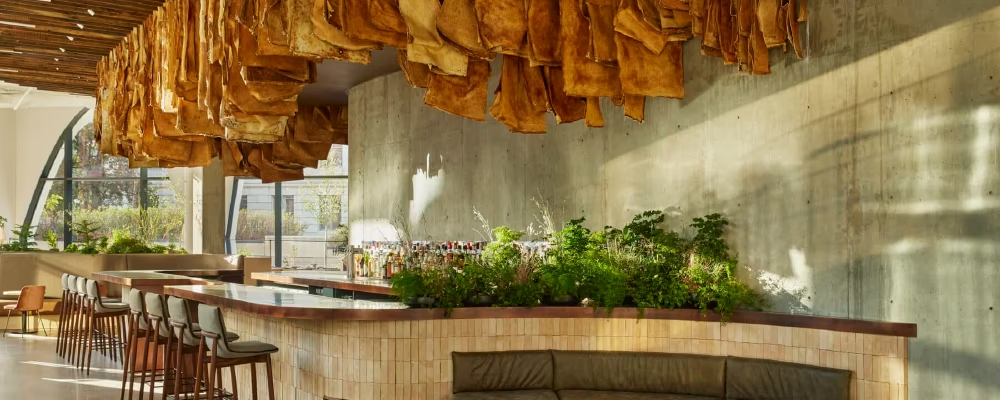
You cannot have a groundbreaking exterior and a generic interior. The interior design seamlessly continues the Studio Gang architecture exterior narrative. For interior designers and realtors selling these spaces, Populus serves as an elite benchmark for sustainable sourcing and sensory engagement.
The interiors feature rich, reclaimed Wyoming snow-fence wood, high-end biodegradable materials, and custom furniture that mimics natural topography. The goal was to make guests feel as though they are resting within a luxurious forest canopy. Every touchpoint, from the lobby seating to the elevator cabs, reinforces the biophilic design architecture.
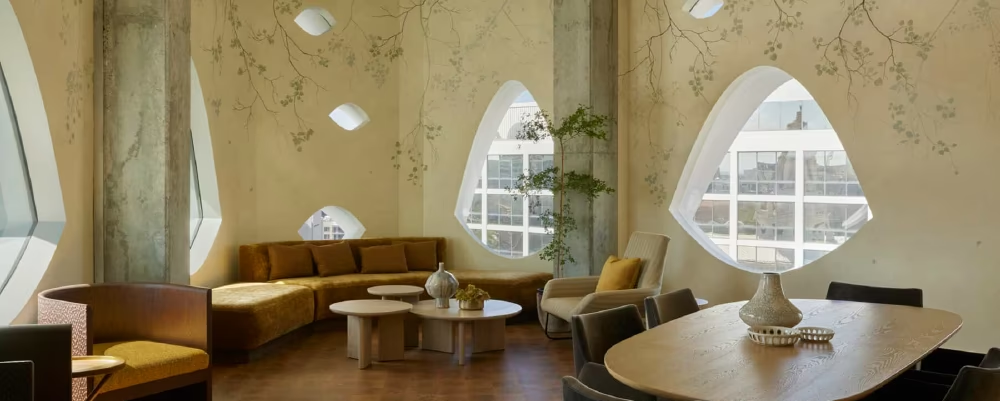
Furthermore, the ground floor is intentionally highly transparent, designed to act as a porous extension of the surrounding Civic Center Park. Creating a building that successfully interacts with the general public is a notoriously difficult tightrope to walk. When public space design goes wrong, it can lead to massive operational challenges, a concept we analyzed deeply in The Vessel NYC Architecture: Design Ambition, Urban Experience, and Public Space Lessons. Fortunately, the Populus Denver architecture avoids these pitfalls brilliantly by making its ground-floor lobby, coffee bars, and rooftop restaurant incredibly welcoming, activated spaces for the entire Denver community, not just paying hotel guests.
Why Visualization is Key for Vanguard Architecture
Now, let us get down to the business of getting these projects off the ground. Getting a radical project like Populus approved by rigid city planners, skeptical investors, and the general public is incredibly challenging. How do you walk into a boardroom and pitch a 13-story hotel with absolutely no parking and irregularly shaped, eye-like windows?
You cannot rely on flat, uninspiring 2D blueprints. If you show an investor a standard CAD elevation of an Aspen tree-inspired facade, they will likely laugh you out of the room. It is too abstract. It feels too risky.
For developers, builders, and architects pushing the boundaries of biophilic and sustainable hotel design, securing funding and swift approvals requires showing stakeholders exactly what the future holds. They need to see how the afternoon Colorado light will hit the textured façade. They need to feel the warmth of the reclaimed wood in the lobby. They need to understand exactly how the building will integrate into the existing urban fabric of 14th Street without overwhelming it.
This level of persuasion requires elite, photorealistic commercial 3D rendering services. When you can show a city council a hyper-realistic animation of pedestrian flow around your flatiron site, zoning variances become much easier to secure. When you can show an investor a stunning, sunset render of a carbon-positive rooftop, the funding flows faster.
Ready to Bring Certainty to Your Construction Pipeline?
Exceptional architecture requires exceptional visualization. Do not let complex designs, coordination errors, or outdated 2D drafting eat into your profit margins or kill your pitch. At Xpress Rendering, we help top-tier architects and developers translate complex, sustainable, and avant-garde designs into photorealistic visuals that win pitches, secure early investor buy-in, and eliminate costly rework.
Conclusion: The Blueprint for Future US Real Estate Development
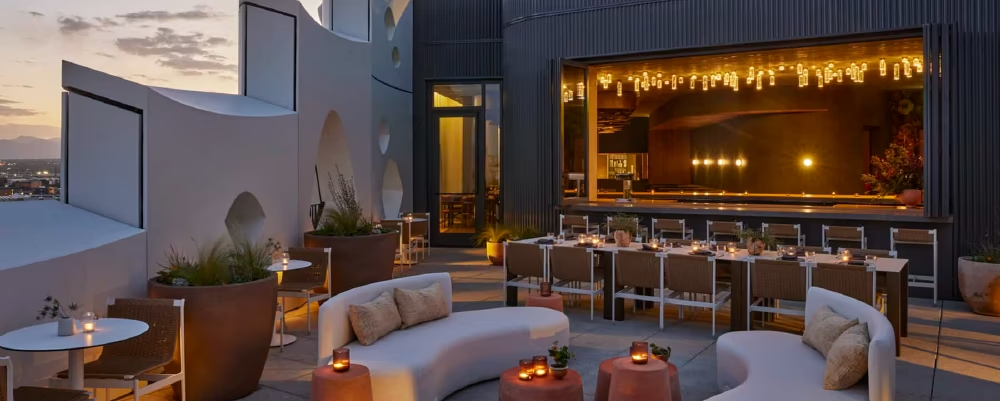
The Populus Denver architecture proves that the days of compromising between striking aesthetics, financial viability, and environmental responsibility are officially over. By pushing the boundaries of biomimicry, utilizing low-carbon concrete, and rethinking urban transportation norms, Studio Gang and Urban Villages have delivered a masterclass in what the future of hospitality must look like. Being simply “net-zero” is no longer the ceiling; constructing a carbon-positive hotel is the new gold standard for ambitious developers and builders across the United States.
However, bringing these radical, sustainable hotel designs from a conceptual sketch to a fully funded reality requires immense coordination and flawless communication. You cannot build the future with outdated pitch decks and flat 2D drafts. As the commercial real estate landscape continues to evolve toward complex, biophilic architecture, the ability to clearly visualize these structures before breaking ground will separate the industry leaders from the rest of the pack. Let Populus serve as your inspiration to build bolder, and ensure your next vanguard project is backed by the visual clarity it deserves to win over any boardroom.
Populus Denver Architecture: Frequently Asked Questions (FAQs)
1. What is the Populus Denver architecture style?
Populus features biophilic design architecture, an innovative approach that intentionally connects building occupants more closely to nature. Its specific style is heavily biomimetic, directly mimicking the organic shapes, functions, and textures of the native Colorado Aspen tree to create a sustainable hotel design.
2. Who is the architect of Populus Denver?
The hotel was designed by the internationally acclaimed architecture firm Studio Gang, led by visionary architect Jeanne Gang. This Studio Gang architecture project was developed in close collaboration with the forward-thinking Denver real estate development firm, Urban Villages.
3. How is the Populus hotel carbon-positive?
The building officially achieved carbon-positive status by strictly minimizing its embodied carbon during the construction phase (primarily by utilizing low-carbon concrete and completely omitting a subterranean parking garage) and subsequently offsetting its remaining footprint by planting over 70,000 trees in a Colorado forest. This process effectively removes more carbon from the atmosphere than the building will ever emit.
4. Why does the Populus hotel have no parking?
Eliminating the underground parking garage saved thousands of tons of heavy carbon emissions typically associated with pouring concrete and deep site excavation. It also perfectly aligns with the hotel’s eco-forward, sustainable hotel design mission, strongly encouraging guests to utilize public transportation, ridesharing, and walking in downtown Denver.
5. How do the windows on the Populus building work?
The distinctive, highly engineered “Aspen eye” windows are designed with protruding, scalloped frames. These architectural “lids” provide critical passive solar shading, blocking intense summer heat from entering the guest rooms while still allowing ample natural light to filter in. This significantly reduces the building’s reliance on power-heavy air conditioning systems.
6. Where is Populus Denver located?
The Populus hotel occupies a highly visible, triangular “flatiron” site at the bustling intersection of 14th Street and Colfax Avenue in downtown Denver, positioned right next to the historic Civic Center Park.