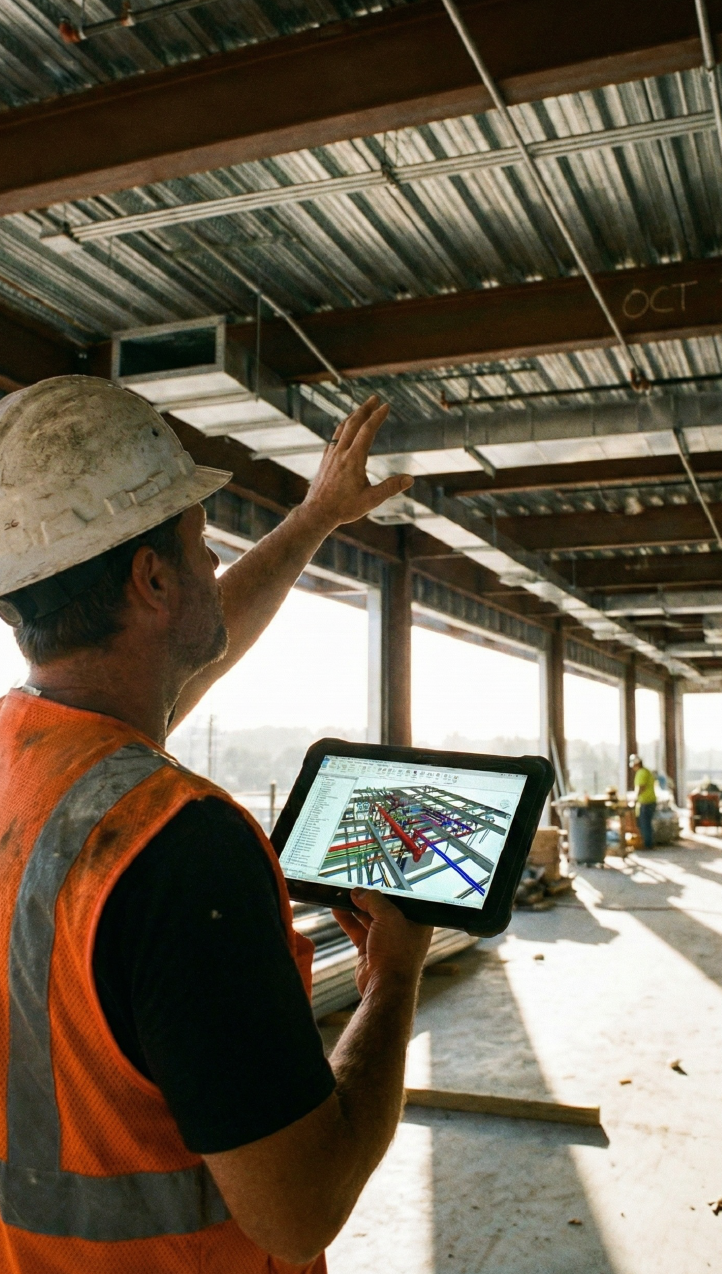
We went from waiting overnight for one render… to changing finishes in a meeting while someone says, “Can we see it in walnut instead?” and everyone nods like that’s totally normal.
That shift is the point. The Future of Architectural Visualization isn’t just about prettier images or sharper reflections. It’s about turning visualization into a decision engine: faster design alignment, smoother approvals, stronger pre-sales, and fewer “Wait, that’s not what I pictured” moments halfway through construction.
And it matters to everyone at the table. Architects want clarity and control. Developers want speed and confidence (and fewer surprises). Interior designers want clients to feel the space and commit to materials before the purchase order becomes irreversible.

The Future of Architectural Visualization in 60 Seconds
Quick answer (save this for your next meeting):
-
What’s changing: AI automation, real-time workflows, immersive VR/AR/MR, cloud collaboration, and 360 tours becoming mainstream deliverables.
-
Why it matters: Fewer misunderstandings, faster iterations, better stakeholder confidence (especially when approvals involve multiple people in multiple locations).
-
What to do next: Match the visualization format to the project phase (concept → design development → approvals → marketing → sales), instead of forcing one “perfect” output to do everything.
From “Final Render” to “Live Design Tool”
The new role of visualization
For a long time, visualization was the last slide: the final hero image you used to sell the dream. Now, it’s increasingly the shared language for the whole team: Architect, client, builder, developer, and sometimes the city reviewer who only has five minutes between meetings.
When visualization becomes part of the workflow (not just the deliverable), something important happens: the project gets fewer “interpretation gaps.” The people funding, designing, and building the same space finally see the same space.
The biggest shift
The industry can do a lot. The question is what’s practical to do consistently. The Future of Architectural Visualization is expanding fast, but adoption still depends on workflow, budget, tools, and how much change your team can absorb at once.
Think of it like jobsite technology: everyone wants the newest gear, but everyone also wants it to work on day one without a 40-hour onboarding. Visualization is having that same moment.

AI Is the New Rendering Assistant (Not the New Architect)
What AI does well in visualization
AI is proving most valuable where time used to disappear: material swaps, lighting adjustments, denoising, upscaling, and speeding up post-production. Some studios and teams report large efficiency gains when AI is integrated into their rendering workflows.
The useful way to think about AI is not “replace artists,” but “remove bottlenecks.” It’s the difference between spending two days polishing what should have taken two hours, or spending those two days exploring better options.
What this means for each audience
- Architects: AI-assisted workflows make it easier to iterate without killing momentum. You can test more design options, faster, and keep the meeting moving instead of sending everyone home with “We’ll show you tomorrow”.
- Developers: Faster visualization cycles can support quicker decision-making, investor updates, and pre-construction marketing, especially when stakeholders want to see changes quickly and clearly.
- Interior designers: AI helps you explore finishes and moods with less friction. When a client asks for “the same kitchen, but warmer,” you can actually show “warmer” (in a way that’s consistent) rather than describing it with hand gestures and hope.
The human element (the part AI can’t do)
AI can accelerate execution, but it doesn’t own taste, story, or intent.
Aesthetic judgment, knowing when “more dramatic lighting” becomes “this looks like a nightclub”, still lives with experienced people. So does narrative: What the client cares about, what the brand needs, and what makes a space feel like a home, a flagship store, or a hospitality experience worth booking.
The “grown-up” part: Ethics & quality control
AI introduces real questions: source data, copyright, transparency, and quality control. If your visuals guide investment decisions or approvals, “close enough” isn’t a strategy. Many industry trend discussions emphasize the need for clearer ethical frameworks and human oversight as AI adoption grows.
The practical takeaway: AI belongs in your workflow, just not in the driver’s seat.
Real-Time Rendering: Everyone Wants It… Adoption Is the Complicated Part
Why real-time is so attractive
Because revisions are constant. Clients don’t do “final-final.” They do “final,” then “final with a small change,” then “final but can we try another option just to be sure.”
Real-time rendering is designed for that reality. It updates instantly as you interact with the model, which can make design review feel less like email tennis and more like an actual conversation.
The adoption gap
Here’s the honest part: interest is rising, but adoption can lag. One industry trend summary highlights a gap between real-time’s potential and the industry’s readiness to adopt it, citing factors like investment planning, tool accessibility, and workflow friction.
In other words: real-time can be incredible, if it fits the team you have, the timeline you’re on, and the deliverables you actually need.
Where cloud collaboration changes the game
Cloud platforms are reducing “version chaos.” Instead of five models living on five laptops with five file names like Project_FINAL_v12_REALLYFINAL.rvt, teams can collaborate more cleanly and keep decisions traceable.
For multi-location projects (or any project where stakeholders travel more than they sit), cloud collaboration is quietly becoming a major pillar of the Future of Architectural Visualization.

VR, AR, and MR: Design Reviews That Feel Like You’re Already There
-
VR walkthroughs = spatial understanding on demand
A floor plan is honest, but it’s not always intuitive for non-designers. VR walkthroughs change that. They let users “walk” the space before it’s built, which can help stakeholders understand scale, flow, and sightlines faster than static images.
That’s why VR is gaining traction in everything from custom homes to commercial interiors: it reduces the mental leap required to approve what you can’t physically visit yet.
-
AR/MR = design layered onto reality
AR and mixed reality take a different approach: they bring the design into the real world. This can be useful for context, on-site alignment, and helping teams understand how a proposed solution “lands” inside existing conditions.
Recommended watch (From Autodesk University)
If you want a modern, practical overview of how VR/AR/MR is being applied in AEC today (and where it’s heading), Autodesk breaks it down in its construction-focused guide on extended reality, covering real use cases and how immersive reviews connect teams to models and project data through Autodesk Construction Cloud.
360 Immersive Tours: The Practical Bridge Between Design + Sales
Why 360 tours are exploding
360 immersive tours hit a sweet spot: they’re interactive, easy to share, and they feel tangible without requiring every stakeholder to own a headset. They allow clients to explore a proposed space remotely and can support faster alignment by making feedback more immediate and specific.
In other words: 360 tours are the “most practical form of immersive” for a lot of teams right now, which is exactly why they’re becoming a standard expectation.
How to position 360 tours for each audience
- Architects: Use 360 tours for approvals and alignment. When a client can explore the space, they ask better questions earlier.
- Developers: Use 360 tours for pre-sales and investor presentations. They help your audience emotionally connect with the project before it exists physically.
- Interior designers: Use 360 tours to lock decisions on layout, lighting feel, and materials. It’s harder to second-guess a finish package after someone has virtually “walked through” it.
Related read: VR tours vs open houses
If you’re on the real estate and sales side, it’s worth reading “Virtual Reality Tours vs. Traditional Open Houses: Which Sells Better?” on the Xpress Rendering blog. It breaks down where immersive experiences win (reach, convenience, repeat viewing) and where in-person still holds power (emotion, immediacy, human connection).

The Future of Architectural Visualization Playbook: What to Use, When
Concept & early design
Use AI-assisted visuals to explore massing, mood, and broad material directions quickly. The goal here isn’t “final”, it’s momentum and clarity.
Design development & approvals
Blend real-time sessions (when your workflow supports it) with immersive reviews (VR or 360) to resolve spatial questions early, before change orders start getting expensive.
Marketing, leasing, and pre-sales
This is where hyperreal visuals and immersive tours become a business tool. 2026 trend discussions emphasize that high-quality visuals, especially immersive tours, are no longer “nice to have” for real estate marketing; they’re increasingly essential for bridging technical design and emotional buy-in.
Remote stakeholders
If your stakeholders are spread across cities (or time zones), prioritize cloud-friendly deliverables and immersive experiences that reduce back-and-forth.
Mini Scenarios: Choose Your Own Visualization Adventure
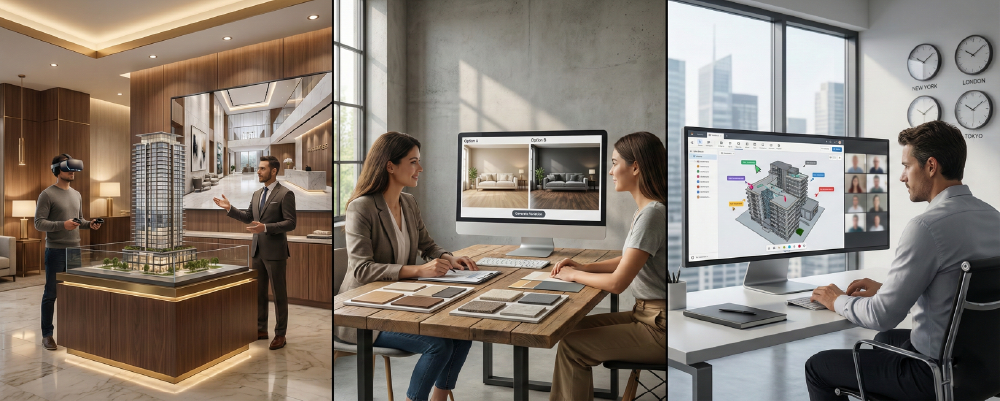
Scenario 1: The developer launching a condo tower pre-construction
You need to sell the vision before the lobby exists. Your buyers are comparing you to three other projects, and everyone claims “luxury finishes.”
Best move: photoreal hero images plus an immersive tour so prospects can explore the experience, not just stare at it. (If the buyer can “walk” it, they’re more likely to remember it.)
Scenario 2: The interior designer pitching two finish packages
The client loves Option A… until they see Option B. Then they want to combine both. Then they want a third option “that feels like both but calmer.”
Best move: AI-accelerated variants paired with a walkthrough-style review so decisions are based on experience, not guesswork.
Scenario 3: The architect coordinating stakeholders across three time zones
One stakeholder wants modern minimal. Another wants warm traditional. A third wants the budget to magically stay the same.
Best move: cloud-friendly collaboration plus immersive review checkpoints so everyone aligns before details harden into contracts.
Implementation Checklist: What You Need to Start
-
Inputs: CAD/BIM model (or drawings that can be modeled), floor plans, finish schedule, reference images, target audience, key viewpoints, and the decisions you need the visuals to support.
-
Key decision: Do you need photoreal stills, animation, or immersive tours first? (Hint: “first” should match your bottleneck: Approval, funding, or sales.)
-
Pro tip: position VR/360 early when clarity is the goal, and later when persuasion is the goal.
Where Xpress Rendering Fits Into the Future of Architectural Visualization
The Future of Architectural Visualization is heading toward interactive, immersive communication, because that’s what helps teams make decisions faster and with fewer surprises.
At Xpress Rendering, we build visual workflows around real project needs, not tech for tech’s sake. If immersive tours are your highest-leverage next step, especially for approvals, pre-sales, or remote stakeholders, our VR360 Virtual Reality Tours and 3D Walkthrough Services are designed to help clients explore a space before a single wall is built.
Get a Quote for a VR360 Tour
Let your clients walk your project before it’s built, learn more about our VR360 services here, and make decisions with confidence.
Future of Architectural Visualization: FAQs
-
What does “Future of Architectural Visualization” actually mean?
It means visualization is shifting from static deliverables to interactive tools for design decisions, approvals, and sales: powered by AI, real-time workflows, and immersive formats like VR/AR and 360 tours.
-
How is AI changing the future of architectural visualization workflows?
AI speeds up repetitive tasks like material swaps, denoising, post-production, and creating quick variations, so teams can iterate faster while keeping creative direction and quality control human-led.
-
What’s the difference between real-time rendering and traditional rendering?
Traditional rendering often requires longer compute time per image, while real-time rendering updates instantly during interaction with the model, making live review and revisions much faster when the workflow supports it.
-
Are VR and AR actually useful for architects and interior designers, or just “cool tech”?
They’re useful when stakeholders need to understand scale, flow, and spatial feel quickly. VR walkthroughs and AR overlays reduce ambiguity and can improve alignment before construction decisions lock in.
-
What is a 360 immersive tour in architecture and real estate?
A 360 tour is an interactive, immersive way to explore a proposed design remotely, helping clients understand layout, finishes, and overall experience before the project is built.
-
Can immersive tours help projects sell faster, especially pre-construction?
They can help by improving reach, convenience, and buyer confidence, especially when the space doesn’t exist yet or the audience can’t visit in person. That’s why immersive content is increasingly described as essential in modern real estate marketing.
-
What files or information do I need to start a VR360 tour?
Typically you’ll need a CAD/BIM model (or drawings that can be modeled), material and finish references, and a clear goal for the experience, approvals, marketing, pre-sales, or all of the above.
-
Will AI replace architectural visualization studios?
Most current trend discussions point to AI acting as an accelerator, not a replacement, because accuracy, storytelling, ethics, and client intent still require experienced human direction and oversight.