You know the look. Every architect, interior designer, and developer has seen it.
You are sitting across the table from a client. You’ve just rolled out a set of pristine, technically perfect 2D blueprints. You are pointing to the flow of the kitchen, explaining how the open-concept living area interacts with the foyer. You see the lines, the dimensions, and the genius of the spatial organization.
But your client? They are giving you the “Blank Stare.”
They are nodding politely, but behind their eyes, they are struggling. They are trying to mentally erect walls, install windows, and imagine sunlight hitting a floor that currently looks like a black-and-white grid. To you, it’s a masterplan; to them, it’s a geometry test they are failing.
This disconnect is where deals stall and enthusiasm dies.
In the high-stakes world of US real estate and architectural design, how we present a project is just as critical as the design itself. This brings us to the ultimate showdown in architectural visualization: 2D vs 3D Floor Plans.
While one is the language of construction, the other is the undisputed language of sales. But is it really an “either/or” situation? Or is there a strategic way to utilize both to keep your contractors happy and your investors signing checks?
Just looking for experts to bring your layouts to life? Check out our 2D & 3D Floor Plan Services and contact us to get started.
Finally, let’s dive deep into the differences, the benefits, and the verdict on which one your client really needs to see.
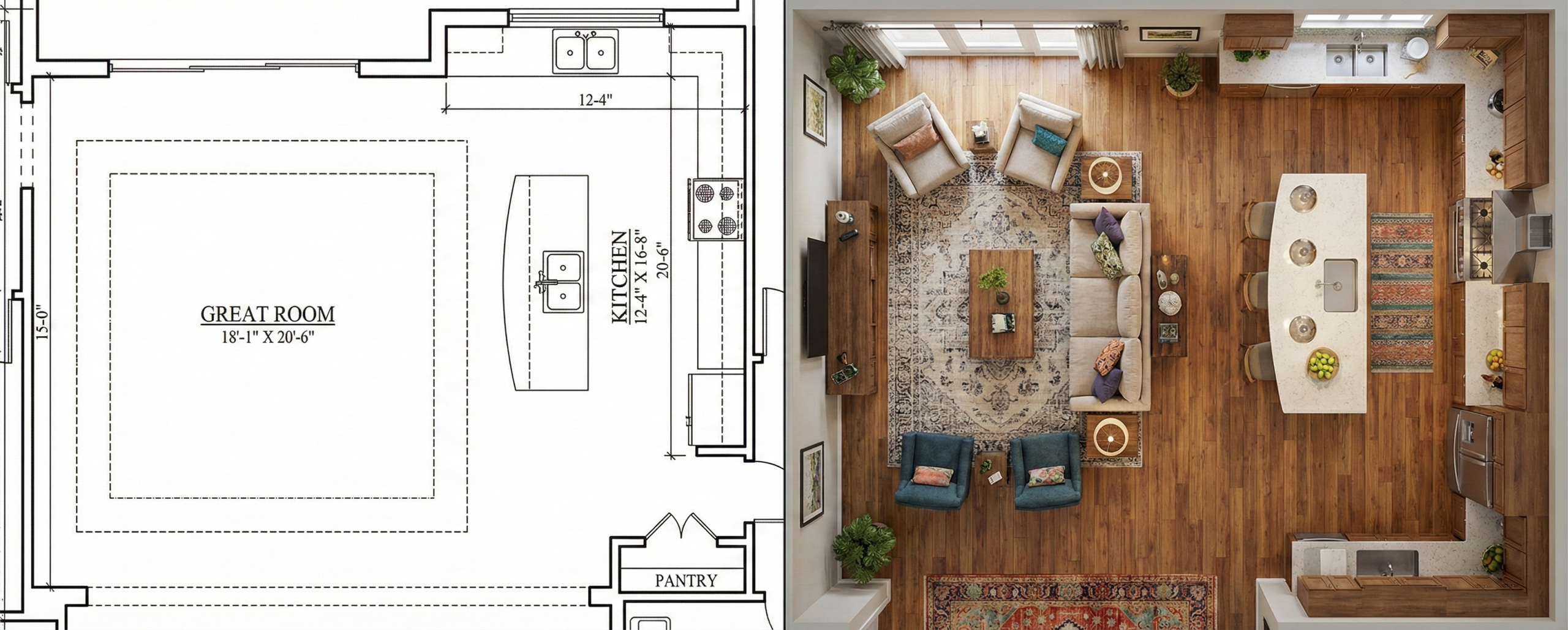
The Blueprint of Success: Understanding the Basics
Before we pit them against each other, let’s clarify what we are talking about. In the realm of search engines and client pitches, there is often confusion about where technical drafting ends and marketing visualization begins.
Here is the breakdown of 2D vs 3D Floor Plans for the uninitiated:
2D Floorplans are the “Technical Skeleton.”
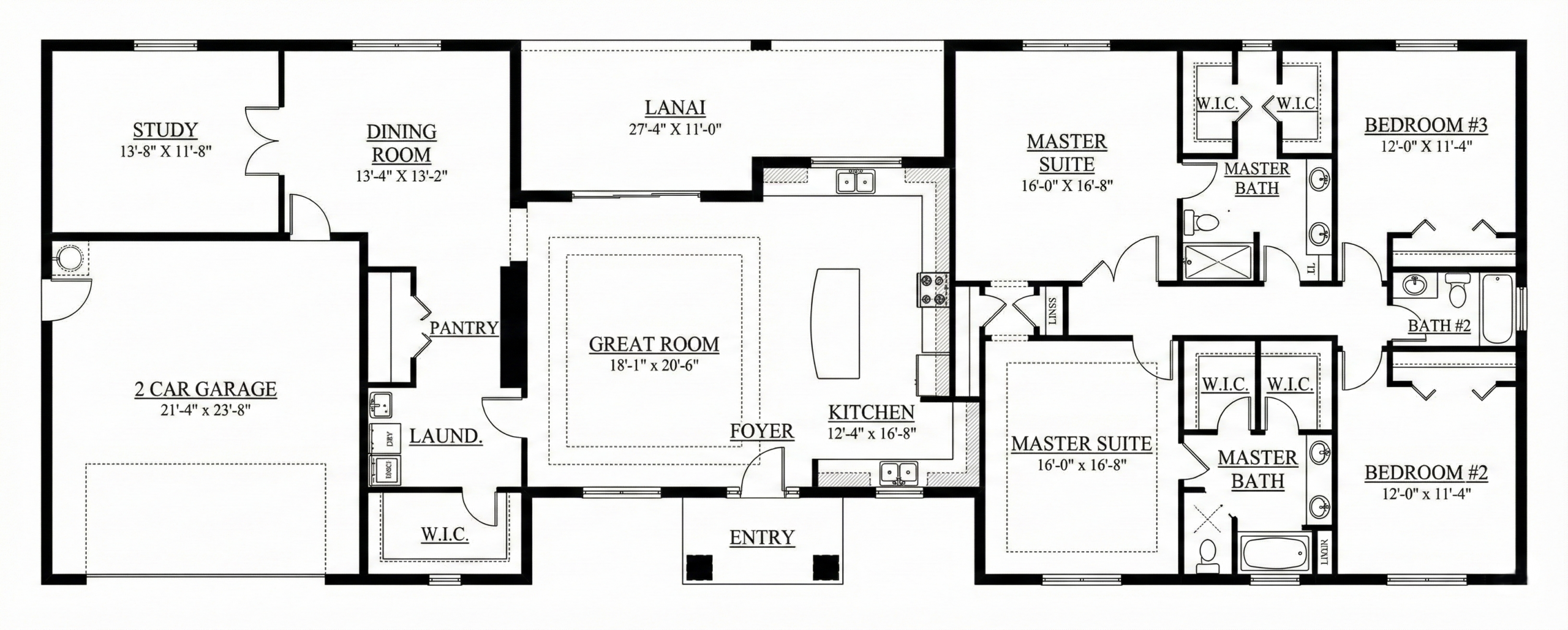
These are flat, diagrammatic drawings viewed from directly above. They show the layout of the property, including walls, doors, windows, and stairs. They are defined by lines, symbols, and text labels. There is no depth, no texture, and no perspective. It is pure data presented visually.
3D Floor Plans are the “Visual Soul.”
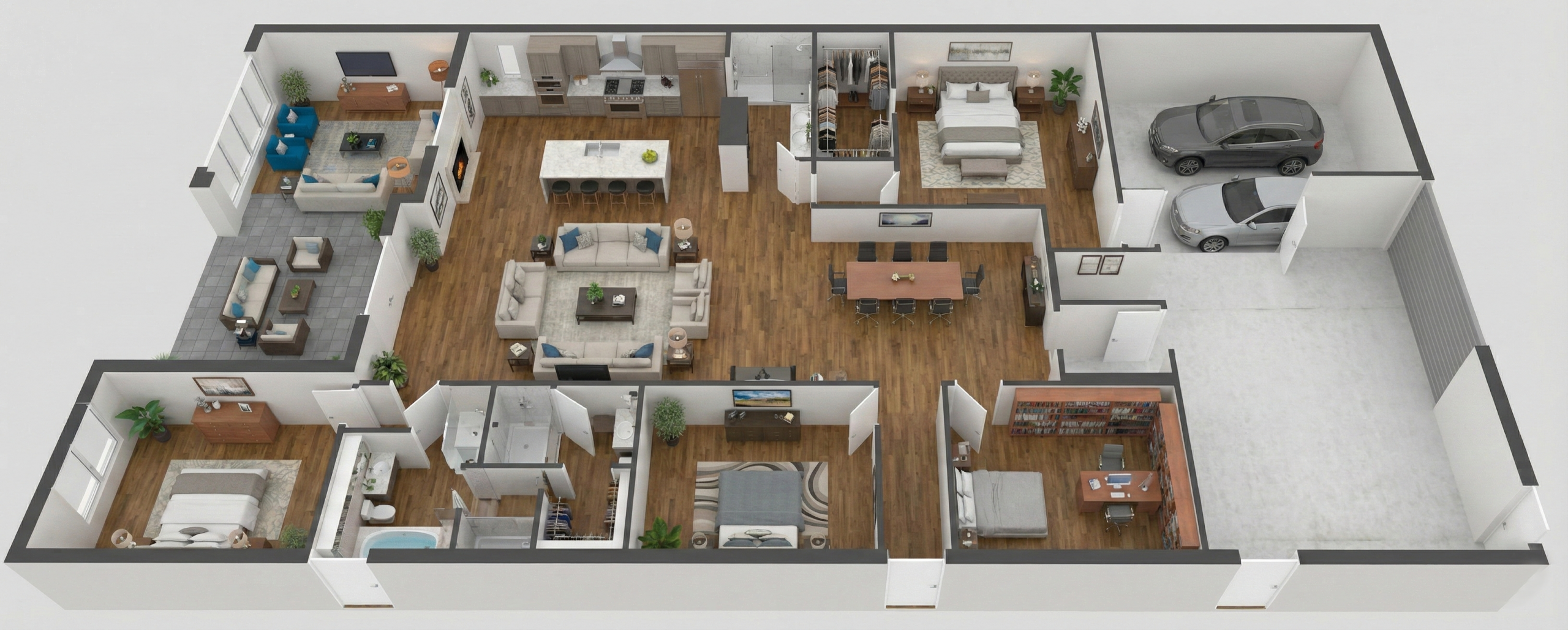
A 3D floor plan takes that flat diagram and extrudes it. It adds height to the walls, depth to the windows, and critically, it adds context. Often rendered in perspective (usually a bird’s-eye view), these plans include flooring materials, furniture arrangements, and sometimes even lighting and decor.
The Core Difference:
Think of it like this: A 2D floor plan is the recipe; it tells the builder exactly what ingredients go where. A 3D floor plan is the picture of the finished meal on the menu; it makes the client hungry to buy it.
The Case for 2D Floorplans: Precision & Protocol
Let’s be clear: 2D floorplans aren’t going anywhere. In fact, trying to build a house without them would be like trying to assemble IKEA furniture without the manual: pure chaos.
For professionals in the industry: architects, structural engineers, and contractors, 2D floorplans are the holy grail of communication. They are non-negotiable for a few key reasons:
1. The Language of Permitting
City planning departments in the US don’t want to see a pretty render of a sofa; they want to see strict measurements, code compliance, and egress paths. 2D plans are the standard requirement for securing building permits. They are clean, devoid of distraction, and mathematically precise.
2. Cost-Effective Clarity
Producing a 2D CAD drawing is generally faster and cheaper than rendering a full 3D model. When you are in the early schematic design phase and moving walls every other hour, working in 2D allows for rapid iteration without the need to re-render textures or lighting.
3. The Contractor’s Bible
When a framer is snapping lines on a subfloor, they need clear dimensions. They need to know that the hallway is exactly 48 inches wide, not “visually spacious.”
However, just because they are necessary for the build doesn’t mean they are sufficient for the sell. As highlighted in a recent study by Archademia on the role of floor plans in effective architectural design, a well-executed plan is the backbone of any spatial organization. It dictates the rhythm of the home. But acknowledging the importance of the plan is different from assuming a layperson can read it.
The Power of 3D Floor Plans: Emotion & Spatial Logic
If 2D is about compliance, 3D Floor Plans are about connection.
The human brain is wired for 3D processing. We navigate the world in three dimensions. When you force a client to look at a 2D drawing, you are asking them to perform a complex cognitive task: translating abstract symbols into an imaginary 3D reality. This creates “cognitive load.”
When cognitive load is high, decision-making slows down. Clients hesitate. They say things like, “I need to think about it,” or “I just can’t picture it.”
3D Floor Plans remove that load instantly. Here is why they are the secret weapon for developers and interior designers:
1. Scale and Volume Visualization
In 2D, a 12×12 bedroom looks like a square. In 3D, the client can see a King-size bed in that square and realize, “Oh, there’s actually plenty of room for nightstands.” They understand the relationship between furniture and the vertical space, specifically if you have design features like half-walls or changes in floor levels.
2. Material and Texture Context
A hatch pattern on a 2D drawing might represent “hardwood,” but a 3D render shows white oak with a matte finish. It shows how the cold grey tile in the bathroom contrasts with the warm wood in the hallway. This helps interior designers get approval on palettes much faster.
3. The “Livability” Factor
3D plans allow clients to imagine themselves living in the space. They can see the flow from the kitchen to the dining area. They can see that the sightline from the entrance lands beautifully on the fireplace. It turns a house into a home before the foundation is even poured.
A Note on Technology:
We are talking about static 3D floor plans here, which are incredibly effective. But the industry is moving fast. While 3D floor plans offer a static immersion, technology is evolving into fully interactive experiences. If you are curious about how interactive models compare to static images, check out our guide on Digital Twins vs 3D Renderings: What’s the Difference?. It’s a great read if you want to see what the bleeding edge of real estate marketing looks like.
Head-to-Head: 2D vs 3D Floor Plans
Sometimes, you just need the data side-by-side to make a decision. Here is how 2D vs 3D Floor Plans stack up against each other in the metrics that matter to your business.
| Criteria | 2D Floor Plans | 3D Floor Plans |
|---|---|---|
| Primary Purpose | Construction, Permits, Layout Specs | Marketing, Sales, Client Approval |
| Target Audience | Contractors, Engineers, Architects | Homebuyers, Investors, Interior Clients |
| Cost | Low (Standard drafting fee) | Moderate (Requires rendering expertise) |
| Turnaround Time | Fast (Hours to days) | Moderate (24-72 hours typically) |
| Visual Appeal | Technical & Abstract | Emotional & Realistic |
| “Wow” Factor | Low | Very High |
| Spatial Clarity | Requires expertise to read | Instantly understandable by anyone |
Did You Know? Fast Facts on Visualization
To give you some ammo for your next client meeting or marketing pitch, here are a few stats that highlight why visualization matters.
-
Speed of Sight: The human brain processes images 60,000 times faster than text (or abstract line drawings). When you show a 3D plan, the client “gets it” in milliseconds.
-
Listing Performance: According to Zillow and other major US real estate platforms, listings that include a floor plan (especially visually clear ones) generate significantly more qualified leads than those with just photos.
-
Buyer Remorse: 3D plans significantly reduce “buyer remorse.” Why? Because when a client understands the space before it’s built, there are fewer nasty surprises during the walkthrough. “I thought this room would be bigger” is a phrase you stop hearing.
The Verdict: When to Use Which?
So, in the battle of 2D vs 3D Floor Plans, who wins? The answer isn’t about picking a winner; it’s about picking the right tool for the job phase.
Scenario A: The “Permit & Build” Phase -> Go 2D.
If you are submitting documents to the city council for approval or handing a set of prints to your electrician so they know where to put the outlets, stick to 2D. It is precise, legal, and standard. Don’t overcomplicate the technical side.
Scenario B: The “Pitch & Sell” Phase -> Go 3D.
If you are pitching a renovation to a homeowner, selling condos off-plan (pre-construction), or trying to get an investor to fund a development, you must use 3D. In these scenarios, you aren’t selling walls; you are selling a lifestyle. A 2D plan is a map; a 3D plan is the destination.
The Hybrid Approach: The Pro Move
The most successful real estate developers in the US don’t choose one. They use both. In their marketing brochures, they place the 3D Floor Plan prominently to catch the eye and trigger the emotional response. Right next to it (or on the back), they provide the 2D plan with dimensions for the analytical buyer who wants to measure if their sofa fits.
Not sure which option fits your project best? We’re here to help. Tell us about your vision and get a free, custom quote today.

2D vs 3D Floor Plans: Frequently Asked Questions
We get asked these questions constantly by realtors and designers looking to up their game. Here are the answers to the most common queries regarding floor plan visualization.
-
Is a 3D floor plan better than a 2D floor plan?
It depends on your goal. For marketing and client presentations, 3D floor plans are superior because they are easier for non-professionals to understand. For construction documentation and precise measurements, 2D is better and necessary.
-
How much more expensive are 3D floor plans compared to 2D?
3D floor plans generally cost more than 2D plans because they require more labor, modeling, texturing, lighting, and rendering. However, the ROI (Return on Investment) on 3D plans is often much higher because they help close sales faster and prevent costly design changes later in the project.
-
Can you convert an existing 2D PDF into a 3D floor plan?
Yes, absolutely. This is the standard workflow. At Xpress Rendering, we take your CAD files, PDFs, or even hand sketches (as long as they have dimensions) and build the 3D model directly from those references.
-
Do interior designers need 3D floor plans?
They are incredibly helpful for interior designers. While mood boards show the “vibe,” a 3D floor plan shows the “flow.” It helps clients understand why a certain furniture layout works better than another, saving the designer from endless debates about sofa placement.
-
What is the best format for real estate marketing?
For social media (Instagram/Facebook) and Zillow/MLS, 3D floor plans perform best. They stop the scroll. However, having a downloadable PDF of the 2D plan available for serious buyers is a best practice.
Conclusion: 2D vs 3D Floor Plans
At the end of the day, your job as a professional, whether you are an architect, developer, or realtor, is to bridge the gap between a vision and reality.
2D plans are your safety net; they ensure the building stands up and fits the code. But 3D floor plans are your bridge; they ensure the client crosses over from “confused” to “confident.”
Don’t let a flat drawing flatten your sales potential. In a market as competitive as the US housing sector, clarity is currency. The easier you make it for your client to say “yes,” the faster you move on to the next project.
Ready to bridge the gap between your technical blueprints and your client’s dream home?
You don’t need to learn complex 3D software to offer this level of service. You just need the right partner. At Xpress Rendering, we specialize in turning flat CAD files into vibrant sales magnets.
Check out our 2D & 3D Floor Plan Services to elevate your next presentation and stop the “Blank Stare” for good.