If you have driven down Biscayne Boulevard recently, or simply glanced at the architectural renderings flooding the high-end real estate market, you already know that the Downtown Miami skyline is undergoing a monumental evolution. We are no longer just looking at a sea of flat, white glass condo towers. The city has officially entered the “supertall” era, and it is doing so with a project that fundamentally changes the rules of gravity, engineering, and design.

When discussing Waldorf Astoria Miami architecture, we are looking at a masterclass in structural defiance and aesthetic brilliance. For architects, developers, builders, and realtors operating in the United States, this project is much more than just another luxury high-rise. It is a blueprint for the future of vertical living in coastal cities
To pull off a feat of this magnitude requires visionary minds. The conceptualization of this iconic structure comes from the brilliant Carlos Ott, working in seamless collaboration with Sieger Suarez Architects, the architect of record responsible for translating a gravity-defying sketch into a tangible, buildable reality. Together, they have conceptualized a building that looks like a precarious, staggered stack of glass blocks but is, in reality, a fortress of modern engineering. Let us break down exactly how this towering architectural marvel is coming to life.
Quick Facts: The Waldorf Astoria Miami at a Glance
Before we dive into the deep engineering and spatial dynamics, let us look at the sheer scale of this project. For those of us in the development and building sectors, the numbers alone are staggering.
- Project Name: Waldorf Astoria Hotel & Residences Miami
- Architects: Carlos Ott (Conceptual Artist) & Sieger Suarez Architects (Architect of Record)
- Interior Design: BAMO
- Height: 1,049 feet (320 meters) – Miami’s first supertall skyscraper
- Stories: 100-story building Florida
- Design Concept: Nine offset, asymmetrical glass cubes
- Location: 300 Biscayne Blvd, Downtown Miami, FL
- Developer: PMG (Property Markets Group), Greybrook Realty Partners, Mohari Hospitality, S2 Development, and Hilton
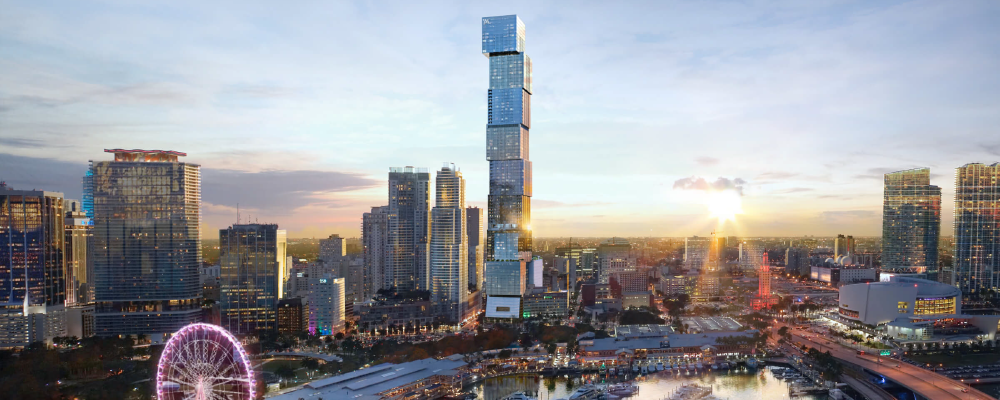
The Concept: Nine Asymmetrical Cubes Defying Gravity in Waldorf Astoria Miami Architecture
Every landmark building starts with an inspiration that challenges the status quo. In the case of this particular project, the architecture is a sculptural statement in the sky. The masterminds behind the concept drew heavy inspiration from the 20th-century Basque sculptor Eduardo Chillida, whose monumental abstract works explored the deep relationships between space, scale, and gravity.
This is where the idea for the Cubed skyscraper construction was born. Instead of designing a continuous, monolithic shaft of glass and steel, Carlos Ott and the team at Sieger Suarez Architects decided to break the tower down into nine distinct volumes. But they did not just stack them neatly; they offset them. The result is an asymmetrical geometry that makes the building look as though it is gently balancing its massive weight, creating a dynamic visual identity that changes entirely depending on where you stand in the city.
However, as any seasoned architect or developer knows, form must meet function. These offset cubes are not just a wild aesthetic choice; they solve a critical luxury real estate problem. By shifting the volumes off the central axis, the design opens up customized, unobstructed panoramic views of Biscayne Bay, Miami Beach, and the deep blue Atlantic Ocean. A traditional straight tower simply cannot provide these unique vantage points from every angle. The shifting geometry creates transition zones that allow for expansive private terraces and entirely unique penthouse layouts that redefine high-end living. To truly appreciate the lifestyle these architectural volumes offer, you can view the overarching vision at the official Waldorf Astoria Residences Miami website.
Structural Engineering: Anchoring a 1,049-Foot Giant in South Florida
Now, let us speak directly to the developers, engineers, and builders reading this. You know the reality of the ground we walk on in South Florida. Building a 1,049-foot structure is challenging in a bedrock-rich city like New York. Building it on top of porous limestone, right next to the ocean, in a high water table, and in a high-velocity hurricane zone? That is an entirely different beast.
The foundation of the Waldorf Astoria Miami architecture is an engineering triumph. Traditional foundational methods were immediately off the table. To anchor a tower of this immense weight and height, the engineering teams had to employ massive deep-soil mixing techniques. This involves driving heavily reinforced concrete pilings incredibly deep into the earth, past the porous upper layers of limestone, to find the stability required to hold the building firm against both gravity and extreme lateral forces.
Speaking of lateral forces, we have to talk about the wind. Wind resistance engineering high-rises is the single most critical factor in coastal supertall construction. This is where the aesthetic genius of the offset cubes doubles as a structural lifesaver. When wind hits a flat, uniform skyscraper, it creates a phenomenon known as vortex shedding, swirling currents of air that cause a building to sway back and forth. By offsetting the nine cubes, the architecture naturally disrupts these wind vortexes. The asymmetrical edges confuse the wind currents, breaking them apart before they can organize and push against the structure in unison.
Even with this aerodynamic advantage, a building of this height will inevitably experience movement. To counteract this and ensure absolute comfort for the residents in the highest cubes, engineers integrated an internal Tuned Mass Damper (TMD) near the top of the tower. This massive, suspended counterweight acts like a pendulum. When a hurricane-force gust hits the building from the east, the TMD swings to the west, absorbing the kinetic energy and keeping the structure remarkably still. It is invisible to the residents, but to the builders and architects, it is the heartbeat of the tower’s stability. If you want to learn more visit the Waldorf Astoria Miami official website.
Waldorf Astoria Miami Interior Architecture: BAMO’s Vision for Sky-High Luxury
Let us shift the focus to the interior designers and real estate professionals. How exactly do you design the inside of a glass cube that is floating 800 feet above the pavement? When you have a facade that is this modern, sheer, and dramatic, the interiors must work incredibly hard to ground the space and make it feel like a home.
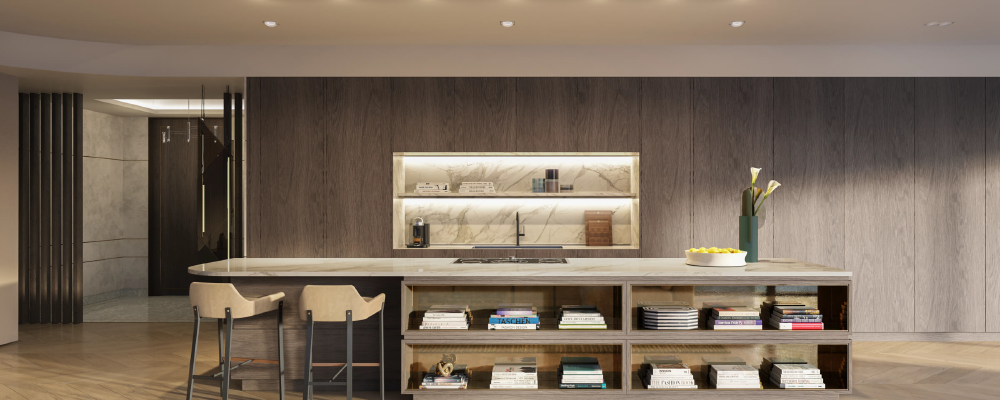
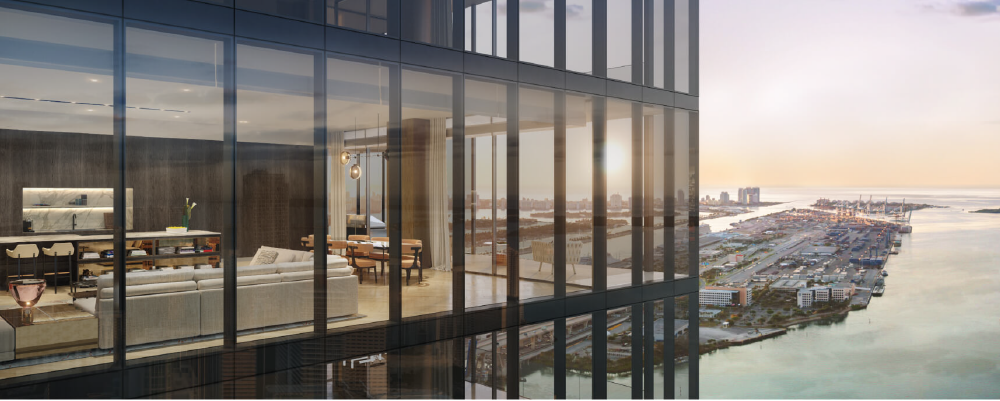
The award-winning design firm BAMO was tasked with this exact challenge. Their approach to the interior architecture was to focus heavily on proportion and scale. When you are standing in a living room entirely wrapped in floor-to-ceiling glass looking out over the clouds, the vastness can be overwhelming. BAMO combated this by introducing classic, rich materials that provide warmth and texture. Think deep-veined marbles, warm woods, and meticulously crafted metals.
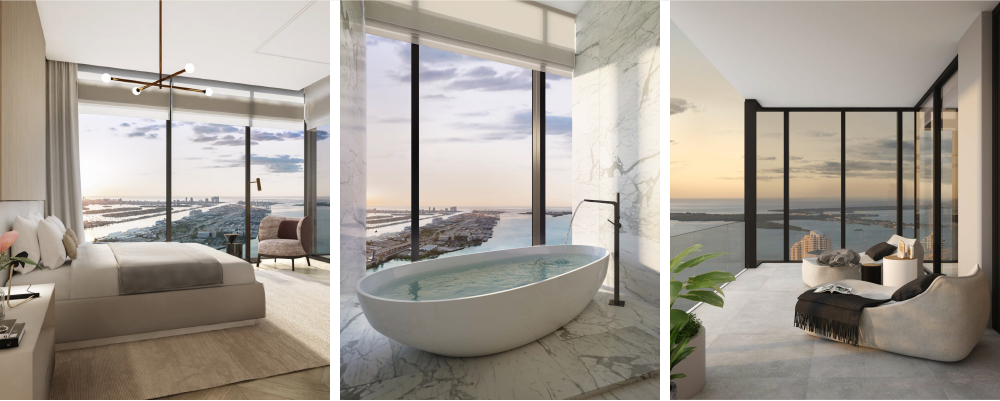
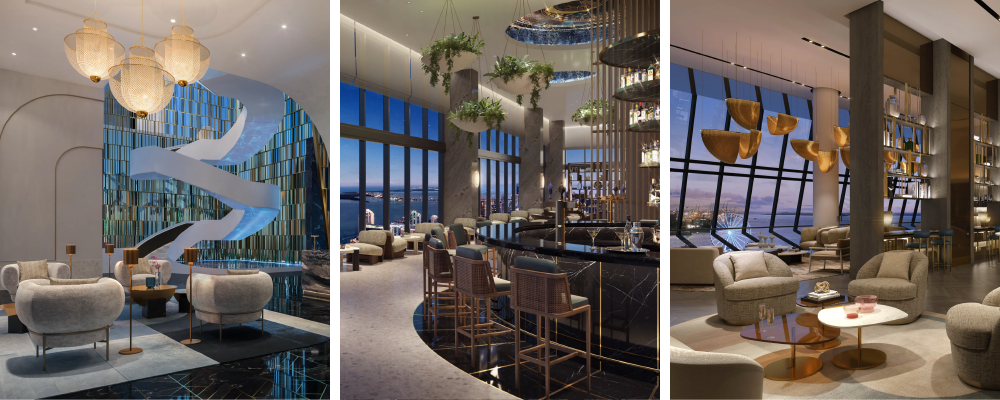
This approach puts a clever “twist” on standard decor. The interior architecture intentionally contrasts with the exterior’s cold, reflective exoskeleton. Yet, it complements the exterior geometry by keeping the lines clean and the layouts open. The transition from stepping out of a high-speed elevator into a space that feels both intimate and impossibly grand is what defines the next tier of Miami luxury real estate development. Every material choice, lighting fixture, and spatial transition was curated to ensure that residents feel anchored, even when they are living in the clouds.
Redefining Downtown: The Broader Impact on Miami’s Real Estate Landscape
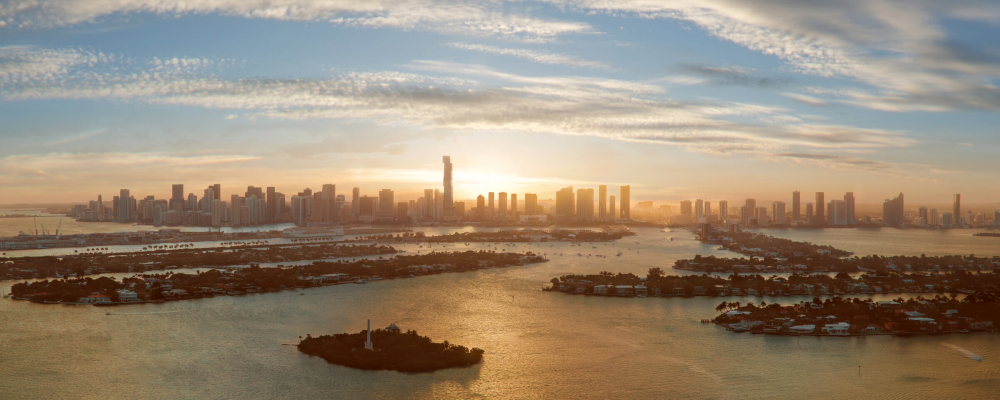
From a macroeconomic and real estate perspective, the Waldorf Astoria Miami architecture is a catalyst. A PMG residential tower Miami of this scale does not just add residential units to the market; it shifts the entire center of gravity for urban wealth in South Florida.
For realtors and developers, the urban impact is clear. This project single-handedly elevates Downtown Miami’s global real estate status. It proves to the international market that Miami is capable of executing architectural and engineering feats on par with Dubai, New York, and London. It acts as an anchor for the Downtown Miami skyline transformation, paving the way for neighboring parcels to be developed with similar ambition and budget. When a flagship brand like Waldorf Astoria plants a 1,049-foot flag on Biscayne Boulevard, property values, commercial investments, and infrastructure in a five-mile radius inevitably follow suit.
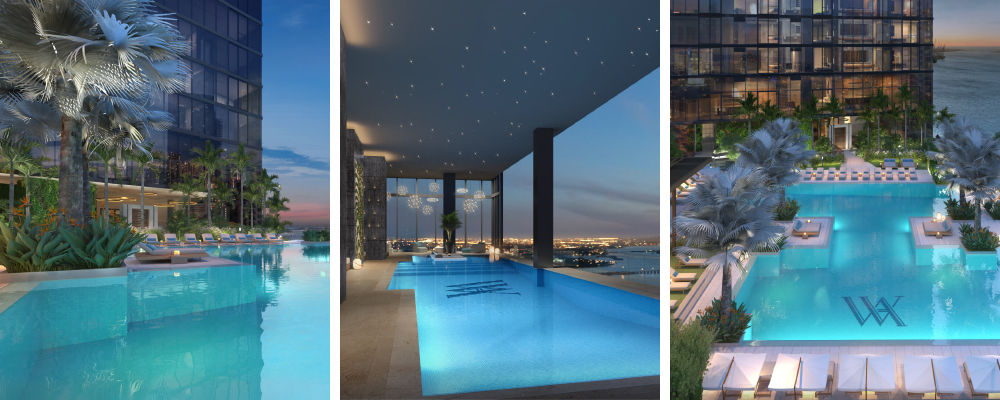
The architectural ambition of this project is undeniably a catalyst for the city’s future. For a deeper dive into how these mega-projects are being conceptualized, planned, and marketed to a global audience, read our highly detailed article on The Rise of Luxury Condos in Miami. It offers vital insights for anyone looking to understand where the market is heading next.
Visualizing the Impossible: Selling Supertalls Before Breaking Ground
Think about this from a practical developer’s perspective for a moment. A project with the architectural magnitude and financial risk of the Waldorf Astoria Miami does not rely on imagination alone to secure billions in investor capital and pre-construction buyers. You cannot sell a $20 million penthouse in a gravity-defying glass cube based on a 2D floor plan and a firm handshake.
Long before the deep foundations are poured or the massive cranes are assembled on Biscayne Boulevard, developers and architects must prove that the design is both plausible and breathtaking. This is where high-end architectural visualization becomes the absolute most critical tool in a developer’s arsenal. To sell the dream, you have to show them the reality.
At Xpress Rendering, we understand the incredible precision required to bring visionary architecture to life. Whether you are an architect finalizing the structural massing of a complex facade, an interior designer selecting materials for a sky-high penthouse, or a developer looking to aggressively pre-sell units before breaking ground, our comprehensive suite of visualization services bridges the gap between a bold concept and a profitable reality.
From hyper-realistic Exterior and Interior 3D Renderings that capture every reflection of the Miami sun, to immersive VR 360 Tours and dynamic Video Animations that let buyers walk through their future homes, we help your clients step inside the future. When you are building the extraordinary, your marketing materials must match that level of excellence.
Are you ready to elevate your next real estate development and captivate your investors from day one? Let’s visualize your masterpiece together. Get a Quote today and discover how Xpress Rendering can accelerate your project’s timeline, boost your pre-sales, and ensure your success.
Frequently Asked Questions (FAQs) About the Waldorf Astoria Miami Architecture
-
How tall will the Waldorf Astoria Miami be?
The Waldorf Astoria Miami will reach a height of 1,049 feet (320 meters) with 100 stories, officially making it the first supertall skyscraper in Miami and the tallest residential building south of New York City.
-
Who is the architect behind the Waldorf Astoria Miami?
The building’s iconic offset-cube concept was envisioned by the world-renowned architect Carlos Ott, with Sieger Suarez Architects serving as the architect of record.
-
Why is the Waldorf Astoria Miami designed as offset cubes?
The nine asymmetrical cubes, inspired by the sculptures of Eduardo Chillida, serve both an aesthetic and functional purpose. The design disrupts wind loads for better structural stability while optimizing unique, panoramic views of Biscayne Bay and the Miami skyline for the residences.
-
Who designed the interiors of the Waldorf Astoria Residences Miami?
The award-winning design firm BAMO is responsible for the interior architecture and design, creating spaces that blend classic Waldorf Astoria luxury with contemporary Miami aesthetics.
-
How does the building withstand Miami’s hurricane winds?
The engineering features exceptionally deep foundational pilings driven into the limestone bedrock, a massive central concrete core, and a Tuned Mass Damper (TMD) at the top of the tower to absorb wind energy and prevent swaying.
-
How do developers pre-sell luxury units in complex buildings like this?
Real estate developers rely heavily on photorealistic 3D interior and exterior renderings, virtual staging, and VR 360 tours to showcase the exact views, layouts, and finishes to prospective buyers years before construction is completed. Visit our services page to learn more about this.
Conclusion: Waldorf Astoria Miami Architecture
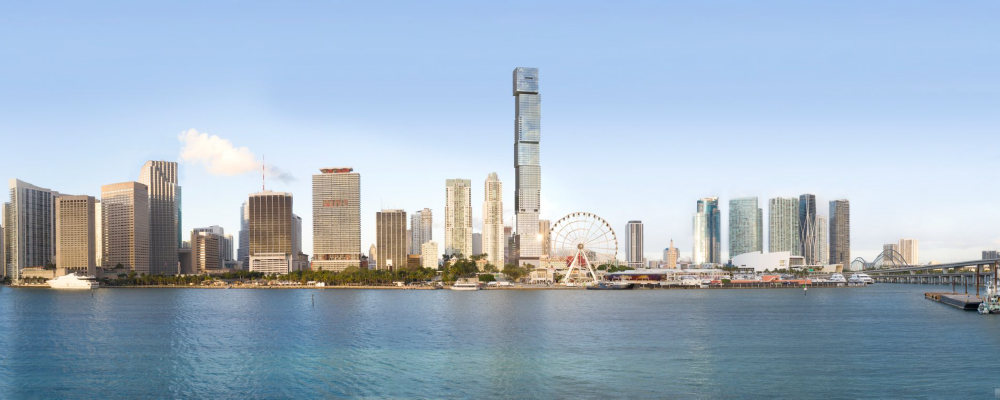
The Waldorf Astoria Miami architecture is far more than an impressive addition to the South Florida landscape; it is a masterwork of structural innovation, aesthetic daring, and luxurious foresight. For the architects, builders, and developers who shape our cities, this supertall tower serves as a benchmark for what is possible when brilliant design meets fearless engineering. As the Miami skyline continues its upward trajectory, projects like this remind us that with the right vision, the right team, and the right visualization tools, the sky is quite literally the limit.